The end of the year is cause for reflection and contemplation of what might come next.
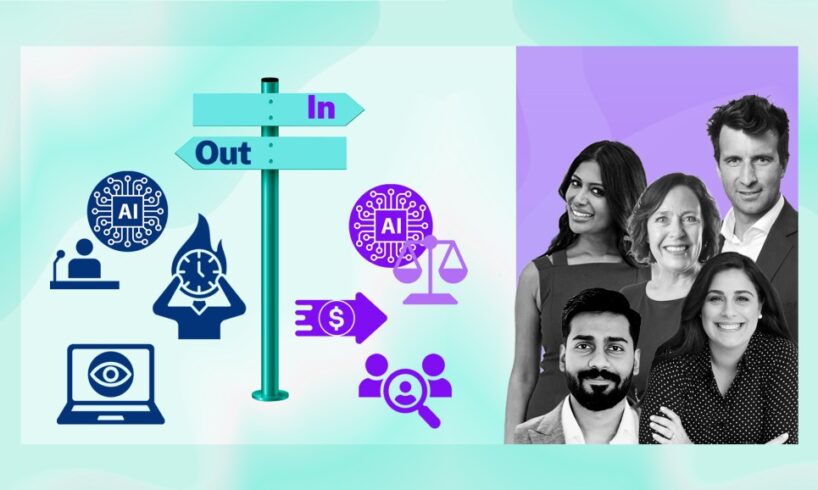
To that end, SmartCompany asked local entrepreneurs for their thoughts on the business trends, storylines, and practices we’ll leave behind in 2025, and what might face founders and leaders in 2026.
Their predictions span tougher data privacy rules, increased cashflow discipline, and the ethical use of artificial intelligence. Here’s what they said.
Related Article Block Placeholder
Article ID: 329298
Plexus CEO and founder Andrew Mellett
Andrew Mellett. Source: Supplied.
OUT: “Experience as a status symbol is being left behind in 2025”.
Business leaders should no longer assume seniority equals performance, according to Andrew Mellett, the founder and CEO of legaltech platform Plexus.
Smarter business news. Straight to your inbox.
For startup founders, small businesses and leaders. Build sharper instincts and better strategy by learning from Australia’s smartest business minds. Sign up for free.
By continuing, you agree to our Terms & Conditions and Privacy Policy.
New artificial intelligence tools can fast-track workplace learning, meaning “time served matters less than patterns learned”.
“The implication is uncomfortable but unavoidable,” he continued. “Experience no longer requires time served.”
Despite widespread fears that hiring managers are turning away from entry-level employees in favour of AI-powered tools, Mellett stresses the change will not make new graduates unemployable.
Instead, AI will create “fewer employers willing to fund slow, inefficient pathways to experience,” said Mellett.
“Inequality becomes less about who has money or credentials, and more about who can harness technology and deliver outcomes faster.”
Tania Evans, founder and CEO, WorkPro
Tania Evans. Source: Supplied.
IN: “Ethical AI becomes a business imperative”.
A maturing regulatory landscape will force businesses to be more careful with their AI choices, says Tania Evans, CEO of WorkPro, a tech platform helping businesses with worker onboarding and ongoing compliance.
“In 2026, regulators and customers alike will expect businesses to demonstrate that automated decisions are explainable, fair and free from bias,” she said.
“Consent will move from a passive checkbox to an active, ongoing process, where individuals understand how their data is being used and have control over it.”
OUT: “Lenient, outdated data-handling practices“.
Meanwhile, incoming Privacy Act reforms will force small businesses to take a closer look at how they obtain and store sensitive information.
Related Article Block Placeholder
Article ID: 306709
“In 2026, SMEs can no longer afford vague privacy notices, unclear retention policies, or ad-hoc data destruction,” said Evans.
That goes double for personal ID.
“Manually sending passports, licences and personal documents back and forth, vulnerable to breaches and misuse, is out for 2026,” she added.
“It’s increasingly risky, inefficient and unnecessary as digital identity takes hold.”
Anthony Woodward, CEO, RecordPoint
Anthony Woodward. Source: Supplied.
OUT: “Treating LinkedIn as your AI roadmap”.
Sometimes, the Top Voices ought to speak a little quieter.
“Over the past couple of years, we’ve all seen too many strategies that start with a viral post or a vendor demo and work backwards,” said Anthony Woodward, CEO of 2025 Smart50 Awards finalist RecordPoint.
There’s a key difference between strategy and experimentation, he continued, and founders should carefully consider their AI practices before adopting overlapping and ineffective tools.
IN: “Understanding how your data actually affects your efforts with AI, especially if you care about productivity”.
What you reap is what you sow, including the business data processed by artificial intelligence, according to Woordward.
“A lot of organisations have rolled out AI and seen very little in the way of measurable gains, usually because the underlying data is messy, incomplete or untrusted,” he said.
Related Article Block Placeholder
Article ID: 326454
Making sure your core data points are intelligible and accessible will “give AI a fighting chance to deliver tangible improvements to the business and free your people up to focus on the work that matters most”.
Shivani Gopal, CEO and founder, Elladex
Shivani Gopal. Source: SmartCompany via Elladex
OUT: “Taking money without strategic alignment”.
Investor interest is gratifying, and goes a long way to prove your business has real potential — but don’t be awestruck into taking capital if it comes with too many compromises.
“In my experience, capital needs to come with more than a cheque,” said Shivani Gopal, CEO and founder of mentoring platform Elladex.
“Money on its own is not helpful if it does not bring perspective, access, or alignment with where you are trying to take the business.
“I have seen founders slowed down, not sped up, by the wrong investors.”
Related Article Block Placeholder
Article ID: 300403
OUT: “Normalising burnout as part of the founder journey”.
In a startup scene beset by ‘grindset’ influencers and the ‘9-9-6’ working week, founders should recognise that success does not always need to come at overwhelming mental, physical, and emotional expense.
“The narrative that founders must be perpetually exhausted, sleeping on couches, or running businesses ‘on fumes’ needs to end,” said Gopal.
“Building a company is a marathon, not a sprint.
“If the business only works when the founder is depleted, it is not a sustainable business model.”
IN: “Enjoying the journey, not just the destination”.
Yes, building a business means perpetually looking to the future. But taking time to acknowledge success and performance in the moment brings its own benefits.
“The journey is where culture is built,” said Gopal.
“Celebrating milestones, acknowledging progress, and recognising team effort make the work meaningful and sustainable, not just successful on paper.”
IN: “Cashflow discipline”.
Cashflow complacency will be enemy number one for many businesses in 2026, said Gopal, whose insistence on culture, personal boundaries, and adequate work-life balance does not come at the detriment of financial control.
“Founders who truly understand their numbers, not just revenue, but cashflow, burn, and runway, make better decisions,” she said.
“Cashflow discipline is firmly in, and vanity growth is firmly out.”
Vivek Kumar, co-founder and CEO, SocialTrait
Vivek Kumar. Source: SmartCompany via LinkedIn.
OUT: “The era of AI demos is ending. Nobody buys a magic trick anymore”.
Forget the razzle-dazzle and claims a single AI tool will revolutionise your business, says Vivek Kumar, co-founder and CEO of Socialtrait, a tech company creating AI tools to help brands test their messaging against AI-powered focus groups.
And given the fact many businesses are now drawing from the same core LLMs and AI tools, the real differentiator will be how innovators use the technology at their disposal.
“Most teams now have access to similar models,” said Kumar.
“The advantage comes from execution, not access.”
IN: “2026 is when AI gets audited like a business function”.
Removing the ‘magic’ from AI means treating it like any other business line item, with the same level of scrutiny given to other parts of the business.
“The winners will treat AI like any other investment,” tracking “ROI, governance, and adoption — not hype”, said Kumar.
Constance Aloe, founder and director, Distinctive People
OUT: “Thinking legislative change and HR are a one-and-done exercise”.
Just because the Albanese government has enacted a swathe of industrial relations reforms, businesses should not get complacent about the potential for future overhauls.
Constance Aloe, founder of SME-focused HR consultancy Distinctive People, says those reforms now face real-world testing — and businesses should take note.
Related Article Block Placeholder
Article ID: 302679
“The current review of the Closing Loopholes reforms is a good example,” she said.
“The focus is not on rewriting the rules, but on understanding whether changes such as the right to disconnect, secure jobs and better pay, and casual and contractor reforms are having their intended impact.
“This reinforces a broader shift. Reform is now iterative.”
IN: “Building HR that is planned, adaptable and supported”.
To roll with potential adjustments to industrial relations law, businesses should consider regular check-ins to assess whether their actions meet best-practice standards.
“In 2026, adaptability is not about doing more HR,” said Aloe.
“It is about doing it deliberately, with structure, support and the ability to respond without disruption.”