2025-12-26T21:00:16+00:00
font
Enable Reading Mode
A-
A
A+
Shafaq News – Erbil
By Manish Rai*
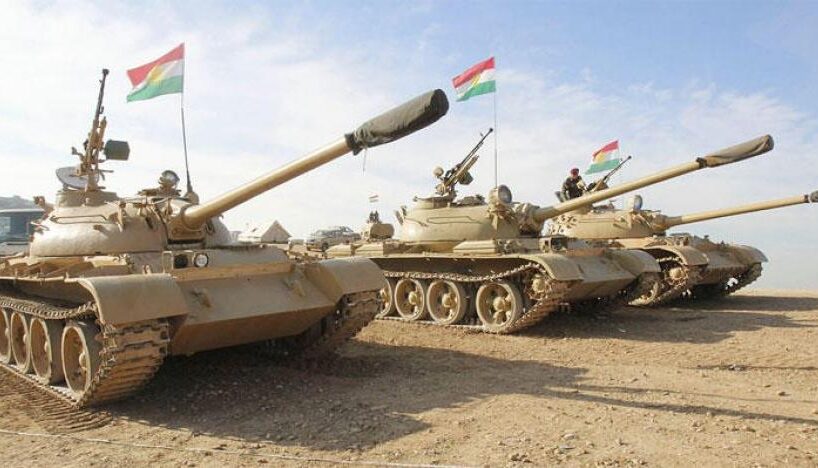
The Peshmerga, the armed forces of the Kurdistan Regional Government (KRG), constitute a highly effective and well-trained military organization that protects not only Kurdistan but also the whole of northern Iraq. The rapid disintegration of the Iraqi military in 2014, after minimal resistance to ISIS, left the Peshmerga as the sole on-the-ground force capable of halting the Islamic State’s expansion and even reversing its advances. During my recent visit to Iraqi Kurdistan for the promotion of my book, titled “Peshmerga: A Remarkable Journey from Guerrilla to Soldier,” I toured several frontline positions of the Peshmerga forces, where they are engaged in counter-terrorism operations against active ISIS cells. Initially, I visited the Brigade 14 headquarters situated in Dibak, around an hour’s drive from Erbil, the capital of Kurdistan. Over there, I met my acquaintance, Brigadier General Almi Mzuri, a seasoned officer who held numerous senior positions within the Iraqi Army over an extended period. In 2014, he joined the Peshmerga forces to protect Kurdistan from the ISIS assault. General Mzuri advised that his brigade is responsible for the Makhmour sector, including the Qarachoq mountains, and they remain on high alert owing to the persistent activity of ISIS cells. I proceeded from the Brigade HQ towards the Peshmerga border posts in the Qarachoq mountains. At all the border outposts I visited, I observed a consistent pattern: Peshmerga soldiers, despite lacking heavy and sophisticated weaponry, demonstrate remarkable motivation and determination to eliminate the remaining ISIS elements.
The Iraqi Kurds have been a pivotal component of the United States’ policy in the Middle East for more than three decades. The primary objective of the 1990 Gulf War was to reverse Saddam Hussein’s invasion of Kuwait. Consequently, the United States implemented a no-fly zone over the oil-abundant northern region of Iraq in April 1991. This facilitated the Kurds to develop their own autonomous governance structure, known as the Kurdistan Regional Government (KRG). The regional framework was strengthened following America’s invasion of Iraq to overthrow Saddam Hussein during the Second Gulf War in 2003. Consequently, the KRG developed into the most stable, reliable, and U.S.-aligned region within the country. The Peshmerga played a vital role alongside Western coalition forces in opposing Saddam Hussein’s Ba’athist regime, ultimately leading to his removal in 2003. The Peshmerga have consistently proven themselves to be the most reliable allies and dependable forces for the United States and its partners in efforts to stabilize the region and combat terrorism. Numerous times it has been proven that the Peshmerga forces are a more reliable and credible partner in comparison to the Iraqi army. The United States has fostered a longstanding relationship with the Iraqi Kurds through humanitarian and military assistance, rooted in a strong partnership dedicated to addressing the security issues in the volatile region. Regrettably, the bilateral relationship between Iraqi Kurds and the United States is at a pivotal point. A shared history fosters a connection; nevertheless, tensions are increasing owing to shifting U.S. objectives, apprehensions concerning the withdrawal of U.S. forces from Iraq and Syria, perceived disregard for KRG interests by the United States, and doubts regarding American commitment to Kurdish security. This perilous situation threatens the political, economic, and security progress attained by the Iraqi Kurds in the Middle East, with the potential to lead to violence, instability, and humanitarian crises. The Iraqi Kurds are effectively governing their autonomous region; nonetheless, they require support across various sectors to strengthen their position as the dominant force in Northern Iraq. The United States must provide support to the Iraqi Kurds regarding the following essential matters.
Air Defence System-Iraqi Kurdistan is under aerial assault from adversaries and adjacent nations, utilizing drones and missile strikes. This constitutes an unequivocal infringement upon its sovereignty. The deployment of an air defense system such as THAAD or Patriot in Iraqi Kurdistan would safeguard American strategic assets and personnel, while simultaneously sending a clear message to allies and adversaries, underscoring Washington’s commitment to defending its partners.
Support from High-Level U.S Diplomacy: Baghdad often delays the transfer of funds to the KRG, resulting in Peshmerga personnel remaining unpaid for several months. US can strengthen high-level diplomatic initiatives to facilitate a comprehensive agreement between Erbil and Baghdad regarding budget allocation, the timely release of funds, oil revenue management, and export procedures.
Supply of Heavy Weapons: The Peshmerga have received some heavy weaponry, including heavy machine guns, artillery, and infantry fighting vehicles, from allied nations such as the United States, Germany, and the United Kingdom, to combat the Islamic State and strengthen their operational capabilities. The Iraqi federal government in Baghdad opposes providing direct military support to the Kurds and aims to impose restrictions on the supply of armaments. The unwarranted apprehensions of Baghdad often deterred allied nations within the international coalition from supplying the vital military hardware to the Peshmerga. In November 2024, the United States provided twenty-four 105 mm M119 howitzers to the Peshmerga forces. Baghdad promptly conveyed its concerns to the United States and opposed the transfer of such armament to the Peshmerga. Baghdad’s objections to the supply of weaponry to the Peshmerga are unfounded, considering that the Peshmerga safeguard an extensive frontline and require heavy armaments. The United States and other international allies should enhance their assistance to Peshmerga forces, as the existing limited armaments transfers are inadequate.
The United States remains committed to maintaining strategic alliances in the troublesome Middle East, where its vital interests will continue to be under persistent threat. In a volatile region, numerous local, regional, and international actors are engaged in complex power struggles and competitive zero-sum games. Terrorism is on the rise as a result of multiple collapsed states within the region. The Iraqi Kurds and their formidable Peshmerga, located at the heart of the Middle East, are exactly what the United States needs in its most vital regions.
*The author is an Australian Geopolitical Analyst and Columnist for the Middle East and Af-Pak.
The views expressed are the author’s and do not necessarily reflect those of Shafaq News Agency.