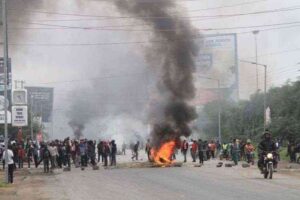
They have fewer clients and take home far less than they used to, yet their shopping baskets are smaller and cost more. Their grievance is simple: the good life they were promised during the campaign has turned into a nightmare. For this bloc of voters, the sense of betrayal is deep and loud. Some insist this bloc is gone for good, just like Mt Kenya is “gone”. Or perhaps half of it is.
This is the dominant, emotionally charged story of the moment. It fills talk shows, fuels social media rants, and animates casual conversations. It is easy to believe that this disillusionment alone will define the next election. It is equally tempting to conclude that because a significant bloc feels betrayed, the 2027 contest must be turbulent and unpredictable.
But there is a flipside to this story — one that is quieter, less dramatic, and far more consequential. It is also the reason the coming election is likely to be smooth for the President.
This bloc comprises those who did not vote for the current regime but sit slightly above the bottom of the pyramid — the elevated poor, or what Kenyans loosely refer to as the middle class. They hold the tilt. On paper, logic suggests that raids on payslips, the high cost of living, and radical changes in health and education financing should push them away from the regime. But logic, in this case, is misleading. This bloc is more likely than not to hand President William Ruto victory in 2027.
This conclusion is not drawn from opinion polls or commissioned studies. It is based on a purposive, non-scientific reading of sentiment gathered from conversations across legacy media, social platforms, interpersonal exchanges, and informal group spaces — lunch breaks with colleagues, social gatherings, quiet tete-a-tete chats, and those informal meet-ups where discourse is presumed to be elevated and rational. Yes, those ones.
Among this group, a particular worldview has taken root. They have embraced the idea of a storm before the sunrise of reform-oriented governance. Pain now, gain later. Disruption first, order afterwards. They have bought — fully — into the promise of better days ahead. Whether that promise materialises is another matter entirely.
They speak, often with confident eloquence, of rising diaspora remittances as a signal of future prosperity. They argue that infrastructure financing will create an enabling environment for investment. They insist that once infrastructure is in place, investors will arrive, skills uptake will grow, industrial production will expand, and reforms in health insurance and education will eventually bear fruit.
There is faith here — almost ideological. A belief that pain is not only inevitable but necessary. That reform must hurt. That complaining is short-sighted. That those who cannot see the long game are emotional, unserious, or trapped in old thinking.
This bloc does not deny hardship. They feel it. Their payslips show it. Their household budgets confirm it. Their postponed plans, downgraded lifestyles, and cautious spending habits all bear witness. But they have rationalised this hardship as transitional. Crucially, they see no better alternative on offer.
For them, an opposition likely to win through ethnic arithmetic — led by figures whose public standing and national ethic they question — is simply unfathomable. They rationalise the current regime by insisting, repeatedly, that the alternative is worse. Not better tomorrow — worse now, worse before, worse always.
This is where the political equation locks itself in. In their view, no candidate in the People’s Loyal Opposition can win without Rigathi Gachagua. Yet they are equally unwilling to support a candidate dependent on him. The contradiction does not disturb them; it reassures them. It confirms their belief that the opposition has no viable configuration capable of inspiring confidence.
Without him, the opposition lacks the numbers. With him, it carries baggage this bloc finds intolerable — political style, historical associations, and a perceived absence of national ethic. Either way, the opposition fails the test.
This is why the coming election may be smooth — not because the country is content, but because the decisive bloc has made peace with discomfort. They have chosen continuity over uncertainty. Reform, however painful, is preferable to reversal or improvisation. Or perhaps they have simply decided that since they know hardship, they see only hardship in any alternative.
Mt Kenya may be gone. The betrayed voter may be loud. The cost of living may be high. But elections are not won by noise alone. They are won by blocs that vote reluctantly, rationally, and consistently — blocs that rationalise imperfect choices and settle for mediocrity over perceived risk.
And that bloc — the elevated poor, the self-conscious middle class, the long-game believers — has already made up its mind.