In partnership with Mastercard
The most forward-thinking owners are already leveraging tools like AI-driven cash flow insights and embedded finance tools that sit inside their platforms of choice.
The next wave of payment innovation? It’s all about making business smarter and more secure.
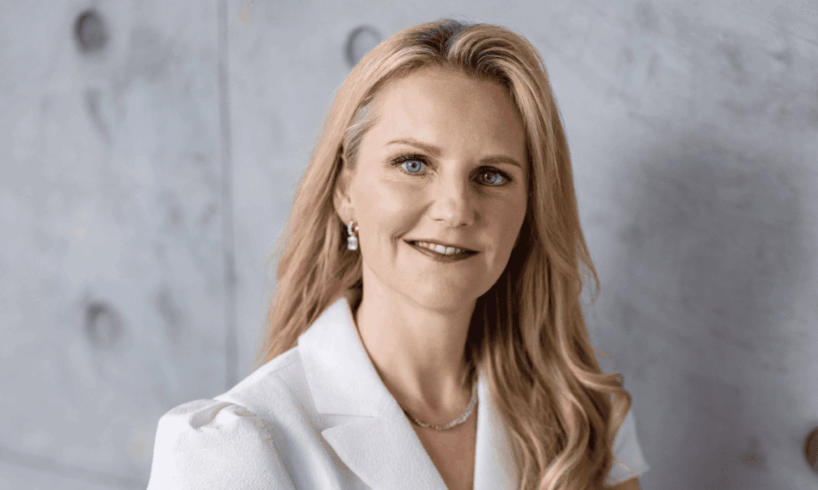
SmartCompany spoke to Anouska Ladds, Mastercard’s executive vice president of commercial and new payment flows for the Asia-Pacific region, to unpack some of the key money trends that will define the year ahead.
You’ll also discover how SMEs can get ahead of the curve with the help of the brand-new Mastercard Digital Doors™ Australia resource hub. Ready?
Smarter business news. Straight to your inbox.
For startup founders, small businesses and leaders. Build sharper instincts and better strategy by learning from Australia’s smartest business minds. Sign up for free.
By continuing, you agree to our Terms & Conditions and Privacy Policy.
Four money trends to know about in 2026
1. The digitisation of payments and expense management
Time-consuming finance tasks are holding businesses back. “Manual processes still dominate SME finance in Australia – 80% rely on paper-based expense workflows, causing delays and errors,” says Ladds.
“The shift to digital-first payment systems and automated reconciliation is accelerating, driven by cost pressures and the need for real-time visibility.”
This is about far more than mere efficiency. As Ladds puts it, digitising payments “can save SMEs thousands of hours annually and boost productivity by up to 70%”. With better forecasting and less risk of fraud, SMEs can finally put more attention on their growth ambitions – and less on needless admin.
2. Embedded finance is the ‘super app’ of B2B payments
‘Embedded finance’ is when financial tools are integrated into other systems and platforms you already use. For consumers, this appears in everything from rideshare apps to reward programs to digital wallets. For businesses, the integrations may be in accounting software, supplier portals or other non-financial platforms.
“Embedded finance is crossing the aisle from consumer into B2B ecosystems, enabling SMEs to access credit, insurance and payment tools directly within their operational platforms,” Ladds says.
It’s a trend that’s especially pronounced in Asia-Pacific, where “fragmented systems have historically slowed B2B transactions”. In fact, recent research shows that Australian SMEs have the highest appetite for embedded services compared to businesses in the US, UK, China and Singapore.
“Payments need to be embedded into platforms and processes that SMEs are already familiar with and use,” Ladds says.
The result? “Faster access to liquidity and less reliance on traditional banking structures – key to scaling in uncertain conditions.”
3. Flexible funding and access to capital
After years of volatile interest rates, your run-of-the-mill ‘credit’ isn’t always the best fit for growing companies. “With traditional banks tightening credit, non-bank lenders and fintech platforms offering adaptive repayment terms and revolving credit lines are gaining traction,” Ladds says.
These newer models “align with seasonal revenue cycles and project-based cash flows”, which gives SMEs breathing room when sales fluctuate. The biggest advantage, she adds, is resilience: “Flexibility in financing helps SMEs maintain liquidity during slow periods and invest confidently during growth phases. This resilience is essential as interest rates and inflation remain unpredictable.”
4. Real-time payments and AI-driven cash flow insights
Speed and intelligence are the new hallmarks of successful financial management, according to Ladds. “APAC is leading in real-time payment adoption, and 2026 will see AI-powered tools embedded in payment workflows for invoice matching, fraud detection and cash position forecasting.”
By the end of 2026 it is expected that about one-third of B2B payment workflows will use autonomous AI agents. That will hopefully mean speedier transactions and fewer errors – not to mention a wealth of additional data to inform smarter decision-making.
“Faster, smarter money movement reduces operational friction, improves supplier relationships. and enables SMEs to make data-driven decisions quickly,” she adds.
Leveraging data for growth
Far too many SMEs underestimate the value of the data they already hold, Ladds says.
“Data is a growth lever SMEs often overlook, but payment data can unlock powerful insights,” she explains.
Businesses can use it to “improve cash flow management, smarter marketing and customer engagement, and optimise pricing and channel strategy”.
Tracking which payment options customers prefer, for example, can help cut down on cart abandonment, while staying on top of settlement times can uncover any liquidity risks before they snowball. “Through tools like Merchant Insights dashboards, SMEs can access aggregated, anonymised data to benchmark performance, spot trends and make informed decisions.”
Where to start
If you’re ready to modernise your payments and future-proof your business, Mastercard Digital Doors™ Australia is a free hub that can help you get there faster. Ladds recommends three areas to explore:
Establish your digital presence: Learn how to build an online identity and reach more customers.
Secure and streamline operations: Upskill yourself with guides on cash flow management, cybersecurity, efficiency and much more.
Get exclusive deals: Mastercard Business cardholders can access easy savings specials through the business hub, including exclusive offers, trials and discounts on platforms like Xero, Shopify, Google Workspace and DocuSign. Offers are subject to change; terms and conditions apply.
The future of small business finance is digital and highly data driven. The SMEs that lean into these money trends early will find themselves ahead of the curve in 2026 and beyond.
Find out more at the Mastercard Digital Doors™ Australia website.
Mastercard seeks to help as many Australian retailers as possible, to grow their businesses by embracing all forms of payment to provide customers the choice to make transactions whichever way they want to, with no restrictions.