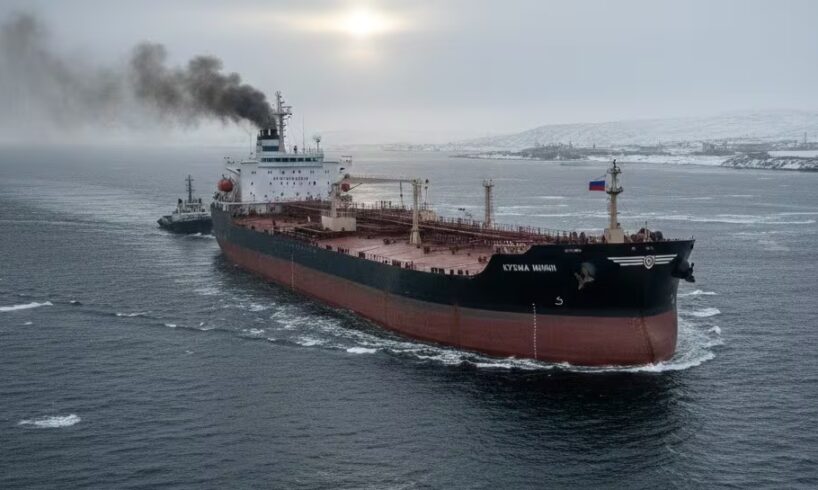
India runs on oil. Almost all of it comes from abroad. Now, two sanctioned giants—Russia and Venezuela—are competing for New Delhi’s attention. Let’s break down which one makes more sense for India economically, politically, and strategically.
India is one of the world’s largest oil consumers. To keep the country running, we need around 5 million barrels of oil every single day. That’s roughly 795 million litres daily, since one barrel equals 159 litres. Think of it this way: every car, bus, truck, airplane, factory, and power plant in India needs fuel. That’s a massive amount.
Because we don’t produce enough oil at home, India imports nearly 90% of its crude oil. This makes us one of the world’s biggest importers. Before the Ukraine war in 2022, India bought most of its oil from Iraq, Saudi Arabia, the United States, and very little from Russia. But that changed dramatically after Western countries imposed harsh sanctions on Moscow for invading Ukraine.
Add Zee News as a Preferred Source
Since 2022, India has imported nearly $144 billion (Rs 12.96 lakh crore) worth of crude from Russia, becoming Moscow’s second-largest buyer after China. The biggest reason is simple: price. Russia offered steep discounts in 2022 and 2023 because it desperately needed buyers after Western sanctions cut off its traditional markets.
Even today, Russian crude is $10 to $15 (Rs 900 to Rs 1,350) cheaper per barrel than Brent crude, which is the international benchmark currently priced around $63 (Rs 5,670) per barrel. Even after adding shipping costs, Russian oil costs India roughly $50 to $54 (Rs 4,500 to Rs 4,860) per barrel. That’s a huge saving when you’re buying millions of barrels every day. As a result, Russia now supplies about 35% of India’s oil, roughly 2 million barrels (318 million litres) per day.
But this dependence comes with growing risk. Donald Trump, now back as US President, previously threatened a 25% levy on India for buying Russian crude. He has also backed a bill allowing a massive 500% tariff on countries importing Russian oil. Imagine paying five times more just as punishment. As this pressure mounts, India has quietly begun reducing its Russian oil purchases.
According to The Indian Express, Russian crude supply to India fell to a three-year low of about 1.2 million barrels (190.8 million litres) per day in December 2025. At the same time, India’s oil import bill dropped sharply from $5.8 billion (Rs 52,200 crore) in October 2024 to just $3.55 billion (Rs 31,950 crore) in October 2025. India is clearly preparing for potential American sanctions.
So where does Venezuela fit into this picture? Right now, it barely does. In 2024, India imported just 22 million barrels (3.498 billion litres) of Venezuelan crude—only 1.5% of total imports. That’s almost nothing.
But this wasn’t always the case. In the mid-2010s, Venezuela supplied around 12% of India’s oil. In 2013, bilateral oil trade touched $13 billion (Rs 1.17 lakh crore). Venezuela has some of the world’s largest oil reserves, and Indian refineries were perfectly equipped to process its heavy crude oil.
By 2020, US sanctions and payment hurdles crushed that trade down to just $0.64 billion (Rs 5,760 crore). Venezuela’s economy collapsed, oil production plummeted, and American sanctions made it nearly impossible to do business.
Now comes an interesting twist. President Trump recently announced that Venezuela will hand over 30 to 50 million barrels (4.77 to 7.95 billion litres) of sanctioned oil to the United States. He says this oil will be sold at market price, with proceeds controlled by the US government. This could potentially open a door for India.
On paper, Venezuelan crude would likely cost around $60 (Rs 5,400) per barrel after shipping. That’s $7 to $10 (Rs 630 to Rs 900) per barrel more expensive than Russian crude for India. If priced against Brent crude, it could be even higher. So why would India consider it? Because it reduces dependence on Russia and avoids American anger.
Venezuelan oil also has another advantage: Indian refineries are already designed to process its heavy, high-sulphur crude. We have the infrastructure and expertise ready.
However, there are serious questions. Can Venezuela actually ramp up production? Will American sanctions truly ease? Will prices remain competitive? Nobody knows for sure.
For now, Russian oil remains India’s safer and cheaper bet. It’s reliable, discounted, and arrives on time. Venezuelan crude could matter tomorrow, but only if prices, production, and politics align properly.
India faces a classic dilemma: choose the cheaper option and risk American sanctions, or pay more to stay politically safe. Until the situation becomes clearer, India will keep doing what it does best—balancing economics with geopolitics, one barrel at a time. Because at the end of the day, keeping 1.4 billion people moving requires practical decisions, not just political ones.
(Girish Linganna is an award-winning science communicator and a Defence, Aerospace & Geopolitical Analyst. He is the Managing Director of ADD Engineering Components India Pvt. Ltd., a subsidiary of ADD Engineering GmbH, Germany)