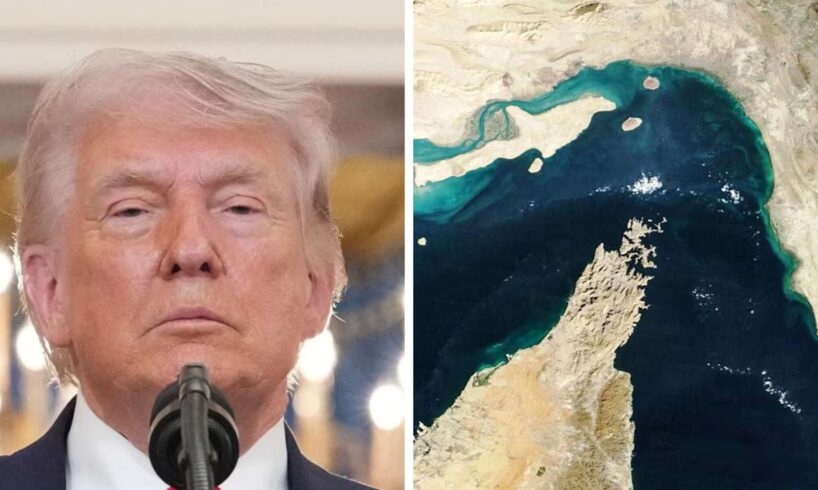
Australia has joined more than 40 countries in an urgent meeting on the opening of the Strait of Hormuz, however fell far short of Donald Trump’s calls for allies to go to the strait “and just take it”.
Mr Trump told allies in his first national address since the United States and Israel attacked Iran on February 28 to “build up some delayed courage”, but said once the conflict was over, the strait would “open up naturally”.
Iran’s de facto closure of the strait, through which about 20 per cent of the world’s crude oil passes through, has led to spiralling fuel prices.
Foreign Affair’s Minister Penny Wong joined an extraordinary meeting on Thursday night local time convened by UK Foreign Secretary Yvette Cooper to debate international efforts to reopen the sea passage.
In a statement, Senator Wong accused Iran of “deliberately inflicting economic pain” on communities, including in the Indo-Pacific.
“Australia joined partners in condemning the Iranian regime’s weaponisation of the Strait of Hormuz,” she said.
However, the focus of the meeting was on “diplomatic and civilian initiatives” countries could pursue to make the Strait of Hormuz “accessible and safe”.
“Ministers agreed on the importance of continued co-ordination and collective action,” Senator Wong said.
“Australia is not taking offensive action against Iran and we are not deploying troops on the ground in Iran.
“The Australian government continues to support de-escalation and the resolution of this conflict.
“The longer this war goes on, the more significant the impact on the global economy will be.”
Ministers reaffirmed commitment to UN Security Council Resolution 2817, which underlines that the exercise of navigational rights and freedoms by merchant and commercial vessels, in accordance with international law, must be respected, particularly around critical maritime routes.
In a separate statement, Ms Cooper, the UK Foreign Secretary, took things further, saying Iran was “trying to hold the global economy hostage”.
She said nations discussed four areas of action: increased diplomatic pressure, potential co-ordinated “economic and political measures” such as sanctions, working together with the International Maritime Organisation to secure the release of thousands of ships and sailors, and joint arrangements to support greater market and operational confidence.
Senator also spoke with Canada’s Foreign Affairs Minister Anita Anand prior to the meeting.
Officials also met during the week with counterparts from Singapore and oil-rich nation of Brunei.
On Friday, Communications Minister Anika Wells said Thursday’s meetings were “really productive”.
“They focused on what civil and diplomatic options be explored between those countries,” she told ABC.
“Obviously, emphasising we should continue to collaborate and co-ordinate where we can to get the straight open as soon as possible.”
Minister grilled on SAS
Ms Wells did not deny reports Australian special forces operatives had been deployed to the Middle East.
The Daily Telegraph reported overnight a small contingent of around 90 Special Air Services members were sent to the region two weeks ago, and were on standby in case the war in Iran escalated.
Asked if she could confirm the deployment, Ms Wells reiterated Australia was “not involved in offensive action overseas”.
“We’re in some cases helping in defence of our Gulf partners,” she said, referring to the deployment of some ADF personnel, air-to-air missiles, and an E-7A Wedgetail reconnaissance plane to the United Arab Emirates early in the war.
“The specifics of where and when our sets are deployed are operational and I can’t comment.”
Read related topics:Donald Trump
Source