Jim Chalmers has been urged to raise the GST while slashing personal income taxes rather than “fiddling” with tax concessions like capital gains if he’s serious about fixing the country’s financial mess.
AMP chief economist Dr Shane Oliver on Tuesday outlined his top five recommendations for the Treasurer in next month’s budget, urging the government not to go down the short-term “populist” path of cost-of-living measures to ease the Iran war fuel shock at the expense of long-term reforms.
It comes after the Treasurer on Monday flagged “a whole range of changes in the tax system” to address “intergenerational unfairness”.
“This budget will be a responsible budget — it will be focused on resilience and reform,” Mr Chalmers told reporters in Canberra.
“There’ll be tax reform, there’ll be a productivity push, and there will be savings … We have been really upfront for some time now in saying that we do think that there is intergenerational unfairness in the tax system and in the housing market.”
Labor is considering a range of tax changes in the budget, including scrapping the 50 per cent capital gains tax discount — available to investors when they sell a property after more than 12 months.
The Howard-era concession has widely been seen as distorting the housing market in conjunction with negative gearing, when rental losses are deducted against other income.
Limits on the number of properties that can be negatively geared are also being considered, alongside a minimum tax on trusts, an export levy on gas producers and moving to a road user charge to include electric vehicles.
Dr Oliver said each of the ideas had “merit” but “if this is all the budget has on tax, it will be a tax hike and not real tax reform”.
“Just fiddling with a few tax concessions in the budget will amount to nothing more than a tax hike, will likely make the tax system even more progressive working against incentive and do little to relieve housing affordability (which is due to the housing undersupply) or intergenerational equity beyond appearances,” he said.
“What is needed is simple: much lower personal tax rates with higher thresholds; a lower corporate tax rate; a higher and more comprehensive GST; compensation of low-income earners and welfare recipients for increasing the GST; the indexation of tax brackets to inflation; and the removal of stamp duty and its replacement with land tax.
“The shift in reliance from income tax to GST is the best way to improve intergenerational equity. This would take political courage, but is the direction we should be moving in.”
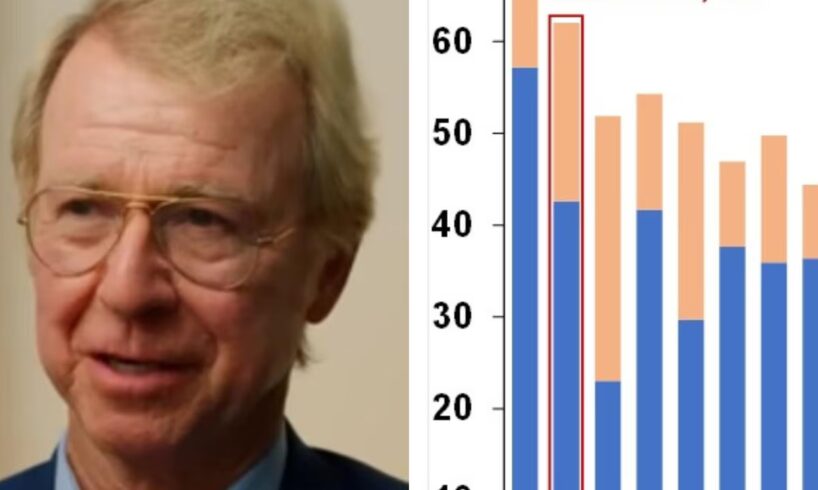
Dr Oliver said Australia was overly reliant on “highly distortionary” personal income taxes, which make up 62 per cent of tax collections, nearly double the OECD average of 35 per cent.
Data from the Australian Bureau of Statistics (ABS) on Tuesday revealed Australians paid a total of $839 billion in taxes across all levels of government in the latest financial year, up 4.7 per cent.
The total Commonwealth income tax bill for individuals rose nearly $7 billion to $347.1 billion.
Australia’s current top marginal tax rate of 47 per cent, which applies to every dollar earned over $190,000, is higher than comparable countries and kicks in at a “relatively low multiple of average weekly earnings”, Dr Oliver said.
As a result, the top 5 per cent of taxpayers pay around 37 per cent of all income tax, and the top 10 per cent pay nearly 50 per cent.
“This likely discourages work effort and hence productivity,” Dr Oliver said.
“A GST is a far more ‘efficient’ tax than income tax and a greater reliance on it versus income tax will boost productivity. The high reliance on income tax also creates equity issues as the ageing population will see an increasing burden placed on younger workers to foot rising health and aged care bills whereas self-funded retirees are taxed lightly.”
At the same time, the government is banking on stealth tax increases via bracket creep — when inflation pushes workers into higher tax brackets never intended for them — to get the budget back into balance over the next decade.
“The ideal solution is to index the tax brackets by 2.5 per cent (the inflation target) each year,” Dr Oliver said.
“This will keep the government accountable by forcing them to pass higher tax rates through Parliament if they want more tax revenue.”
Dr Oliver also urged the Treasurer to cut government spending by around $100 billion to bring it back as a share of GDP to longer-term norms — from 28 per cent to around 22.5 per cent — and constrain spending growth to 3 per cent.
“This would require cuts to the NDIS (with the government looking like it might move in this direction), more aggressive cuts to the public service and more means testing of welfare,” he said.
“This would also require the government to ‘save’ most of any new revenue windfall flowing from higher energy prices due to the war and higher than expected iron ore and gold prices (which has been put at between $30-$60 billion over the forward estimates) as it did in its first budget in October 2022 when 81 per cent of it was saved.”
The budget must also include significant productivity-enhancing reforms, he argued.
Australia’s productivity growth — growth in output per hour worked — has flatlined over the past decade, in part due to the explosion of “non-market” taxpayer-funded portions of the economy like disability, aged care and health.
“Limiting public spending (to make room for more productive private spending) and fundamental tax reform are critical,” Dr Oliver said.
“In particular, it’s critical that the budget have a focus on product and labour market deregulation to remove red tape, boost flexibility and make it easier to get things done and to provide more incentives for companies to invest.”