Save
You have reached your maximum number of saved items.
Remove items from your saved list to add more.
AAA
Prosecutors will launch an appeal after a teenager accused of telling a youth detention inmate he knew how to make bombs to “blow up the whole of Melbourne” was released on bail.
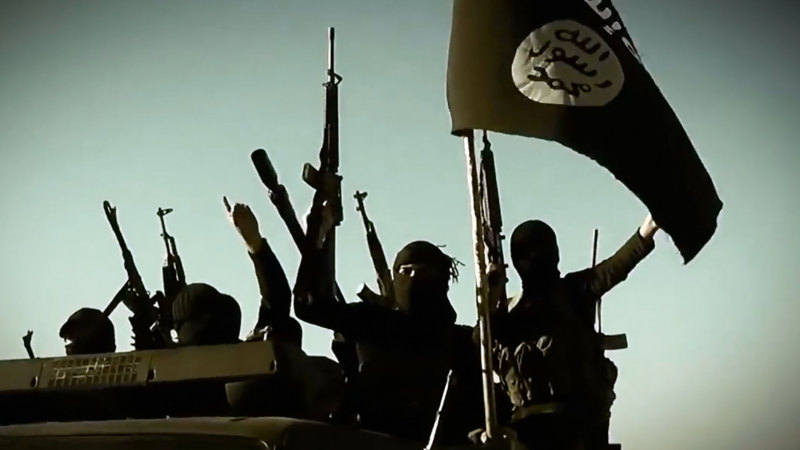
The now 18-year-old was arrested in March after counter-terrorism authorities were tipped off that he had allegedly ordered a custom-made Islamic State flag, which led to the discovery of a cache of violent terrorist material including several bomb-making manuals and data that showed he had been searching for nearby synagogues and Melbourne’s busiest intersection.
The teen, who cannot be identified, has been held in youth detention ever since.
Prosecutors allege the teen was found in possession of Islamic State material. File photo.
A judge told a children’s court on Thursday it was an “arduous, long decision”, but he ultimately granted the teen bail after reading an expert’s report.
Related Article
The teen’s bail conditions, described by the judge as “strict”, include 24-hour electronic monitoring, a nightly curfew, restricted access to electronics and frequent reporting to a police station.
The prosecution said they would appeal the decision after arguing the teen was an unacceptable risk to the community, and arguing that no conditions could alleviate the risk he posed.
The Commonwealth Director of Public Prosecutions’ office has been approached for comment.
Australian Federal Police and Victoria Police officers raided a home in Melbourne’s north on March 24, which the year 12 student shared with his parents and siblings.
The arresting officers discovered the cache of extremist material held on a USB, phone and computer belonging to the teenager, the court heard.
Related Article
He was initially charged with one count of collecting or making documents that facilitate a terrorist act and one count of importing a prohibited object.
The teen’s files allegedly included several bomb-making manuals, including an al-Qaeda video depicting a man in a balaclava instructing viewers on how to make TNT, as well as a step-by-step guide for train derailment devices.
The teenager is accused of using Apple Maps to search for nearby synagogues and repeatedly searching for Melbourne’s busiest intersection.
He allegedly frequently visited several pro-IS and al-Qaeda sites and stored pro-IS material on his phone, and is accused of actively searching for antisemitic material.
The judge said a report by a forensic psychiatrist and extremism expert was the defining factor in his decision to grant the accused bail.
“His work clearly identifies [the teenager’s] needs,” the judge said. “He does not identify them in the abstract, but how they relate to any risk to the community.”
The psychiatrist noted the youth’s alleged behaviour supported a legitimate concern that he had been working toward lone-actor terrorist violence. However, the psychiatrist said there was no evidence of imminent violence.
“From what I’ve seen of the material and searches, I think he was, at most, at the stage of researching what he may have been thinking of doing … as opposed to gathering materials or any of those kinds of steps,” the expert told the court.
Related Article
He said the teenager’s undiagnosed autism and social isolation, among other identity issues, made him more susceptible to accessing terrorist material.
The psychiatrist found effective treatment would include engagement with a pyschologist to work through why the accused accessed the material, the court heard.
As part of his bail conditions, the teen has been ordered to avoid all synagogues and busy intersections in Melbourne’s CBD.
In a previous hearing, the court heard that days after the teen’s arrest, he told another detainee he could teach him how to make explosives to “blow up the whole of Melbourne”.
In a letter written to the court from custody, the teenager said he had made some “serious mistakes”.
He described his time in youth detention as difficult, and that it forced him to reflect on his behaviour. He added that he regretted the distress caused to his parents and missed his family.
Various expert witnesses described the teenager’s family as highly supportive who had already engaged with youth justice. Several community organisations and the teen’s school had also offered their support.
Get alerts on breaking news as it happens. Sign up for our Breaking News Alert.
Save
You have reached your maximum number of saved items.
Remove items from your saved list to add more.
Carla Jaeger is a journalist for The Age. Got a tip? Email [email protected] or message carlajaeger.62 on Signal.Connect via X or email.