By Guest Blogger. Any opinions expressed are those of the author(s), and do not necessarily reflect the views of Iraq Business News.
1. A historic volume of agreements – 48 in total
A total of 48 agreements, memoranda of understanding, cooperation agreements and partnership declarations were signed between public and private sector entities in Iraq and the United States during the five-day visit. In total, Iraq’s initial agreements with US firms, spanning the energy, healthcare and technology sectors, are worth more than $60 billion.
2. Major oil and energy companies ink deals
The agreements include cooperation and partnerships involving the Iraqi ministries of oil and electricity with ExxonMobil, KBR, GE Vernova, Shell and Halliburton. Chevron also signed two additional agreements with Iraq focused on boosting oil production.
3. Iraq-Syria crude oil pipeline to be revived
Iraq and Syria signed a cooperation agreement to reconstruct the long-defunct Iraq-Syria oil pipeline, which runs from the oil-rich Kirkuk region in northern Iraq to Syria’s Mediterranean port of Banias [Baniyas]. Iraq’s state news agency reported that Chevron would carry out the project. The US Department of State welcomed the plan, stating that upon rehabilitation the pipeline would have an initial transport capacity of two million barrels per day.
4. Pipeline deal framed as making Hormuz “an afterthought”
US ambassador to Türkiye Tom Barrack said Iraq’s latest oil pipeline agreements would lead to a programme “that will make the Strait of Hormuz an afterthought.” The deals come as Baghdad seeks to move away from dependence on the Strait of Hormuz, where shipping and oil exports have been heavily disrupted due to the US-Israel war against Iran.
5. Starlink deal for satellite internet services
Iraq signed a deal with Starlink to introduce services to the country. This forms part of a broader push to attract US companies across the technology sector.
6. Oil production ambitions front and center
Al-Zaidi said Iraq seeks to increase oil production to seven million barrels per day over the next three years, up from its current output of about 4.5 million bpd. A sovereign wealth fund structured around oil exports was also discussed as a vehicle for funding future development.
7. US companies given priority across key sectors
Al-Zaidi’s government said it would prioritise US companies in energy, communications, technology and development projects, with the prime minister stating his goal is to move bilateral relations “from a phase of security cooperation to a sustainable economic partnership.“
8. Deals signed at a US-Iraq Business Summit
The preliminary deals were signed at a US-Iraq business summit at the US Chamber of Commerce in Washington. Al-Zaidi told attendees: “We are using an open-door policy. Everybody who has a project can come and talk to us. We will not make it difficult for anyone.“
9. Corruption crackdown cited as a confidence-builder for investors
Al-Zaidi has launched a corruption crackdown, with raids yielding millions of dollars in seized assets, a signal intended to reassure US partners that Baghdad is serious about improving the business environment.
10. Strategic shift from security to economic partnership
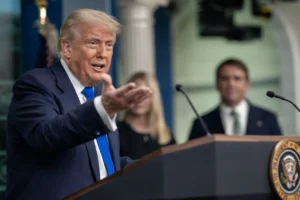
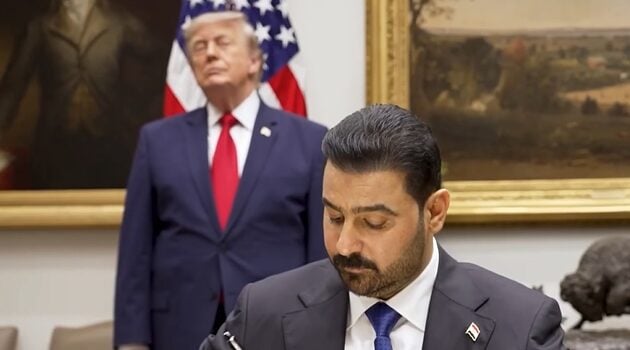
Al-Zaidi said discussions with Trump focused on strengthening bilateral relations, expanding economic cooperation and creating opportunities for American companies to participate in development projects in Iraq, particularly in the energy sector, stressing the importance of building commercial ties rather than focusing solely on military cooperation.