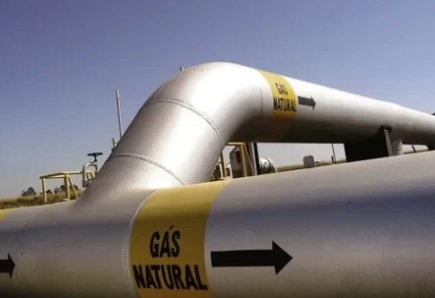
The progress of biomethane connection projects to the piped gas distribution grid in São Paulo without prior assessment of their connection to the Natural Gas Transportation System (STGN) may result in higher rates, according to the local natural gas transporters association ATGás.
The largest gas consumer in Brazil, São Paulo has three concession areas for piped gas distribution, operated by Companhia de Gás de São Paulo – Comgás (Eastern Area), by Necta Gás Natural S.A. (Northwestern Area) and by Naturgy Distribuidora de Gás S.A. (Southern Area). The STGN interconnects these areas.
In a letter sent to the National Agency of Petroleum, Natural Gas and Biofuels (ANP) and to the Energy Research Company (EPE), ATGás calls for coordination between the federal bodies and the São Paulo State Public Services Regulatory Agency (Arsesp) so that biomethane projects and interconnection between concession areas are required to include comparative studies on the feasibility of connection to the STGN.
The association claims that the regulatory framework in São Paulo for the expansion of biomethane has been built without systematically considering this alternative. According to the entity, this may compromise the economic efficiency of the gas infrastructure, reduce the utilization of transport gas pipelines, and put pressure on the tariffs paid by users.
ATGás cites as examples the regulation of the interconnection of biomethane plants to distribution networks, studies on swap operations, Necta’s public call for connection of producers, and the public consultation on the Green Distribution System Use Agreement (CUSD-Verde). In the entity’s assessment, none of these initiatives requires entrepreneurs to demonstrate whether direct connection to the transportation system would be a more efficient alternative.
The association also emphasized that some of the interconnection projects improperly consider the full operation of the Subida da Serra gas pipeline, whose transport capacity exceeds the volume of gas consumed in Comgás’s concession area, “it being certain that the current classification of said pipeline by ANP is for transport and that the matter is under discussion in the courts.”
In the letter, ATGás also notes that a technical note from ANP itself has already indicated that interconnection between distributors can reduce the demand for natural gas transportation, raise tariffs and create a “gas island” in the state of São Paulo. For the entity, this risk increases when biomethane projects are directed exclusively to distribution networks without a comparative analysis with the STGN.
Contacted by BNamericas, Arsesp said the projects to interconnect gas distribution networks and connect biomethane plants to São Paulo’s pipeline distribution system comply with the legal and regulatory framework governing local gas distribution services, which fall under state jurisdiction under Brazil’s Constitution.
According to the regulator, the interconnection of distribution networks is also предусмотрed in the concession agreements and forms part of the São Paulo state government’s strategy to develop the piped natural gas market.
Arsesp noted that São Paulo has a unique market structure, with gas distribution split among three concessionaires. In this context, interconnecting the concession areas represents an evolution of the existing infrastructure, with the potential to enhance system integration, increase operational flexibility and strengthen security of supply.
Regarding biomethane, Arsesp said connecting production plants to the distribution network supports regional development, the circular economy and the energy transition.
The regulator added that it has already approved six biomethane projects in the state, including an isolated network in the municipality of Presidente Prudente and four plant interconnections in Piracicaba, Américo Brasiliense, Paulínia and Itapevi, with the potential to inject around 500,000m³/d of biomethane into the distribution network.
Institutional harmonization
Attorneys Maria Amélia Braga, a partner at TAGD Advogados, and Luis Marcello Chipp, who specializes in natural gas and the power sector, believe that it is still necessary to demonstrate, based on data, that the biomethane projects under discussion have the potential to affect transportation system planning, given the apparently still limited volumes being handled.
For them, it is advisable that ANP’s actions focus, at this moment, on institutional harmonization and the sharing of technical guidelines.
“This harmonization strengthens the integration of the sector, prevents isolated decisions and contributes to systemic efficiency, without this implying any shift in the regulatory powers assigned to each federative sphere,” they told BNamericas.
The lawyers pointed out that most of the Brazilian pipeline network corresponds to the state distribution networks, and not to the transport gas pipelines.
“Thus, any institutional coordination mechanism must recognize the strategic role of distributors in expanding service to consumers and avoid interpretations that may result in an overlap of ANP’s actions in relation to the decisions that are the responsibility of state regulatory agencies”, Braga and Chipp concluded.
Arsesp did not respond to the contact made by the report to comment on the matter.
(The original version of this content was written in Portuguese)