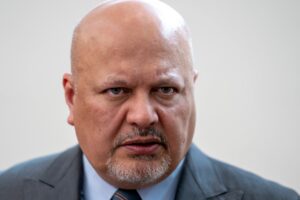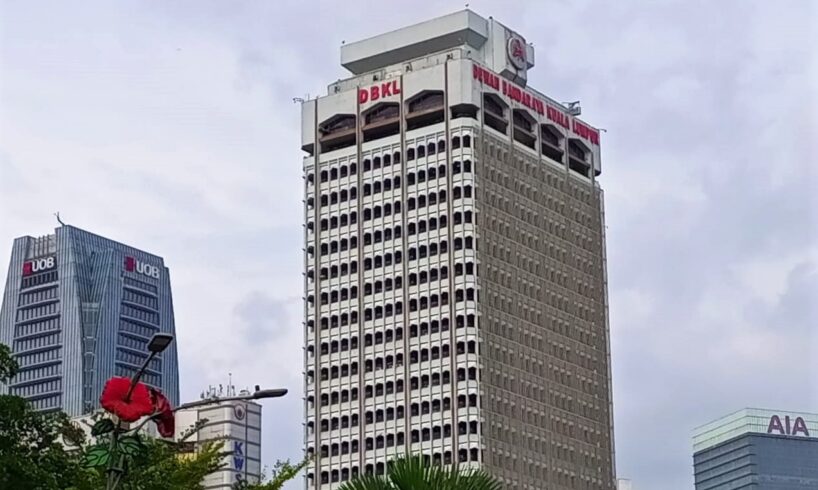
Former Kuala Lumpur City Hall advisory board member Lai Chen Heng says the city does not need more watchdogs in the form of appointed councillors. Instead, the federal capital needs a professionalised, digitised, and autonomous administration that respects the separation of powers.
I would like to thank the Public Accounts Committee (PAC) and its chairperson, Datuk Mas Ermieyati Samsudin, for their blunt and honest feedback on the governance challenges facing our capital.
The PAC’s reports have highlighted critical friction points, including their frustration regarding the government’s refusal to amend the Federal Capital Act 1960 to introduce an appointed councillor system.
We all want the same thing: a better, more transparent, and effective Kuala Lumpur. However, I must respectfully reject the PAC’s proposed remedy of having an appointed councillor system for Kuala Lumpur.
While the PAC views such a system as leading to greater accountability and efficiency in the city council, in an age where Kuala Lumpur needs to move fast, adding a new layer of “watchdogs” is not the solution the city needs. It is merely a recipe for gridlock.
Reforming an institution like Kuala Lumpur City Hall is unlike updating software. The council is a beast entangled in a sprawling, rigid civil service framework. While our systems are models of procedural compliance on paper, the picture on the ground is entirely different.
Consider the challenge of enforcing city regulations, such as those against illegal traders. To initiate a simple crackdown, the meeting room must reach a consensus between the Royal Malaysia Police, various City Hall departments, the Immigration Department, and, in some cases, the Health Ministry. In these rooms, time is not spent on enforcement but on draining, circular arguments over jurisdiction. The refrain “who has the authority?” is the anthem of our administrative deadlock.
Introducing a councillor system into this environment would not break these stalemates. It would merely add another voice to the table, requiring another briefing, another committee hearing, and another signature before any action can be taken. We don’t need more people at the table; we need the table cleared of deadlocks.
This bureaucratic paralysis has tangible consequences for the people of Kuala Lumpur. Consider the Prime Minister’s ambitious aspiration to position our capital as a “City for All,” particularly for lower-income groups. In 2023, he set a target of 80,000 new affordable homes under the Rumah Madani, Malaysian Civil Service Housing, and RumaWIP programmes. Yet, we must confront reality and ask ourselves how many of these 80,000 units have reached fruition today?
The fault does not lie with our leadership’s direction but with the multi-dimensional pressures and stagnant bureaucratic processes that keep development in a state of suspended animation. If we complicate our governance structure further by adding layers of political watchdogs, we risk burying these national agendas under even more red tape.
While the PAC’s recommendation for appointed councillors was mooted in relation to their report on the lack of checks and balances regarding legal land sales in the federal capital, there appears to be a fundamental misunderstanding concerning the role of our elected representatives.
By questioning the lack of MPs engaged in land development, the PAC’s report pushes us towards a culture where we expect politicians to wade into issues related to permits and local authority matters. The country requires development that moves beyond the speed of local disputes; we cannot afford to have our lawmakers bogged down in the minutiae of local permits and site approvals. At the same time, we must respect the technical expertise of our civil servants. They are trained professionals well-versed in urban planning and tasked with executing the national agenda with a long-term perspective.
There is often a disconnect here. For example, residents might protest against a bicycle lane because it causes them inconvenience today, but City Hall must plan for the future, prioritising the infrastructure required for a sustainable Smart City. We need the technical autonomy of our administrators to drive these complex, long-term decisions, free from the political pressure of short-term popularity.
The government is currently choosing a path of internal, evolutionary reform, and this is the correct approach. We have seen tangible progress through 16 governance and administrative reforms implemented in recent months, including:
· The abolition of the special One-Stop Centre (OSC) committee: removing political meddling from approvals, and providing MP access to the OSC 3.0 Plus portal for real-time transparency to track applications.
· The shift to e-tendering and open procurement: ensuring contracts are awarded based on merit, not connections.
· The full digitisation of licensing: cutting out the “middlemen” who profit from complexity.
These initiatives are working. They are streamlining the system from within, proving that the existing infrastructure is capable of excellence if managed with integrity and digital tools.
Above all, we must respect the constitutional framework. Kuala Lumpur is a Federal Territory, and the Federal Capital Act 1960 is tied to powers defined under the Yang di-Pertuan Agong. Amending this Act is a major constitutional step, not a simple tweak.
In a time of economic and social volatility, we cannot gamble with the foundations of our institutions. We don’t need more watchdogs; we need a professionalised, digitised, and autonomous administration that respects the separation of powers.
Let our MPs focus on legislation, and let us continue to pressure City Hall to modernise its internal engine. We have proof that this works; we just need the patience to see it through.
The future remains uncertain. There may be an era of a councillor system or even the return of local elections down the road. But for now, we don’t need them. What we need is institutional reform from within.
The views expressed here are the personal opinion of the writer and do not represent those of Twentytwo13.