Shafaq News
Iraqi women have secured a stronger voice in parliament, entered more
government positions, and gained greater visibility in public life. Yet inside
homes across the country, many continue to face violence with limited legal
protection.
The contrast has become one of the most persistent challenges facing
women in Iraq. While conferences, government initiatives, and public
commitments continue to focus on women’s empowerment, thousands of domestic
violence cases are reported every year, while survivors often struggle to find
effective protection or justice.
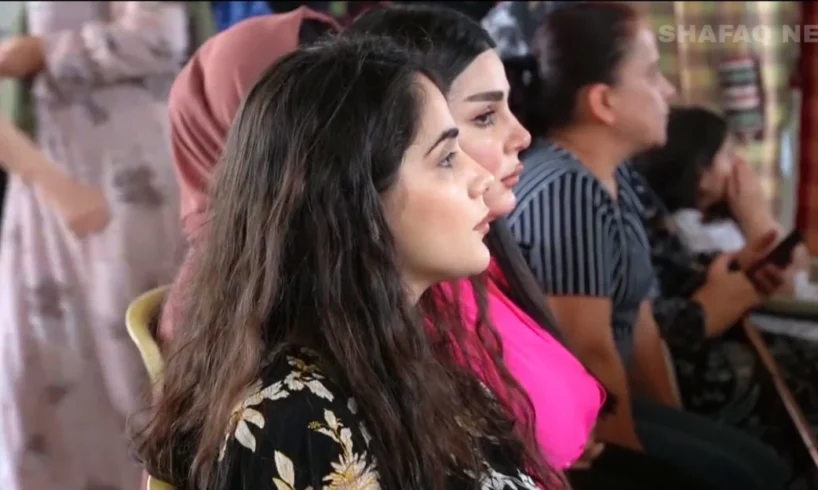
The latest debate emerged during the 18th Islamic Conference on
Combating Violence against Women in Baghdad, where officials, lawmakers, and
civil society representatives gathered to discuss ways to protect women and
strengthen their role in Iraqi society.
For rights advocates, the importance of such events depends more on what
follows: stronger legislation, functioning institutions, and practical measures
that can protect women when violence occurs.
Recent figures show the scale of the challenge.
The Iraqi Observatory for Human Rights recorded 36,289 domestic violence
cases in 2025, including 19,587 cases involving husbands assaulting their
wives. The organization warned that the figures likely represent only part of
the problem, as many victims do not report abuse because of social pressure,
fear of retaliation, or economic dependence.
The Interior Ministry registered more than 16,000 domestic violence
complaints during the first half of 2026, including more than 9,000 cases
involving husbands assaulting their wives, according to figures presented
during the Baghdad conference.
Behind those numbers is a wider social problem shaped by years of
conflict, economic hardship, unemployment, and attitudes that rights groups say
continue to discourage women from seeking help.
Read more: Quotas without a cause: Iraqi Women counted, rights discounted
Quotas versus Authority
Iraq’s Constitution guarantees women at least 25% of seats in
parliament, a quota designed to ensure female participation in the country’s
political system. Women currently hold 82 of the 329 seats in Iraq’s Council of
Representatives, meeting the constitutional requirement and giving women a
significant presence in national politics.
Their role has also expanded beyond parliament. Women have increasingly
taken positions in government institutions, universities, the judiciary, and
public bodies, reflecting gradual changes in a political system historically
dominated by men.
But activists and lawmakers argue that representation alone has not
translated into equal influence over decision-making.
Sarwa Abdulwahid, recently appointed as Environment Minister, is the
only woman serving in Prime Minister Ali al-Zaidi’s cabinet, compared with
three female ministers in the previous government led by former premier
Mohammed Shia al-Sudani.
Member of Parliament Shaimaa Abdul Sattar noted that Iraqi women
continue to face barriers in reaching senior government positions despite
having the qualifications and experience required.
Speaking to Shafaq News, she maintained that women remain
underrepresented in ministries and sovereign positions, arguing that political
arrangements between major blocs often continue to favor men when leadership
posts are distributed.
“Iraqi women have proven their ability to manage ministries and state
institutions,” Abdul Sattar stated, pointing out that appointments should be
based on merit rather than political considerations.
Read more: Iraq’s Women: Fighting for rights in a patriarchal stronghold
Closing Legal Gaps
For many rights advocates, the central challenge is no longer only
increasing women’s participation in public life but ensuring that women have
legal protection when they face violence.
A new legislative step has reopened the debate after the Iraqi
Presidency submitted the Draft Law on Anti-Domestic Violence in Iraq to
parliament for discussion.
The proposal represents the latest effort to create a dedicated legal
framework for domestic violence after years of calls from activists and rights
organizations for stronger protections.
The draft introduces several changes that supporters believe could
reshape Iraq’s response to domestic abuse. It expands the definition of
domestic violence beyond physical assault to include threats, psychological
harm, and other forms of abuse committed within the family.
It also introduces a protection order system that would allow courts to
intervene quickly when women face danger. Under the proposal, victims could
request protection measures, while courts would have the authority to prevent
alleged abusers from approaching victims or contacting them.
The draft also seeks to establish a wider support system by creating
specialized institutions to handle domestic violence cases, including family
protection mechanisms, specialized courts, and safe centers where survivors can
receive protection, care, and rehabilitation.
Another proposed change would require certain public employees,
healthcare workers, education workers, and social service providers to report
suspected domestic violence cases while protecting the identity of those who
submit reports.
For rights advocates, these measures address some of the biggest
weaknesses in Iraq’s current system: the lack of specialized procedures,
limited protection options, and the tendency for abuse cases to remain hidden
inside families.
Read more: Fired for motherhood: The hidden toll on Iraqi women
Shielding the Abuser
The push for new legislation comes amid continued criticism of existing
legal provisions.
One of the most debated issues is Article 41 of the Iraqi Penal Code,
which has been criticized for potentially allowing violence to be justified
under the concept of the “right to discipline.”
The Iraqi Observatory for Human Rights maintains that, in the absence of
an independent anti-domestic violence law, serious abuse cases can sometimes be
treated as private family disputes rather than criminal acts.
The watchdog also warned that this legal gap has contributed to cases
being pushed toward tribal settlements, a practice the Observatory believes can
undermine victims’ rights and allow perpetrators to avoid accountability.
The proposed Draft Law on Anti-Domestic Violence in Iraq attempts to
address that gap by creating clearer procedures for reporting abuse, protecting
victims, and holding offenders responsible.
The draft also introduces penalties for violating protection orders and
allows courts to provide compensation to victims, adding financial and legal
consequences for abuse.
However, the proposal still faces its most important stage: whether it
will gain parliamentary approval and whether state institutions will have the
capacity and willingness to enforce it.
Read more: Iraq advances sexual assault documentation with new guideline
Actions, Not Speeches
For rights advocate and academic Bushra al-Obaidi, Iraq’s challenge is
not a shortage of discussions on women’s rights, but the gap between repeated
commitments and meaningful change on the ground.
Speaking to Shafaq News, al-Obaidi noted that women’s issues have often
been reduced to slogans, while years of conferences, initiatives, and public
pledges have delivered limited improvements in the daily lives of many Iraqi
women.
“Priority should be given to practical legislation and policies that
strengthen women’s position across all sectors,” al-Obaidi remarked, adding
that appointing women to senior positions carries little value without a
broader commitment to protecting their rights and ensuring their participation
in society.
She also reflected on her changing view of Iraq’s parliamentary quota
for women. While she previously supported the system, she questioned whether it
has achieved the progress many women had expected, noting that “increased
political representation has not necessarily translated into better conditions
for women across the country.”
“Many violence cases remain hidden because victims fear social stigma,
family pressure, or losing economic support,” she added, as violence against
women extends beyond physical abuse to include psychological violence, economic
control, forced marriage, and online blackmail.
Online blackmail has also emerged as a growing concern, with women and
girls increasingly targeted through social media platforms, where private
material is sometimes exploited as a means of intimidation or extortion.
At the Baghdad conference, researcher Suhad al-Shammari stressed the
importance of strengthening women’s role in Iraqi society while recognizing the
progress women have made in government institutions and the private sector.
“Protecting women from exclusion and marginalization remains essential
to allowing them to expand their educational, economic, and social
opportunities and contribute more effectively to their communities,” she noted,
cautioning that the real progress will ultimately be measured by whether Iraqi
women can access safety, justice, and protection when they need it most.
Read more: The new blackmail in Iraq: AI and the exploitation of women
Written and edited by Shafaq News staff.