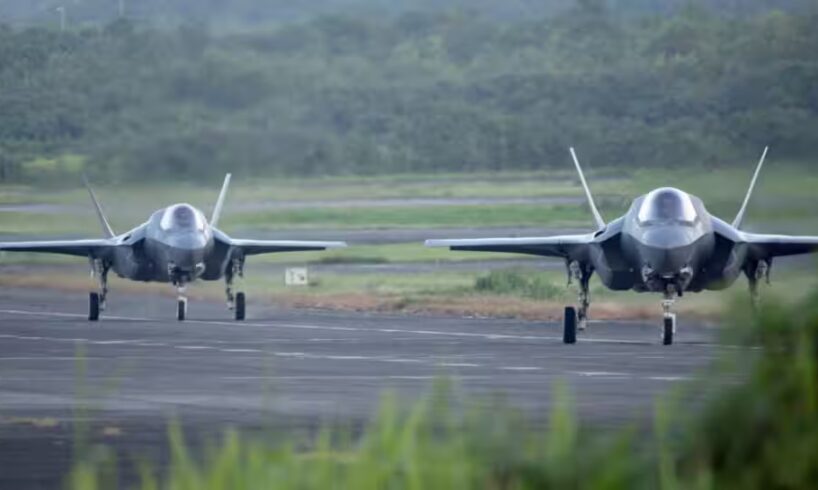
New Delhi: The ongoing war between US-Israel and Iran has revealed a new dimension of modern warfare. Tehran’s carefully executed drone and missile strikes have placed even the United States on the defensive. Analysts say Iran’s strategy has made highly expensive fighter jets and missile systems, including F-22s, S-35s and Israel’s Iron Dome, appear vulnerable.
The world is watching how a smaller and resource-limited country can impose costs on superpowers without large-scale conventional arsenals. India has started to study this, exploring ways to build a smart and cost-effective response to potential regional threats.
A growing need for smart defence
Add Zee News as a Preferred Source
India faces a complex security challenge. China continues to expand its military capabilities, deploying fifth-generation fighter jets, hundreds of missiles and naval assets while establishing overseas military bases. Pakistan operates as a proxy threat in the region. India cannot match China’s scale or defense spending.
For New Delhi, preparing a strategy similar to Iran’s, one that leverages advanced drones and missiles for targeted and high-impact operations, is becoming critical.
The rise of indigenous long-range drones
Iran’s Shahid-136 drone has become a symbol of its unconventional advantage, wreaking havoc across multiple Arab countries. Reports indicate that Iran possesses tens of thousands of such drones, which are capable of precise attacks over long distances.
India is now following suit. Private companies and startups have entered the battlefield of indigenous drone production, focussing on long-range loitering attack drones that self-destruct after completing their mission.
Leading the effort, Solar Industries India Limited, in collaboration with the National Aerospace Laboratories in Bengaluru, is developing drones with a 900-1000 km range. These drones can deliver up to 25 kg of explosives, use India’s NAVIC satellite system for guidance and stay in the air for hours before attacking.
They are designed to operate in swarms, overwhelming enemy defenses with precision and speed.
Other players include Hyderabad-based VEM Technologies, which is developing the Chaser loitering drone equipped with advanced electro-optical targeting systems capable of nearly 100% precision.
Noida’s IG Defence Project has introduced the Delta-wing Kal attack drone, which is capable of reaching 1,000 km with a flight endurance of three to five hours. It is designed to disable enemy radars and logistical hubs.
These platforms are being developed in parallel, showing a broader strategic change in India’s defense acquisition policies that emphasises speed, cost-efficiency and private sector innovation.
Why this strategy matters
India’s domestic fighter jet programme still lags behind international competitors. The country’s present air assets include 36 Rafale jets, with plans for an additional 114, while the Tejas Mark-2 is not fully operational.
By contrast, China operates hundreds of fifth-generation fighters, totaling roughly 2,000 aircraft, some of which could potentially be transferred to Pakistan. The Indian Air Force (IAF) has just over 600 fighters, making raw numbers insufficient to counter multiple threats simultaneously.
Drones offer an asymmetric advantage. They are cost-effective, quickly deployable and capable of inflicting significant damage without committing large manned aircraft. Lessons from Operation Sindoor, when hundreds of Turkish-made drones targeted India but were neutralised by air defenses, have reinforced the importance of domestic drone development.
Iran’s war further validates the approach, proving that drones can change power dynamics even against technologically superior opponents.
The path ahead
India is now charting a course to integrate long-range and AI-enabled drones as a core component of its future military strategy. These systems promise not only to enhance national security but also to establish India as a competitive player in the emerging international drone market.
The emphasis on loitering, precision and affordability mirrors Iran’s tactics and could redefine India’s defense posture in the decades to come.