“I find it difficult to think Samoa isn’t running rife with who it is,” Judge Jelas said at that hearing, referring to the country where Afoa grew up and where she recruited the workers from.
The judge declined the suppression application, but Afoa’s lawyers filed a second appeal with the High Court at Auckland, hoping again to have the district court judge’s decision overturned.
They didn’t succeed.
Most details of the name suppression appeal, however, remain suppressed.
Cash hidden in paperwork
Authorities began investigating Afoa, who owned Auckland-based painting business Poly Painters, after a Crime Stoppers tip in 2020. They examined seven years of her business operations, during which she would frequently travel to Samoa.
“As part of the recruitment process, [she] would either directly or indirectly sponsor a worker’s visitor visa; manage the process of applying for visas through Immigration New Zealand; and pay for their visa-related fees and airfares,” court documents state. “[She] would often use her own extended family or friends to sponsor the workers.”
Auckland painting business entrepreneur Latifah Afoa was sentenced to prison in 2025 for migrant worker exploitation and bribery. Photo / Supplied
What she didn’t tell the recruits was that the visas she had obtained for them didn’t allow employment.
When they arrived in New Zealand, the employees were told they’d be paid a flat rate of $100 per day. The business, meanwhile, charged between $17 and $25 per hour for the workers’ services. Afoa breached minimum wage requirements, although not by enough to result in additional charges, Judge Jelas said.
“I point out any shortfall, for a worker earning a minimum wage, is significant,” the judge said.
But it was the lack of holiday and sick leave pay that was the basis of the exploitation charges. Authorities calculated she owed the six listed victims more than $17,000. She came to court with $4000 – all that she could afford, she said.
It is not known how frequently the defendant paid off Immigration NZ employees in Samoa or how much total money was put towards corruption. But one employee recalled her telling him about the bribes as early as 2014. Afoa told the judge she would pay $500 or less at a time.
“She would pay money directly to contacts, who would issue visas at her request or otherwise give favourable treatment,” according to the summary of facts for the case.
Judge June Jelas oversees the sentencing of Latifah Afoa at Auckland District Court in April 2025. Photo / Jason Dorday
Sometimes, the cash would be placed inside the paperwork as it was handed over to the Immigration NZ employee.
“While I accept they weren’t substantial payments, in terms of the monetary situation in Samoa they would have been highly valuable to the recipient,” the judge said.
Desire to help community
Defence lawyer Esther Kim had sought a non-custodial sentence for her client, emphasising that Afoa’s background was crucial to understanding her mistakes.
Although a New Zealand resident, she was raised as a fa’afafine in a small Samoan village to which she still has many ties. Much more than just gender roles, fa’afafine live with the expectation they are to take care of their extended family and their community, Kim said.
So when people approached Afoa looking for work during her frequent visits back home, her background made it difficult to say no, the lawyer suggested.
“This was driven by her desire, really, to assist her community,” Kim said. “She fully accepts it was not done in the correct way.”
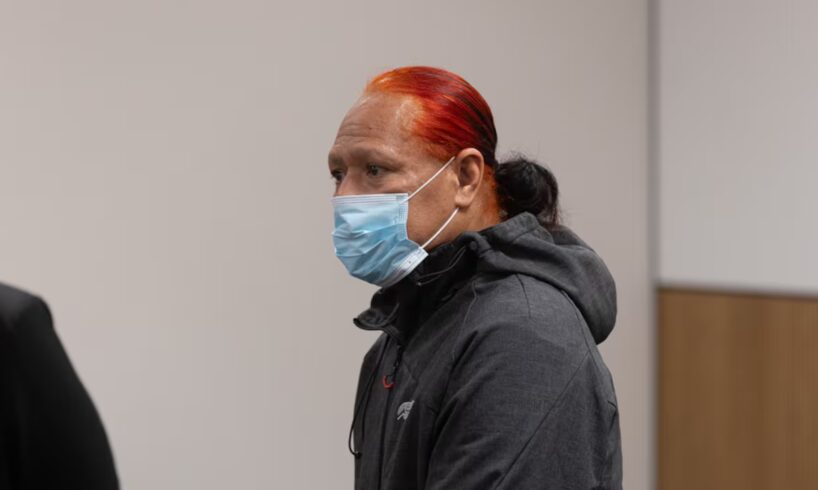
Latifah Afoa stands in the dock at Auckland District Court in April 2025, when she was sentenced for exploiting employees and offering bribes to bring them to New Zealand under false pretences. Photo / Jason Dorday
But Judge Jelas wasn’t convinced of the argument.
While there might have been some additional pressure to help her community, it’s not unique to fa’afafine, she said, explaining anyone from the Pacific living in New Zealand would feel pressure to support family back home.
The judge acknowledged there had been shame and remorse on behalf of the defendant, but that had to be weighed against the “significantly long period” of offending and the significant level of premeditation needed to pull off international employment fraud.
The judge extensively quoted from four victim impact statements. Each former employee described how their excitement about earning a better living in New Zealand turned to fear and trepidation upon realising, after they had already arrived, they were not here legally.
The defendant’s longest-serving employee described working for three months at a time, then repeatedly returning to Samoa to apply for another visitor visa. He recalled working 12-hour days, seven days a week.
“He feels he worked hard for Ms Afoa and was exploited by her in return,” the judge said.
Another worker recalled how he “relished the opportunity to come to New Zealand” because he was the sole provider for his parents and four younger siblings and could only find a low-wage job in Samoa.
The judge noted his “complete trust” in Afoa, “believing that she was giving him an opportunity to change his life”. But upon arriving in New Zealand, he realised he had no rights and was unfairly paid. He feared getting in trouble if he sought help.
“He felt trapped, and that Ms Afoa had destroyed his dream,” Judge Jelas said. “He felt manipulated by her.
“Her actions have brought about more suffering for him.”
Late, lengthy suppression bid
Afoa’s fight for permanent suppression came late in the process.
Her name was public when she pleaded guilty to five counts of aiding breach of visa conditions, six counts of exploitation and a representative charge of corrupting a public official.
It wasn’t until three months later, when the Herald applied for court documents in preparation for her sentencing, that a late application was filed.
At that point, Judge Jelas said, it was likely too late for any suppression order to be effective.
Afoa’s name and offending would have already been well-known among those who knew of her in Samoa and Auckland, she said.
Latifah Afoa’s fight for permanent name suppression came late in the judicial process. Photo / Supplied
In addition, the judge noted Afoa’s co-defendant and sister, Tahire Afiafilelei So’oula, did not have name suppression. Publication of So’oula’s name would easily lead to identification of Afoa, she said.
So’oula was described by authorities as having “played a key role in facilitating the unlawful employment of Samoan nationals” but was never considered the main offender. She was sentenced in July to six months’ home detention for a single representative charge of aiding and abetting breach of visa conditions.
Judge Jelas also said during the August name suppression hearing there was a strong public interest in the case and Afoa’s identity.
Afoa’s name suppression appeal was heard three-and-a-half months later. The resulting decision was released earlier this year, with an order that interim suppression remain in place for two more weeks so Afoa could prepare for publication.
Justice Rebecca Edwards allowed new evidence to be heard during the appeal hearing but ordered that it not be published.
“The media may report that name suppression was sought for personal hardship reasons and declined,” she said.
Craig Kapitan is an Auckland-based journalist covering courts and justice. He joined the Herald in 2021 and has reported on courts since 2002 in three newsrooms in the US and New Zealand.
Sign up to The Daily H, a free newsletter curated by our editors and delivered straight to your inbox every weekday.