The Coalition has called on Anthony Albanese to drop the “weasel words” on China and speak frankly about the threat the superpower poses to Australia in a blistering attack.
In a major speech on Tuesday, Senator Paterson lamented Labor’s defence spending, arguing that it was effectively cutting the military budget by sacrificing projects to cover AUKUS – the $368bn pact with Britain and the US to arm the navy with nuclear-powered submarines.
Senator Paterson also claimed the Albanese government had failed to explain to Australians why the country needs to spend more on defence, saying jargonised language “has real world consequences”.
“The main reason why it is so hard for defence ministers to get a dollar out of the (Expenditure Review Committee) is because we have collectively failed to earn and sustain the social license for the defence spending we need to protect our country,” Senator Paterson told the National Press Club.
“Against other worthy causes – some of which are more politically popular – defence keeps losing out.
“If the Australian public knew how likely conflict is in our own region in the near future, and how ill-prepared we were for it, they would be marching in the streets demanding higher defence spending.
“Instead of being honest with the Australian people about the threat and our preparedness, they are being lulled into a false sense of security.”
He went on to say it was perverse that the government “is telling (Australians) we have stabilised our international relationships and we’ve never spent more on defence”.
“If that’s really true, Australians will wonder why we need to increase defence spending any further or even set aside $368 billion to acquire nuclear propelled submarines,” Senator Paterson said.
“Not unreasonably, Australians might assume that politicians who have access to classified intelligence and understand the nature of the threat would be spending whatever needs to be spent to keep us safe.
“Indeed, the Prime Minister has often said that’s exactly what his government is doing. There’s just one problem – it’s not true.
“It is almost impossible to find a defence or national security expert who thinks we are spending enough or moving fast enough.”
He did offer some praise for his government counterpart Richard Marles for “at least mentioning the People’s Republic of China and calling out their malign activities” when the Defence Minister fronted the National Press Club last week.
“But too often he and Defence Industry Minister Pat Conroy are lone voices in the Albanese government willing to do this, and they are often contradicted by others, including the Prime Minister, who seem intent on reassuring us everything is fine,” he said.
“Rote-learned platitudes about ‘stabilisation’ and ‘disagreeing where we must’ do the public a disservice – this is a historical moment that demands more than lamely repeating anodyne talking points.”
Senator Paterson stressed he did not want “reckless or inflammatory” statements from the government, but that he was calling on it to “be more candid more often about just how dire our strategic circumstances are”.
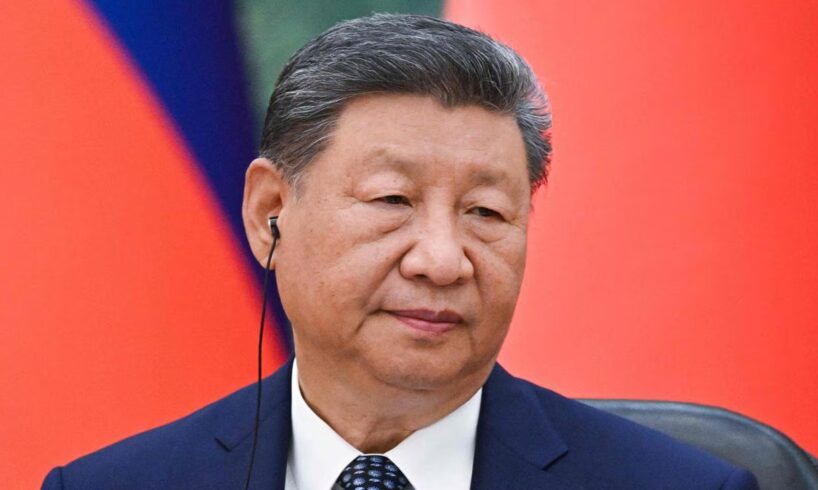
Xi Jinping has built the world’s biggest military in his 14 years as Chinese president and has increasingly flexed its might in recent years, from rehearsing invasions of Taiwan and carting state-of-the-art nuclear missiles through Tiananmen Square to dispatching warships to circumnavigate Australia and carry out live fire exercises in the Tasman Sea.
He has also overseen a rapid expansion of China’s atomic arsenal, with he country tipped to hit 1500 nuclear warheads by 2035.
Pointing to research from the Australian National University, Senator Paterson said that “Australians are hungry for authoritative insight from trusted leaders about our security environment”.
He suggested the Defence Force release an annual threat assessment similar to that put out by the domestic intelligence agency’s chief.
“An annual threat assessment which is measured and calm but also direct and honest would help dramatically improve public understanding of the serious threats we face,” Senator Paterson said.
“It would also assist in sustaining the social license needed for indispensable, multi-decade projects like AUKUS.”
Read related topics:Anthony AlbaneseChina
Source