INFLATION TO GET WORSE BEFORE IT GETS BETTER
Yesterday’s inflation figures unsurprisingly generated plenty of headlines after the Australian Bureau of Statistics revealed a 33% rise in petrol prices had helped push inflation to 4.6% in March.
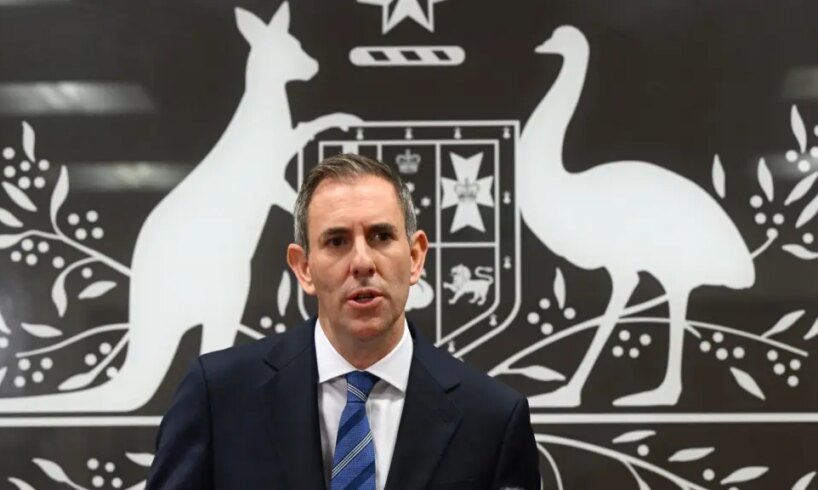
The Age picks up on Treasurer Jim Chalmers saying on Wednesday that things are set to get worse before they get better, citing the impact of the war in the Middle East, which has closed the Strait of Hormuz.
“The tick up in the monthly headline data today was driven by the conflict, and this war could drive inflation up even higher before it comes back down again. Treasury’s expectation is that inflation is likely to peak higher than this,” he said.
The Age says without the surge in oil prices through last month, caused by US-Israeli strikes on Iran and Tehran’s response, overall inflation would have fallen to 3.4%.
In under two weeks Chalmers is going to have to stand up and deliver his fifth budget, with the uncertainty over when ships will start passing through the Strait of Hormuz again still unresolved.
That uncertainty makes any predictions over inflation and economic growth pretty impossible to make, and therefore everything that is predicted in and around the budget may well not come to pass.
Despite this, Chalmers has said he is going to continue with his heavily trailed reforms in areas such as taxation and housing, plus the NDIS cuts.
Commonwealth Bank chief economist Luke Yeaman, who used to be deputy secretary in the Treasury, is quoted in numerous publications giving his thoughts on what the government should do in the budget amid the economic instability.
“We expect the government to try to thread the needle. To pull this off, they will need to meet several tests,” the AAP quotes Yeaman as saying.
His tests include making tens of billions of dollars of spending cuts to reduce the deficit and try to cool inflation, reforms that help housing affordability and productivity, and thirdly, national resilience and cost-of-living measures.
The Nine papers quote Yeaman as saying a package of property tax reforms would generate around $2 billion in extra revenue over the next four years and up to $30 billion over the next 10 years.
“The government will argue that the combined changes reduce the existing tax bias towards housing (allowing capital to be allocated to more productive investments), and take some modest pressure off housing demand, thereby improving affordability, without damaging new supply,” he said. “These are fair arguments overall, but we judge that the impacts on house prices and productivity are likely to be quite modest — the largest benefit will be higher long‑term government revenue and a stronger budget.”
On the theme of housing, The Australian Financial Review reports higher commodity prices and supply chain disruptions caused by Donald Trump’s war on Iran have cut the number of new homes Australia was on track to build by the middle of 2029 by 33,000.
National Housing Supply and Affordability Council chair Susan Lloyd-Hurwitz said the impact of the war on home building could be greater as the figures from the housing agency’s latest annual report only reflect building costs, not the wider economic fallout.
The newspaper also reports next month’s budget will see billions of dollars allocated to boosting the country’s long-term fuel reserves and highlights Prime Minister Anthony Albanese ruling out a new gas tax this week.
ROYAL COMMISSION’S INTERIM REPORT DUE
The Royal Commission on Antisemitism and Social Cohesion’s interim report is set to be released today.
The government ordered the inquiry after 15 people were killed in a terror attack at Sydney’s Bondi Beach on December 14.
The AAP reports this morning that “possible intelligence and security failures before the deadly Bondi Beach terror attack will headline initial findings”.
Meanwhile, The Australian says the interim report “is set to defer substantive findings on the actions of intelligence and law enforcement agencies ahead of the Bondi massacre, with recommendations on national security likely to focus on the nation’s broader counter-terrorism machinery”.
The Nine papers say royal commissioner Virginia Bell will hand down her interim report, which will be made public, this morning.
Public hearings addressing Jewish-Australian lived experiences of antisemitism are set to take place in Sydney from May 4-15, the AAP adds.
Details of the hearings can be found on the royal commission’s website.
WONG: CHINA TO HELP WITH JET FUEL SUPPLIES
The ABC reports Foreign Affairs Minister Penny Wong has said the Chinese government has agreed to work with Australian businesses on jet fuel supplies.
Wong is currently on an international tour aimed at shoring up the country’s supplies.
Speaking at a press conference in Beijing, Wong said: “I can confirm the Chinese government is facilitating engagement with Australian businesses on jet fuel.
“This is an important step; however, it is the first step. The whole reason I’m here is to try and press for and advocate for Australia’s interests and for the provision of liquid fuels.”
The national broadcaster recalls how China, a major exporter of jet fuel and diesel to Australia, paused exports when the war in the Middle East broke out.
The BBC notes oil prices soared on Wednesday following reports the US was preparing for a prolonged blockade of Iranian ports.
The Wall Street Journal reports that President Trump has instructed aides to prepare for an extended blockade in an attempt to pressure Iran into a deal.
ON A LIGHTER NOTE…
“Make seagulls sexy again.”
Those are the words of Claude Willaert, organiser of the annual European seagull screeching competition.
Yes it’s a real thing, yes people take part, and yes there is footage of human beings dressed as seagulls shrieking like birds.
The Washington Post informs us there is no cash prize for winning the competition, just bragging rights.
Apparently over 70 participants took part in the tournament in Belgium and tried to produce the best impression of the seagull’s distinctive shriek.
Honestly, just watch the footage; my words can’t do it justice.
SAY WHAT…?
The old saying is that sell your shares when the CEO buys a private jet.
Matt Canavan
The Nationals leader posted on social media after One Nation leader Pauline Hanson made an enormous song and dance about being gifted a $1 million plane by Gina Rinehart.
CRIKEY RECAP
AUKUS is falling apart before our eyes. The government and alliance shills are silent
Defence Minister Richard Marles earlier this month (Image: AAP)
AUKUS has always been a project draped in secrecy by the Albanese government, with the only detailed information about Australia’s largest-ever defence program available not from Australian agencies or the government, but the UK and US governments, which have more open and mature systems for debating defence and security issues.
And that’s how we know, after the past week, that AUKUS is in even more trouble than previously thought. It is now extraordinarily difficult to see how Australia will receive any second-hand Virginia-class submarines from the US on schedule, or how the new SSN AUKUS boats will be designed and built on time and on budget by the UK submarine construction industry in the UK and Australia.
While most of the focus in the AUKUS debate has been on the failings of the US submarine building program, the UK role is more important: the UK will design the new SSN AUKUS attack submarine that will make up the bulk of Australia’s nuclear submarine fleet, and it will be outfitted with British nuclear propulsion, with BAE putting the subs together in the UK and Australia. And a report on AUKUS published by the House of Commons defence committee last week is deeply alarming. The defence committee is government-chaired, so it has an incentive to play down potential sources of embarrassment for the Starmer government — which prepped King Charles to spruik AUKUS on his trip to the US — but it lays out a series of major problems for the UK contribution to AUKUS, especially around recruiting a sufficient workforce to build the new submarine.
Everything is threatening ‘social cohesion’! And everything is vital to its survival!
“Prime Minister Anthony Albanese claims social cohesion is at stake as he makes the case to the public to pare back negative gearing concessions and the capital gains tax discount for investors in next month’s federal budget,” the Australian Financial Review reported this morning.
At the same time, The Australian told us, via “senior sources”, that Albanese “will build on the theme of social cohesion in his speech to mining bosses” in Perth this week, “declaring there is a ‘bigger purpose’ to building resilience than economic self-sufficiency”.
Is there to be no rest for our beloved social cohesion? A look at all the threats it has faced since late 2023 is chilling.
Is the new plan to force big tech to pay for Australian news any good? We ask the experts
Professors Monica Attard and Derek Wilding, co-directors of the Centre for Media Transition, told Crikey that the design of the new incentive appeared to be more effective than the previous code, but that it still had limitations.
“The design suggests it will be more effective because it does include a mechanism for setting a minimum amount the platforms will have to pay, and unless they leave Australia altogether or there is a successful legal challenge, they won’t be able to avoid paying it (as Meta has with the NMBC),” they said.
Despite this, concerns have been raised about the risk to smaller publishers of missing out on the funding opportunity.
READ ALL ABOUT IT
Sharon Granites’ grandmother issues heartfelt plea for her granddaughter to come home (NT News) ($)
Pauline Hanson billed taxpayers for flights to fundraisers and travel to catch Rinehart jet to Florida (ABC)
Pete Hegseth denies Iran war is a ‘quagmire’ as cost to US hits estimated $25bn (The Guardian)
Police declare terrorist incident after two Jewish men stabbed in north London (BBC)
New pictures emerge of suspect in correspondents’ dinner shooting (NBC News)
Viral star ‘Raygun’ loses university posting (AFR) ($)
THE COMMENTARIAT
Everyone’s getting mugged by inflation — and you’ve got one man to blame — Shane Wright (The Age): No one is talking about an end to the conflict and a reopening of the strait any time soon.
The conflict has dragged on. That means chances of a “material bearing on both inflation and economic activity” have increased, not decreased.
There’s a reason other central banks are sitting pat on their interest rate settings. The uncertainty caused by Trump’s war is growing, not easing.
And that’s a big problem for the Reserve Bank and the members of its monetary policy setting committee. And anyone who happens to have a mortgage, drives a car, runs a business, wants a holiday or enjoys cheese toasties.
Inflation gives the RBA a chance to wait for the budget — John Kehoe (AFR): On Tuesday, Chalmers insisted that the budget would be “responsible”. It would focus on fuel security, supply chain resilience, inflation, boosting productivity and responding to the global uncertainty, he said. We’ve heard similar declarations before, only to feel underwhelmed afterwards.
The government and RBA will weigh the risks of higher inflation versus the growing risk of a significant economic downturn due to the fuel shock.
The RBA may decide to get ahead of the budget and increase rates again. But it’s a genuine coin toss which way the RBA board votes next Tuesday, so a decision either way should not surprise.