Australia’s rapid shift to online shopping has created a growing issue in the background of retail — a returns system now linked to an estimated $20bn in activity each year — with new services now emerging to address the strain.
About one-third of all online purchases in Australia are being returned, with industry estimates placing return rates between 19 per cent and 30 per cent.
The trend has grown alongside record e-commerce spending, which reached $69bn in 2024, including $9.6bn in fashion sales alone.
Despite that growth, the process for sending items back remains largely unchanged.
Many customers are still required to print labels, repack goods and attend post offices, while others opt out altogether.
Camera IconOnline returns in Australia are estimated to be worth about $20bn each year. NewsWire/ Gaye Gerard Credit: News Corp Australia
More than 7.3 million Australians have reported not returning items because the process was too difficult, leaving an average of $590 worth of goods unused at home.
That equates to about $4.3bn in unreturned products nationwide.
Environmental impacts are also increasing in step with higher return volumes.
Online retail generates up to 4.8 times more packaging waste than in-store shopping, with additional materials created through reverse logistics.
In Australia, an estimated 13,000 to 32,000 tonnes of soft plastics are associated with online returns each year.
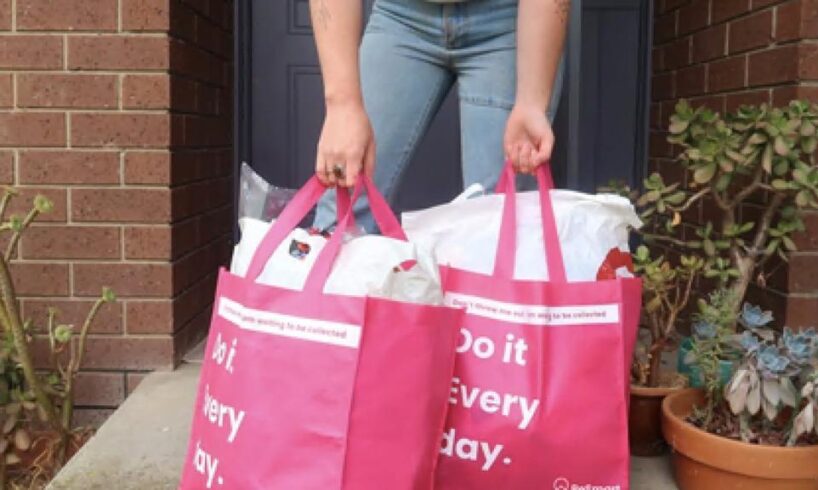
One company trialling a different approach is ReSmart, which is in the final stages of testing a doorstep collection service that combines product returns with packaging recycling in a single pick-up.
Under the system, customers place unwanted items and packaging into a bag at their doorstep for collection, where they are then sorted and processed through a consolidated reverse logistics network before being sent back to retailers.
Camera IconReSmart’s model is expected to cut return processing costs by about 50 per cent. Credit: Supplied Source Known
ReSmart founder and chief executive Giorgio Baracchi said the current returns process had not kept pace with the growth in online retail.
“Online shopping has evolved rapidly, but returns are still stuck in the past,” Ms Baracchi said.
“People are printing labels, finding boxes and queuing at the post office, which is why millions of Australians simply don’t bother returning items at all.
“What most people don’t realise is that every return also creates more packaging and more waste, and much of it is not being properly recovered.
“For customers, it removes the hassle and saves time. For retailers, it reduces the cost of processing returns and improves recovery outcomes.”
Camera IconThe company has completed more than 440,000 pick-ups through its existing network. Credit: Supplied Source Known
Industry benchmarks suggest retailers currently spend about $22 per returned item on processing.
Consolidated logistics models, such as the one being tested, are expected to reduce those costs by about 50 per cent.
ReSmart already operates a national collection and recycling network, which it claims has completed more than 440,000 pick-ups and diverted over two million kilograms of waste from landfill.
The system is currently used by more than 44,000 customers and supported by 29 councils across Australia, with organisations including Canva, Westpac, Qantas and The Iconic among existing users of its broader platform.
The existing infrastructure is being used to support the rollout of the returns service across major cities including Sydney, Melbourne, Brisbane, Perth, Adelaide, Canberra and Hobart.
Camera IconMore than 7.3 million Australians have avoided returning items due to difficulty. Gaye Gerard / NewsWire Credit: News Corp Australia
The announcement coincides with the launch of an equity crowd-funding raise on the OnMarket platform, with funds intended to support expansion, logistics optimisation and national deployment of the service.
“Millions of returns flow through retail every year, but the infrastructure to deal with them properly doesn’t exist yet,” Ms Baracchi said. “We’ve already built the network. This next phase is about unlocking a completely new layer of that network and making returns as simple as leaving a bag at your front door.”
Funds raised will be directed towards scaling operations and expanding logistics systems as the company moves towards broader rollout.