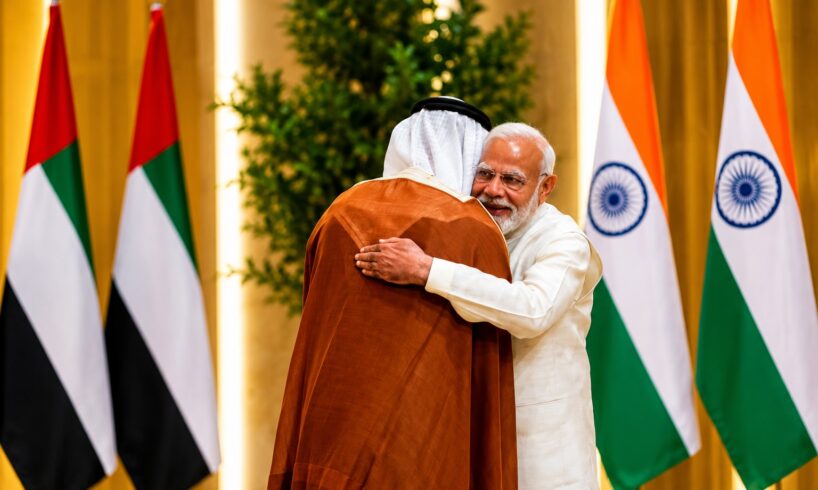
May 20 – Indian Prime Minister Narendra Modi’s whirlwind visit to the United Arab Emirates on Friday — the opening leg of a five-nation tour that will also take him to the Netherlands, Sweden, Norway and Italy — comes at a moment analysts describe as one of significant strategic opportunity for India.
With global oil prices surging amid the fallout from the US-Israel conflict with Iran and growing instability across the Middle East, Modi arrived in Abu Dhabi carrying more than diplomatic symbolism. The visit produced a series of major energy agreements aimed at shielding India from worsening supply shocks and future market volatility.
The trip also comes barely a month after the UAE’s landmark decision to withdraw from the Organisation of Petroleum Exporting Countries (OPEC), a move widely viewed as signalling the emergence of a new Gulf energy order.
As OPEC’s sixth-largest oil producer, the UAE is now free from the cartel’s production quota system, allowing it to pump beyond its previous ceiling of 4.8 million barrels per day and negotiate more flexible supply arrangements with strategic partners.
India, which sources roughly 10 per cent of its crude oil from the UAE and remains the Gulf nation’s largest liquefied natural gas customer, appears to be among the biggest beneficiaries of this shift.
Analysts say the timing of Modi’s visit was deliberate.
“Abu Dhabi’s move to ditch OPEC quotas and ramp up production gives it flexibility to supply more oil and LNG directly to key buyers like India,” said Srinivasan Balakrishnan, Director of Strategic Engagements and Partnerships at the New Delhi-based Indic Researchers Forum.
Though Modi’s stop in the UAE lasted only a few hours, both sides quickly translated diplomatic goodwill into concrete agreements.
Under a new strategic collaboration agreement between Indian Strategic Petroleum Reserves Limited and the Abu Dhabi National Oil Company (ADNOC), the UAE will increase its oil supply to India’s strategic petroleum reserves to 30 million barrels.
A separate agreement between Indian Oil Corporation and ADNOC formalised long-term liquefied petroleum gas supply arrangements, while the two countries also agreed to explore the establishment of strategic gas reserves within India.
In addition, the UAE pledged fresh investments worth US$5 billion, underlining the rapid expansion of a bilateral relationship now valued at approximately US$85 billion annually.
The urgency behind the agreements has been reinforced by renewed security concerns in the Gulf. Fresh drone strikes targeting both the UAE and Saudi Arabia on Sunday, despite a ceasefire linked to the Iran conflict, highlighted the continuing vulnerability of Gulf energy infrastructure.
For India, which relies heavily on Gulf imports to power its economy, any prolonged disruption would carry serious economic consequences.
Balakrishnan described the strengthened partnership with the UAE as a “pragmatic hedge” designed to lock in stable long-term supply arrangements before global spot-market shocks intensify further.
Beyond oil and gas, the relationship is also expanding into infrastructure, ports, green hydrogen and civil nuclear cooperation.
The geopolitical dimension of the partnership is equally significant.
The UAE’s growing rivalry with Saudi Arabia over regional influence has simmered for years, but its decision to leave OPEC is viewed as the clearest indication yet that Abu Dhabi intends to pursue a more independent strategic and economic path.
India appears to be benefiting from this recalibration. Analysts also point to the UAE’s recent demand that Pakistan repay US$3.5 billion in outstanding loans — a move that added pressure on Islamabad’s foreign reserves — as another signal of shifting regional alignments.
The deepening India-UAE relationship is increasingly being viewed as part of a broader strategic axis involving India, the UAE and Israel, particularly in areas of trade, technology, logistics and energy security.