SINGAPORE – Bukit Timah Waterworks – Singapore’s first water treatment plant – is set to be assessed for its national significance and heritage value, as the authorities decide what to do next with the facility that is no longer in active use.
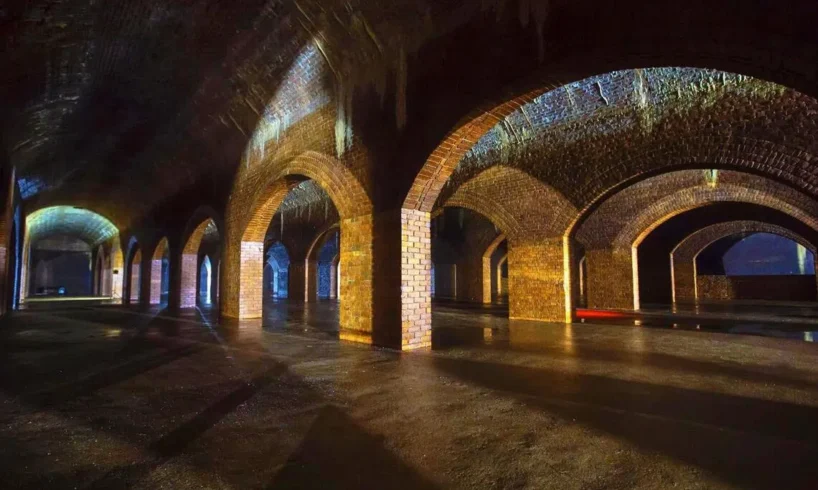
Built and opened in 1891 – and subsequently upgraded over the years – the facility contains a subterranean old clear water tank, which has magnificent brick columns and arches that have been seen by few.
In 2020, then Prime Minister Lee Hsien Loong said that national water agency PUB had plans to convert the old clear water tank into an education centre and exhibition space.
This was assessed in a PUB-commissioned study that was conducted between 2020 and 2022, and the agency has mooted turning it into a “potential world-class water museum”, which could provide a “multi-sensory underground water experience”.
Now, the National Heritage Board (NHB) – the public agency that advises on the preservation and maintenance of national monuments – is set to commission more studies on the site. These are expected to include a heritage baseline study and an assessment of the condition of the facility’s buildings.
These studies seek to “determine the best approach to protect and commemorate its heritage value while optimising land use and long-term sustainability”, said a tender published by the NHB.
Generally, heritage baseline studies involve researching and documenting the history and heritage significance of existing buildings, structures and settings within a site.
Responding to queries from The Straits Times, PUB and NHB said on July 1 that the various studies, which include PUB’s earlier study, will inform potential future uses of the site.
PUB’s NEWater Visitor Centre in Bedok closed in 2024 and has not been replaced since.
Bound by the Istana, as well as Cavenagh, Bukit Timah and Mackenzie roads, the facility and a nearby block of flats called MacKenzie Apartments occupy a site of close to 3ha – equivalent in area to about four football fields.
The apartment block has 16 units and is currently managed by a PUB-appointed agent.
MacKenzie Apartments comprises 16 residential units.
ST PHOTO: NG KENG GENE
The nondescript, low-rise facility houses infrastructure needed for water treatment, including a chemical store, flocculators and clarifiers, as well as clear water tanks for clean water storage.
Flocculators bring particles suspended in water together into clumps, and clarifiers remove these clumps from the water.
When it was built, Bukit Timah Waterworks drew and treated water from MacRitchie Reservoir for distribution to more central areas on the island, shifting reliance away from water wells.
A chemical treatment plant at the facility – the first such plant to add fluoride to Singapore’s water supply – was constructed in 1957.
From December 2005, it became a standby facility, and later, from March 2009, operated as a relift station to boost water pressure from the network to Fort Canning Service Reservoir.
The sludge house and sludge tank at Bukit Timah Waterworks.
ST PHOTO: NG KENG GENE
Architect Randy Chan, principal of multidisciplinary design studio Zarch Collaboratives, was involved in the PUB study, which was awarded to his firm.
Chan said the study involved converting the old clear water tank and MacKenzie Apartments into a visitor centre – other infrastructure such as the new clear water tank and the pumping station were beyond the scope of the study.
He said his team submitted several proposals. One involved tearing down the apartment block, while others included using it for purposes such as offices, galleries or eateries.
Chan added that members of the public, who were surveyed as part of the study, generally wanted it to be retained for heritage purposes and repurposed to incorporate lifestyle elements, akin to Marina Barrage – another PUB facility.
He noted that one challenge the site faces is accessibility for visitors, despite its central location. It is a 600m walk from Little India MRT station – largely unsheltered – and the site was not planned with parking for visitors in mind.
But Chan added that there are opportunities for the facility to become a pit stop for cyclists and other users of the Bukit Timah-Rochor Green Corridor, a linear park that runs along Bukit Timah Canal.
Chan also said the site should be considered for retention in full, with the buildings on the site notable for their French-inspired architectural style.
The chemical store at Bukit Timah Waterworks.
ST PHOTO: NG KENG GENE
Heritage author and blogger Jerome Lim added that the site is worthy of preservation as a national monument – the highest form of protection for sites and buildings in Singapore that are of national importance and have significance in areas such as history or culture.
He said the facility is “significant to the nation’s water story as it is part of the continuous effort to provide residents with clean, sediment-free water, without which Singapore could not have developed as well as it has”.
“It is a complete facility and a rare example of Victorian waterworks engineering in this part of the world,” Lim said, adding that it is a site that many Singaporeans may remember for National Day light-ups at its fountain in the 1970s.
Lim noted that the site is unique compared with other monuments – which are largely institutional buildings or places of worship – and is a different type of building from the former St James Power Station, a monument that once provided public utilities, like the waterworks.
“It would be wonderful if the site could be repurposed to tell the story of Singapore’s water journey as a waterworks museum,” said Lim.
Chan added that Singapore can take inspiration from similar efforts overseas.
The Ex-Sham Shui Po Service Reservoir in Hong Kong is open for self-guided tours.
PHOTO: NG KENG GENE
In Japan, for instance, former pump stations in Sapporo and Tokyo have been converted for public education use, while the Ex-Sham Shui Po Service Reservoir in Hong Kong is open for self-guided tours.