2026-07-22T22:41:16+00:00
font
Enable Reading Mode
A-
A
A+
Shafaq News
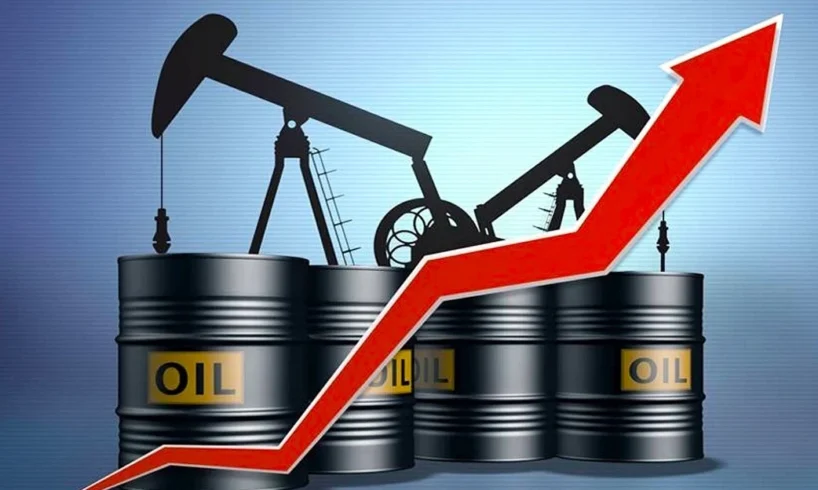
Oil prices settled at their highest since June 11 on
Wednesday on mounting supply concerns as hostilities continued to escalate
between the U.S. and Iran, while threats to shipping by the Iran-backed Houthi
militia in Yemen further boosted prices.
Brent crude futures settled up $3.06, or 3.36%, at $94.07 a
barrel, their highest in just shy of six weeks, after hitting a session high of
$95.47.
U.S. West Texas Intermediate crude climbed $2.49, or 2.95%,
to $86.83.
The Brent crude three-month timespread, meanwhile, expanded
to $9.26 a barrel, its widest since May 22, deepening backwardation on
mounting supply risks. Backwardation is where prompt crude trades above
later-dated barrels, typically signalling tighter near-term supply.
The U.S. military said it carried out an 11th consecutive
night of attacks on Iran. The U.S. attacks came a short while after the Kuwaiti
army said its air defences were intercepting Iranian drones.
President Donald Trump said on Wednesday the U.S. would
“bomb and destroy one bridge or power plant” any time Tehran targets
a ship in the Strait of Hormuz.
Iran’s Revolutionary Guards’ spokesperson warned shipping
companies that the Strait of Hormuz southern route is mined in a post on X.
As well as the renewed conflict over control of that key
waterway, the Iran-aligned Houthis have opened a new front in the war by
threatening to target vessels carrying Saudi oil in the Bab el-Mandeb Strait
and announced a naval blockade of Saudi Arabia.
Ships with links to Israel, the United States or Saudi
Arabia are at a higher risk of being attacked by Yemen’s Iran-aligned Houthi
militia and are advised to avoid voyages through the Red Sea and Gulf of Aden,
the European Union’s naval force Aspides said on Wednesday.
“The energy market now has the dual-strait worry, with
the Bab el-Mandeb Strait looking like it could join the Strait of Hormuz as a
hot spot, as traders closely watch shipping numbers in the Red
Sea,” said Tim Waterer, chief market analyst at KCM Trade.
Bab el-Mandeb at the southern entrance to the Red Sea has
become an increasingly important route for Saudi Arabian crude exports as
traffic through the Strait of Hormuz has fallen sharply again since a ceasefire
between the United States and Iran collapsed earlier this month.
Five tankers in the Red Sea to avoid the Bab el-Mandeb
Strait on Wednesday after the Houthis’ threat to block Saudi oil exports.
“Heightened supply disruption fears are mounting
as intensified conflict and security risks in the Red Sea force commercial
vessels and tankers to alter trade routes,” said Gelber & Associates
analysts in a note.
In response to the Houthi warnings, Asian refiners are
seeking to ship crude oil from Saudi Arabia’s Red Sea port of Yanbu through
the Suez Canal and around Africa.
“The (Houthi) threat has led tankers to divert which could
further pressure the physical market and Saudi exports, contributing to push
prices to the upside,” said Frank Walbaum, market analyst at trading
platform Naga.com.
Meanwhile, U.S. crude stocks rose last week, the Energy
Information Administration said, as refinery runs eased and crude exports
dropped while imports rose.
Crude inventories rose by 2 million barrels to 411.7
million barrels in the week ended July 17, the
EIA said, compared with analysts’ expectations in a
Reuters poll for a 1.1 million-barrel draw.
Elsewhere, EU ambassadors failed on Wednesday to agree on a
21st package of sanctions against Russia over its invasion of Ukraine, an EU
diplomat said.
(Reuters)
Only the headline is edited by Shafaq News.