For novelist Cris Judar, language and bodies are charged with conventions and social norms, and as such, language and bodies contain within them the potential for social upheaval and change. They are sites of repression, erasure, and enclosure, but also spaces for liberation, creativity, and dissident expression.
Article continues after advertisement
Language constructs and reinforces our political infrastructures, but fiction has the capacity to estrange us from language, to imagine new experiences of embodiment, expand horizons of expectation, and open possibilities for ways of being, of moving through the world. Fiction also has the ability to show how language snaps under the weight of violence, how trauma ruptures the very meaning of words.
These intertwined thematic threads—language and the body, social and political repression, and lines of flight towards liberation—coalesce in Cris Judar’s fiction. A non-binary author from São Paulo, they are part of a generation of writers on the front lines of critiquing and challenging the politics of gender and sexuality in contemporary Brazil, where much as in the United States today, trans rights, queer identities, feminism, as well as the language we use to speak about gender stand at the forefront of political struggle.
By including these voices, Judar explores the intimate corners of Brazilian history, and they also point to the gendered dimensions of state violence.
Judar, who has published nearly half a dozen works of fiction including award-winning books Roteiros para uma vida curta and Oito do Sete, approaches these political topics through genre-defying prose that hovers about the borders of poetry, playing at the limits of the vocabularies and grammars used to define bodies, desire, and femininity.
The queer poetics Judar advances are rooted in Brazilian politics, past and present. That specificity is especially evident in They Marched Under the Sun, where abuses of the Brazilian state fold into intimate narratives. The book is structured around the voices of two young women in São Paulo, Ana and Joan, each on the cusp of their eighteenth birthday, each experimenting with their sense of self, with their limits and possibilities.
But their voices are not alone. To the contrary, their interlocked narrative arcs are constantly interrupted by traces of far broader social trauma. In letters that appear throughout the novel, women imprisoned under the Brazilian military dictatorship (1964-1985) who experienced gendered violence and extrajudicial imprisonment at the hands of the state also grasp at new vocabularies, reimagining what it means to inhabit their bodies, to experience desire in the wake of torture. In the case of a letter from the character Julia F. Dantos, these new vocabularies are literal: “Legs = flamingos. Buttocks = fluffy clouds. Eyes = egg yolks, unbeaten. Lips = highways, leading me towards desirable destinations. Neck = a sunset overlook. My body = a satellite, poised for discovery.”
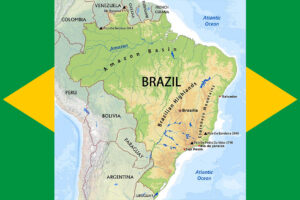
By including these voices, Judar explores the intimate corners of Brazilian history, and they also point to the gendered dimensions of state violence. Brazil’s rightwing, Cold War dictatorship hunted down citizens perceived as communists or leftists, deeming them enemies of the state, but like many other authoritarian regimes, it also upheld strict norms around gender and traditional family values. LGBTQ communities were persecuted, feminism repressed, and discourses around sexuality that did not conform to conservative Christian ideals censored. The violence and torture that took place in detention centers were also gendered, as women suffered abuses different from those to which men were subjected.
Through intimate reflections on the body, Judar’s novel unpacks how dictatorships are forces that impose straightjacketed ideas of morality, and how present-day social norms carry the weight of our past political systems, as well as the legacies of those who managed to live in its crevices, asserting a nonconformist existence.
Indeed, the social traumas of They Marched Under the Sun are not only echoes of a past regime. The novel also alludes to contemporary examples of violence in the country’s current, democratic system, gesturing to the ways in which brutality persists in Brazil as state and corporate power continue to commit violence with near impunity. In “October” (the novel’s chapters are labeled by month, not by number), Ana looks into her reflection in a mirror and is confronted by a voice cataloguing the deluge of violence in Brazil from the past decade: “river dams ruptured” refers to the Brumadinho dam disaster in Minas Gerais, when technical failures at a nearby mining facility caused a massive mudslide, burying hundreds of mine workers, animals, and residents of the nearby town alive.
None of the examples in this catalogue are easily translated or transposed into another language and social context; they are utterly specific to Brazil.
“One hundred and eleven rounds fired; five boys dead” alludes to the police killing of five teenagers in a poor neighborhood of Rio de Janeiro in which officers fired 111 bullets at their targets in a gross excess of brute force.
“Dandara, the travesti” references a case of the violent hate crimes that travestis in Brazil suffer on a regular basis. The term travesti—which I left untranslated given its specificity to Latin America—describes a person who was assigned male at birth, holds a female gender identity, and lives in a context of social and economic precarity and exclusion due to that identity, which has sex work on the streets as its main reference (currently, the term has acquired strong political associations and has also been adopted by trans people in different contexts). Dandara dos Santos was tortured and beaten to death by a group of twelve people, who eventually tossed her body in a wheelbarrow, shot her, and posted a video of the crime on social media.
“The thirteen bullets that took Marielle” speaks to the 2018 political assassination of Marielle Franco, a Black, socialist, lesbian city councilperson in Rio de Janeio and vocal critic of police brutality who was killed after giving a speech, leading to nationwide outrage and protests.
“A routine police search over Luana Barbosa’s butch body” describes the killing of a Black, gay woman, a mother from the periphery of São Paulo, who died at the hands of the police as a result of blunt force trauma, after asserting her right to have a body search carried out by a female police officer.
None of the examples in this catalogue are easily translated or transposed into another language and social context; they are utterly specific to Brazil, and Judar’s choice to include them is an act of denunciation grounded in a particular history and political context, one that engulfs their characters. At the same time, there are clear resonances between this novel’s political outcry and demands to recognize repression against queer and trans communities, against workers, people of color, and other marginalized groups far beyond Brazil.
Indeed, despite its specificity, They Marched Under the Sun has had an unusually global trajectory since its original publication in Brazil in 2021. Unlike most authors, for whom translation into English is a steppingstone towards publication in other languages, especially those in the Global South, They Marched Under the Sun was translated into Egyptian Arabic and Italian—and other stories in Judar’s oeuvre into Indonesian, Italian, German, Danish, and Spanish—prior to my embarking on this English translation.
Judar’s prose may be resistant to translation in the way it reasserts its contextual rootedness, but the political issues and themes of the novel are nevertheless broadly relevant, compelling to audiences across wide swaths of the world. And the urgency of Judar’s meditations on authoritarianism, impunity, social repression, and avenues for liberation in the United States in 2026 is so clear as to be self-evident.
But another, equally significant reason as to why we should read Judar in English translation lies in language. In 1990, French feminist theorist Helène Cixous wrote a series of essays on Brazilian author Clarice Lispector in which she articulated the importance of reading novels originally written in foreign languages. If part of feminism involves transgression within language—or what Cixous describes as an effort at becoming “transgrammatical”—then looking at what kinds of experimentation take place in other countries and languages is indispensable to breaking bounds in any mother tongue. She writes, from the French context, “it is good to work on foreign texts—Clarice Lispector’s, James Joyce’s and others’—because they displace our relation to grammar. In everything we do, we are questioning femininity. We work on texts as quests, that is, a questioning of femininity, on traces that are perceptible.”
Traces of femininity appear throughout They Marched Under the Sun, sometimes in ways that are best left untranslated—such as in the case of travesti—and in others, that weave their way through novel images redefining desire in English: “To love is to fill one lung with suffering and the other with stones. A belly full of otters, a leg of lamas, rump like a basket of gold that could fit a calf or whole human child.”
It is apt to engage They Marched Under the Sun as though it were a quest, because the idea of questioning femininity, of questioning the ties between language and bodies, is central to Judar’s agenda. This is the very quest that Ana and Joan themselves embark on at the outset of the narrative. It is the quest that is meditated on in fables and fantastical stories that appear throughout the book, such as the anecdote about a community of people determined to transform themselves into cats: “they lifted their tailbones towards the moon while lapping cream from fine chinaware; they meowed in a chorus of tones and practiced their purrs, which weren’t all that convincing; they frequented polemical lectures on the subject of The Art of Becoming a Feline-Human-Citizen, or How to Live Well as a Soul Separated from the Body.”
Ana, Joan, and even the community of cat people fostering this feline culture—all of these fictional characters seek to embrace an estranged relationship to their bodies, to the Portuguese language, to socially imposed conventions of being. Reading with Judar in English is an opportunity to question and transgress, to imagine worlds and words of possibility closer to home.
__________________________________
From They Marched Under the Sun. Used with the permission of Fonograf Editions. Copyright © 2026 by Cris Judar, introduction by Lara Norgaard