(July 24, 2026 / JNS)
A committee of the United Nations Educational, Scientific and Cultural Organization voted on Friday to designate Sebastia, an archaeological site in Samaria, and five medieval castles in southern Lebanon on the World Heritage List and the List of World Heritage in Danger, despite Israeli objections that the decisions were politically motivated.
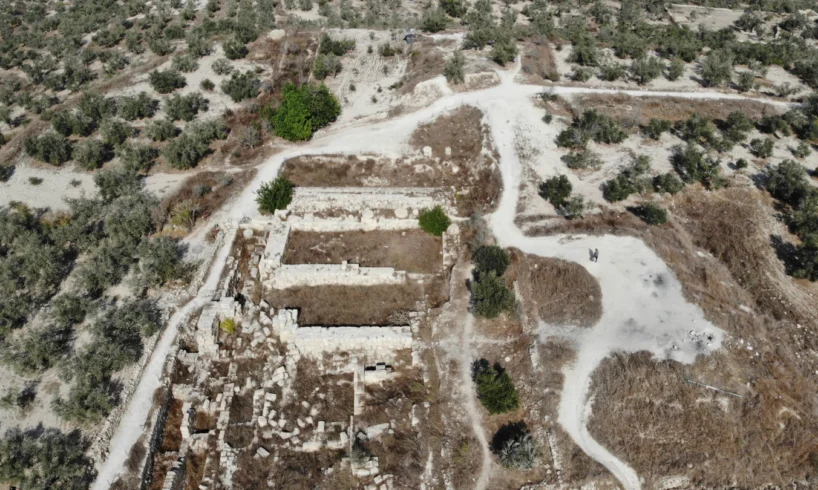
Sebastia, a hilltop northwest of Shechem, is widely identified by scholars as the site of ancient Samaria, the capital of the biblical Kingdom of Israel established by King Omri. The site is also traditionally believed by Christians and Muslims to contain the tomb of John the Baptist.
Sebastia is in the West Bank village of the same name, which lies under Palestinian Authority administration. The archaeological park itself is in Area C, where Israel retains full civil and security control under the Oslo Accords, while parts of the surrounding village are in Area B, under Palestinian civil administration and Israeli security control.
The Palestinian delegation first nominated Sebastia for World Heritage status in 2012, arguing that the site has suffered from inadequate preservation and development.
“Any discussion of Sebastia must recognize, explicitly, the ancient Jewish presence and connection to this land. Yet the Palestinian submission deliberately ignores this historic fact,” said Nina Ben-Ami, Israel’s deputy director general for the U.N. and international organizations, during Friday’s session in Busan, South Korea. “In doing so, it seeks to erase the people of Israel’s connection to the Land of Israel. It is a travesty.”
Ben-Ami said illegal Palestinian road construction and antiquities looting, not Israeli administration, pose the greatest threats to the site.
“The site requires stable stewardship and management, consistent conservation standards and unrestricted archaeological research. Maintaining Israel’s administrative responsibility is the best means to safeguard Sebastia’s integrity,” she told the World Heritage Committee. “If UNESCO allows Sebastia to be listed in this manner, it is evidence of the extent that politicization has permeated the organization, and it is a mockery of history.”
Israel withdrew from UNESCO in 2019, accusing the agency of persistent anti-Israel bias and of minimizing Jewish historical ties to the region.
The committee also inscribed five castles in Lebanon’s Mount Amel region on both the World Heritage List and the List of World Heritage in Danger. Israel specifically objected to the inclusion of Beaufort Castle, saying Hezbollah has used the site to launch rockets and construct tunnels since Israel’s withdrawal from southern Lebanon in 2000.
A Lebanese delegate rejected the allegation, saying images presented as evidence of Hezbollah tunnels actually depict tourist facilities.
Asked what policies UNESCO has in place to prevent the politicization of its World Heritage LIst selections, an agency spokesperson told JNS that “All nomination proposals are examined according to the same criteria, the same procedures, and the same rigorous technical requirements, regardless of the state party concerned,” while decisions by the committee are taken “in a transparent manner and based on technical evaluation reports provided by the advisory bodies.”
The spokesperson added that UNESCO “recognizes the historical, cultural, and religious significance that many heritage sites hold for different communities and traditions” and “does not take positions on political disputes.”