LIONEL BONAVENTURE/AFP/East News
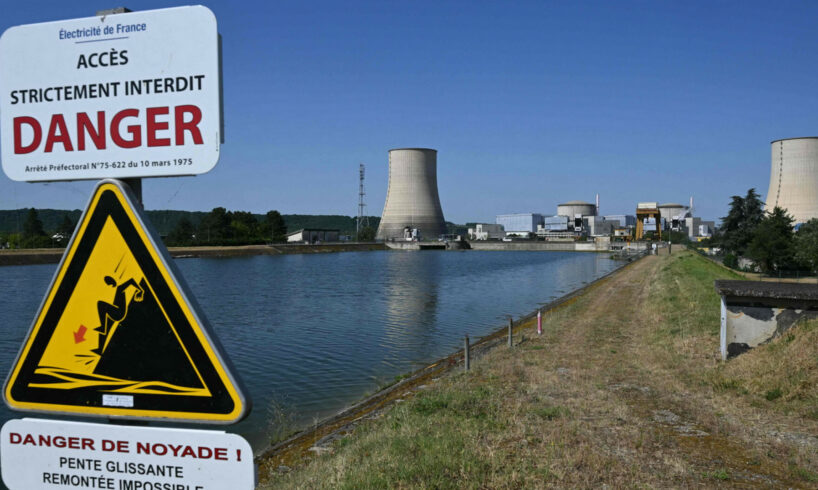
French company Framatome has opted to work with the Russian corporation (illustrative photo)
The fifth year of Russia’s full-scale war against Ukraine is underway. Millions of victims, countless lives lost, widespread destruction, and enormous economic damage continue to mount.
The European Union has declared its commitment to gradually phasing out cooperation with the aggressor state and reducing its dependence on Russian energy resources under the REPowerEU plan.
Framatome’s Russian alliance
However, decisions taken at the national and regional levels in Germany contradict this strategic course. On 22 July 2026, the Lower Saxony Ministry for the Environment, Energy and Climate Protection, acting on behalf of the German federal government, approved an application submitted by Advanced Nuclear Fuels (ANF), a subsidiary of the French company Framatome, for a licence to manufacture nuclear fuel assemblies for Soviet-designed VVER reactors at its facility in Lingen.
The fuel will be produced using Russian technology and know-how under a licensing agreement with TVEL, a subsidiary of Rosatom. VVER reactors are currently in operation at nuclear power plants in Czechia, Bulgaria, Slovakia, Hungary, Finland and Ukraine.
Most European countries are working to diversify their nuclear fuel supply in order to reduce cooperation with the Russian state corporation. Ukraine and several other countries, for example, have switched to fuel supplied by Westinghouse.
Framatome aims to become a European alternative supplier of VVER fuel assemblies. However, instead of relying on Western partners, the company has chosen to cooperate with Russia’s state-owned nuclear corporation.
As a result, a paradoxical situation has emerged. On the one hand, non-nuclear Germany officially supports Ukraine and the European strategy of reducing dependence on Russian energy resources.
On the other hand, it has authorised a project that will facilitate the expansion of Russia’s nuclear business within the European Union.
In practice, this opens a “back door” for Rosatom into the European nuclear fuel market. Fuel assemblies manufactured in Lingen for European VVER reactors will carry a “Made in the EU” label,
yet they will be produced using Russian technology and manufacturing know-how, which remain under Russian control.
This hardly represents genuine diversification away from Russia; rather, it amounts to a transformation of the existing dependency into a different form.
Rosatom deserves sanctions, not cooperation
How did this become possible? The primary reason is the lack of sufficient legal grounds to reject the project.
Although Lower Saxony’s Environment Minister Christian Meyer, a member of the Green Party, openly stated that he opposed the project, he acknowledged that German law provided no formal legal basis to block it.
Who could have influenced this decision? The German federal government had the authority to veto the project, for example on the grounds of security concerns and foreign policy risks identified in the report prepared by Prof. Dr. Gerhard Roller. This report was officially commissioned by the Lower Saxony Ministry for the Environment, Energy and Climate Protection to provide an independent assessment of the project’s security risks.
Ultimately, however, the authorities concluded that these risks could be managed, and the project was approved subject to ANF complying with a number of conditions.
These include restricting access for Rosatom representatives, strengthening physical and cybersecurity measures, ensuring strict control over the use of Russian technologies and components and implementing safeguards against espionage and sabotage.
The decision inevitably invites comparisons with the infamous Nord Stream 2 project.
In both cases, a major energy project involving a Kremlin-controlled company was treated primarily as a commercial and regulatory matter, despite repeated warnings from Ukraine and other European partners about strategic dependence, political leverage, and security risks. Nord Stream 2 clearly demonstrated the consequences of ignoring broader geopolitical and security considerations in relations with Russia. A project justified on economic grounds ultimately increased Europe’s strategic vulnerability and became politically unacceptable only after Russia launched its full-scale invasion of Ukraine.
The expansion of the ANF facility in Lingen risks repeating the same strategic mistake. It envisages integrating Rosatom’s equipment, technologies, and know-how into European nuclear fuel production precisely at a time when the European Union seeks to reduce its dependence on Russia.
The conclusion is clear: this case demonstrates that the current European legal framework is no longer fit for today’s security challenges. Formal compliance with existing legislation is insufficient to prevent decisions that deepen the EU’s dependence on Russia.
The appropriate response should therefore not be silent acceptance, but rather a review of the existing regulatory framework, stronger political and legal efforts to challenge this decision, and accelerated sanctions against Rosatom and its subsidiaries. Otherwise, Europe risks repeating the mistake of Nord Stream 2 – this time in the nuclear sector.
This material was prepared by DIXI GROUP NGO with support of the International Renaissance Foundation within the framework of the project “Strengthening Ukraine’s Resilience in Energy”. The material reflects the views of the authors and does not necessarily represent the position of the International Renaissance Foundation.
If you notice an error, select the required text and press Ctrl + Enter to report it to the editors.