Those are the kupu one Pākehā grandmother hopes will encourage more New Zealanders to take their first step toward te reo Māori and te ao Māori.
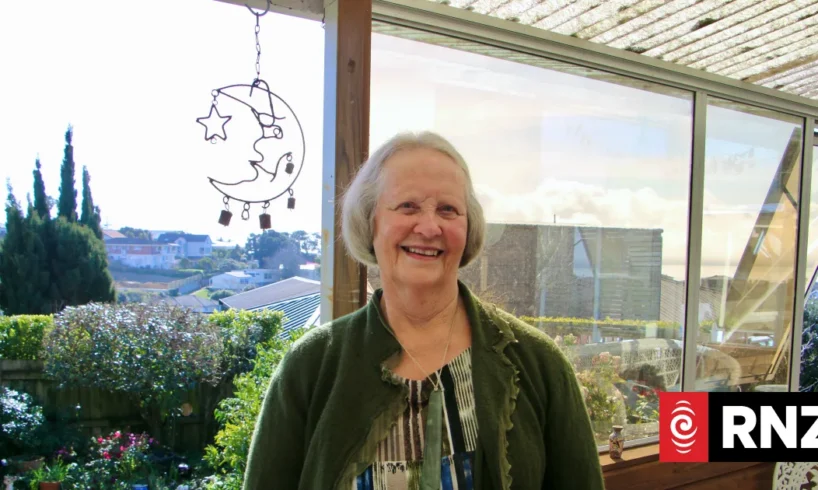
Gael Finlayson-Davis, grandmother of six and great-grandmother of two, now in her 70s, became an unexpected symbol of this year’s Matariki celebrations after speaking through tears at the national hautapu ceremony at Takaparawhau.
Matariki for everyone proves true at Takaparawhau
Her emotional kōrero, in which she described learning te reo Māori as part of her hope for “a better future for our country”, resonated with thousands.
Although learning te reo is something she wishes she had embraced decades earlier, she hopes her story shows it is never too late.
“If I can do it in my 70s, anyone can,” she told RNZ.
“Open your heart. Just listen and learn. There is so much generosity in the Māori community that if you take a step forward, you will be met.”
Even learning basic greetings and taking the time to pronounce Māori place names correctly, she believes, is an act of respect.
“You would do that in countries overseas, so why would you not try in your own country?”
Finlayson-Davis was a probation officer and later a clinical psychologist.
RNZ / Layla Bailey-McDowell
Raised on a farm near Dargaville, Finlayson-Davis describes her childhood as a typical rural upbringing of the 1950s and 60s, surrounded by whānau and generations living side by side.
Although there were few Māori at her school, one experience stayed with her for decades.
“I remember going on a marae visit when I was about 12, and I remember just being blown away and thinking there’s something here that I feel very drawn to. I didn’t understand it and I didn’t know how to access it, but it was an important experience in my young life.”
That feeling never disappeared.
Throughout her career as a probation officer and later as a clinical psychologist, she worked alongside many Māori. Witnessing the inequities many of her clients faced only deepened her desire to better understand te ao Māori, she said.
“I saw so many young Māori offenders who’d had a very tough time in their lives, often through children’s homes and borstal. It seemed like things could have been very different for them if they’d had different opportunities, and that really affected me.”
She enrolled in her first te reo Māori class while in her 30s, but raising two daughters, building a career and family life meant the language had to take a back seat.
Only after retiring did she finally return to learning through Selwyn Community Education.
“It’s been really hard. I’m not a natural linguist and I will never be fluent, but I’ve learnt such a lot, such a tremendous amount. As a person very interested in language, written language and meaning, I love the whakataukī and the waiata and the significance for different iwi, so it has unlocked something important for me as a Pākehā that I would not have had otherwise.”
RNZ / Richard Tindiller
Learning te reo became a way of understanding Aotearoa differently, she said.
“Though it will never be my language or my culture, by learning the reo you unlock so much about the culture that you’re unaware of if you don’t speak the reo.”
“Māori have such a beautiful way of honouring the natural world, the whenua, the awa and the moana. I just really appreciate all of that.”
One of the greatest lessons, she said, was recognising that her experience of learning te reo as a Pākehā is fundamentally different from the experience of Māori reclaiming their own language.
“I’m very aware that for a Pākehā to learn te reo and for a Māori to learn te reo, they’re two extremely different experiences.”
“The anguish of Māori who are having to reclaim their own language rather than being brought up with it and being fluent in it… I feel very humbled by the effort that that takes and the emotional toll it takes.”
“Whereas for me it’s quite different. I come with curiosity and an openness, but I don’t have that emotional anguish that I’m reclaiming something I should never have lost.”
She said learning more about Aotearoa’s history had also been confronting.
“Yes, it is confronting. It is. And it’s confronting in a way that needs to be experienced.”
While Finlayson-Davis said while Aotearoa has come a long way, she believes there is still work to do.
“I have been very disturbed by recent attempts to remove the reo, and aspects of Māori representation on councils, and I find that disheartening… we’ve struggled hard to get to this point, which is some way, but to see that being dismantled has been heartbreaking actually.
“Clearly there are people who feel antagonistic towards Māori and I don’t really understand it, because we have a partnership, and to honour that would make us very strong.
“We could do better than we’re doing at the moment.”
Aucklander Gael Finlayson-Davis was one of the many Pākehā New Zealanders watching this year’s Matariki hautapu ceremony at Bastion Point – she said it was a beautiful and emotional experience.
RNZ / Layla Bailey-McDowell
She said too often people viewed Māori success as coming at someone else’s expense.
“People seem to think that if Māori thrive, then Pākehā will suffer.”
“No. Māori don’t want to make a country that’s better just for Māori. They want to make a country that’s better for everyone. That would be taking care of climate and whenua and waterways and people, so everyone would thrive.”
She points to the way marae respond during times of crisis as an example of the country Aotearoa could be.
“We only need to look at what happens in a crisis, and marae open and manaakitanga is extended to anyone who turns up. That’s a strength in our community.”
“We could be so much better with both Pākehā and Māori working collaboratively rather than in some sort of contest, as if [when] someone gets something it’s taking away from someone else. No. We’re adding to it for everyone.”
Finlayson-Davis said she is not alone in this way of thinking, and said there are many others like her embracing Māori culture. She attends a waiata Māori kaupapa every Monday, where she says up to 20 Pākehā wāhine attend each week.
https://www.rnz.co.nz/news/politics/586724/growing-numbers-of-pakeha-seeking-to-understand-te-tiriti-o-waitangihttps://www.rnz.co.nz/news/te-ao-maori/532750/the-pakeha-project-a-tangata-tiriti-led-push-for-tino-rangatiratanga
“I don’t consider myself unusual in thinking that there are many Pākehā who are well disposed towards Māori being fully represented and acknowledged within our nation in ways that are appropriate to them, and that seems to me that could make us a special country.”
As a grandmother and great-grandmother, she said she feels hopeful seeing younger generations learning te reo Māori, tikanga and waiata from their earliest years at school.
“That’s really enhancing the culture for all of us.”