2026-01-07T21:46:02+00:00
font
Enable Reading Mode
A-
A
A+
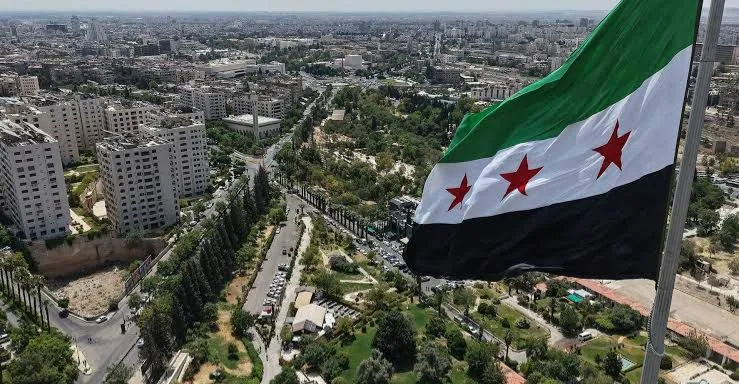
Shafaq News– Damascus
Foreign investors in Syria need legislative updates that
ensure operational stability and alignment with free-market standards, a senior
official told Shafaq News on Wednesday.
Mohammad Al-Hallaq, a member of the Damascus Chamber of
Commerce, said that the current phase requires “serious efforts to rebuild
trust between Syria and neighboring countries,” noting that investment interest
is directly linked to the availability of a safe environment based on stable
and transparent economic legislation that reflects clear future-oriented goals
and supports sustainable partnerships.
Existing legislation focuses on addressing past shortcomings
and strengthening positive aspects of the business climate, he stated, pointing
out that some countries apply internationally recognized standards related to
ownership rights, profit and capital transfers, ease of stock market
registration, and share trading, factors that enhance investment
attractiveness.
Calling for the establishment of clusters or small
industrial cities near sources of raw materials and target products for
manufacturing and export, he indicated that flexibility in creating such
clusters could strengthen Syria’s export capacity.
According to Al-Hallaq, incentive programs for exporters
should be based on their needs, with support from export support bodies, and
these steps should be followed by medium- and long-term strategies, clear
implementation plans, and a sustainable pricing policy that achieves balance.
“The absence of accurate statistics on trade volumes, saying
available official data does not reflect the full picture,” he explained,
adding that large quantities of goods entered the Syrian market after the fall
of the Bashar Al-Assad regime, requiring time to accurately assess needs and
indicators.
About Investment in Syria
A recent report by the World Bank estimates Syria’s
reconstruction needs at between $140 billion and $345 billion, with a “best
estimate” of $216 billion, nearly ten times the country’s 2024 gross domestic
product (GDP) of $21.4 billion. According to the report, these figures remain
“conservative,” citing uncertainty linked to satellite-based assessments in
areas affected by ongoing or recent conflict.
Following the fall of the Al-Assad regime in December 2024,
Western countries began easing sanctions and signaling support for foreign
investment as part of Syria’s economic re-engagement. Syrian officials said
these steps were followed by amendments to investment laws, helping attract an
estimated $28 billion in commitments during the first six months after the
changes.
Investment activity accelerated in mid-2025. In July,
Damascus hosted its first Syria–Saudi Investment Forum, which resulted in 44
agreements valued at around $6 billion. The same month, Syria signed an $800
million deal with Dubai Ports World to upgrade port infrastructure and
logistics services.
In August, Damascus concluded memoranda of understanding
worth about $14 billion with companies from Qatar, the United Arab Emirates,
Italy, and Turkiye, and a $7 billion energy investment signed in May by
Turkish, Qatari, and US companies aims to significantly expand electricity
generation and improve living conditions for millions across the country.
Among the largest infrastructure projects announced is a
multi-phase modernization of Damascus International Airport, led by a
consortium of Turkish, Qatari, US, and Syrian partners. The project, estimated
at roughly $4 billion, includes new terminals and major rehabilitation works,
with plans to increase the airport’s capacity to more than 31 million
passengers within the next decade.
Read more: Caesar Act lifted: Syria’s economy reopens, reforms await