Shafaq News
The abduction of Venezuelan
President Nicolas Maduro has dominated international headlines, redirecting
attention toward political dynamics across the Americas and the responses of
China and Russia. Despite the scale of the incident, tensions in the Middle
East have remained high, showing no signs of de-escalation.
US military activity across the
region has accelerated sharply, with deployments suggesting preparations beyond
routine exercises or force rotations. This buildup has unfolded as Iraq remains
without a new government following the November 2025 parliamentary elections,
while Washington intensifies pressure on Baghdad to dismantle Iran-aligned
armed factions operating outside state authority.
Tehran, meanwhile, faces escalating
internal unrest alongside strained relations with the United States and rising
speculation over Israeli preparations for a broad military strike against
Iranian targets and Lebanon’s Hezbollah.
These parallel developments have
reinforced warnings that the Middle East is entering a critical phase marked by
the convergence of domestic instability and external pressure.
Iran illustrates this overlap
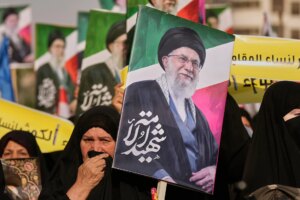
clearly. Protests, now in their eleventh day, have spread across social
sectors, drawing in merchants, students, and workers, with demonstrations
taking place daily in Tehran. Supreme Leader Ayatollah Ali Khamenei has urged officials
to engage protesters while calling for firm measures against what he described
as disorder.
The government has announced a
monthly cash grant of about $7 per citizen at current exchange rates, even as
the rial continues to lose value. Officials acknowledge that the currency’s
collapse directly triggered the unrest.
At the regional level, talk of a
renewed confrontation with Israel has intensified. US media reports have cited
an alleged understanding between Israeli Prime Minister Benjamin Netanyahu and
US President Donald Trump on launching a second strike against Iran. This has
contrasted with Western media disclosures indicating that Netanyahu conveyed a
message to Tehran, via Russian President Vladimir Putin, stating that Israel
does not currently seek escalation.
Haitham Al-Heeti, professor of
political science at the University of Exeter, said recent US military
movements toward the Middle East do not automatically signal an imminent
full-scale war. He described the deployments as part of a recurring US operational
model.
Speaking to Shafaq News, Al-Heeti
noted that the movements may pave the way for rapid and unexpected actions,
similar to those seen in other theaters, including Venezuela. “US military
strategy now favors swift, surprise strikes over prolonged conventional wars.”
On Iraq’s internal situation,
particularly the issue of limiting weapons to state control, Al-Heeti stressed
that no clear scenario has yet emerged, pointing to the absence of a fully
empowered government and the retreat from earlier commitments on disarmament.
Several factions, including Asaib Ahl Al-Haq led by Qais Al-Khazali, Kataib Al-Imam Ali, and Kataib Sayyid
Al-Shuhada, have announced their acceptance of restricting arms to the state.
Kataib Hezbollah and Harakat Al-Nujaba, however, continue to reject disarmament
without prior conditions, most notably the complete withdrawal of US and
Turkish forces from Iraq.
Recently, Kataib Hezbollah
Secretary-General Abu Hussein Al-Hamidawi said, “Iraq’s next phase requires a
fair government with full sovereignty, capable of making independent decisions
and exercising authority over the country’s land and airspace.” He also
stressed the need to build Iraq’s security forces on professional and
institutional foundations, and to equip them with the necessary capabilities to
defend the country’s territory and airspace, vowing that the “Islamic
resistance would remain ready to offer its accumulated experience in these
areas.”
Read more: Iraq’s armed factions and the disarmament debate: Why unity masks deep divisions
Al-Heeti warned that prolonged
delays in government formation or progress on the disarmament file could prompt
Washington to carry out a targeted operation. In his assessment, “the United
States works on a compressed timetable and tends to interpret delays as
political maneuvering rather than administrative obstacles.”
Monitoring platforms tracking
military aviation, along with Israel’s NSIV website, have reported extensive US
activity, including the arrival of more than 30 C-17 strategic transport
aircraft, dozens of KC-135 and KC-46 refueling planes, advanced fighter jets,
and stealth aircraft at bases in Europe and Qatar. The aircraft carrier Nimitz
has also moved toward the US Central Command’s area of responsibility.
Security analyst Adnan Al-Kinani
linked the US military buildup to fixed strategic objectives, chief among them
support for the “expansionist Zionist project.”
In comments to Shafaq News,
Al-Kinani said all potential scenarios for US action converge on weakening any
force capable of obstructing that project. Some measures, he said, apply
pressure or project deterrence, while others lay the groundwork for direct use
of force.
He did not rule out military or
intelligence operations inside Iran, portraying the current phase as a
“zero-cost war” for Washington and Israel. “The strategy relies on inflaming
internal unrest and turning public sentiment against the Iranian government
rather than engaging in open confrontation.”
Similar dynamics, he cautioned,
could surface in Iraq and Syria, where signs of tension may escalate into
internal clashes. He argued that the region is moving toward a combination of
domestic instability and synchronized external pressure, even in states that
currently appear secure.
Maduro’s Abduction has raised
concerns about the reach of American military action, according to security
expert Alaa Al-Nashoua, who emphasized that “the incident could serve as a
model for the expansion of operations into other unstable regions, including
the Middle East,” but at the same time, he argued that current US movements
largely aim to reinforce forces already deployed in the region.
On Iraq, Al-Nashoua described
Washington’s approach as uncompromising, adding that the United States has
presented Iraqi authorities with explicit conditions, including curbing Iranian
influence, dismantling armed factions, and blocking pro-Iranian political
figures from decision-making positions. Failure to comply, he warned, could
reshape Iraq’s political landscape.
Read more: US strategy 2026: Containment or military strike for Iraqi armed factions
Al-Nashoua also highlighted the role
of Trump’s Envoy to Iraq, Mark Savaya, who conveyed these demands to leaders of
political blocs. “Washington prioritizes peaceful disarmament but continues to
keep military and economic options on the table.”
Written and edited by Shafaq News
staff.