Australian sustainable cleaning product startup Pleasant State will close its doors after six years in operation, as cost of living pressures force environmentally-conscious consumers to make tough spending decisions.
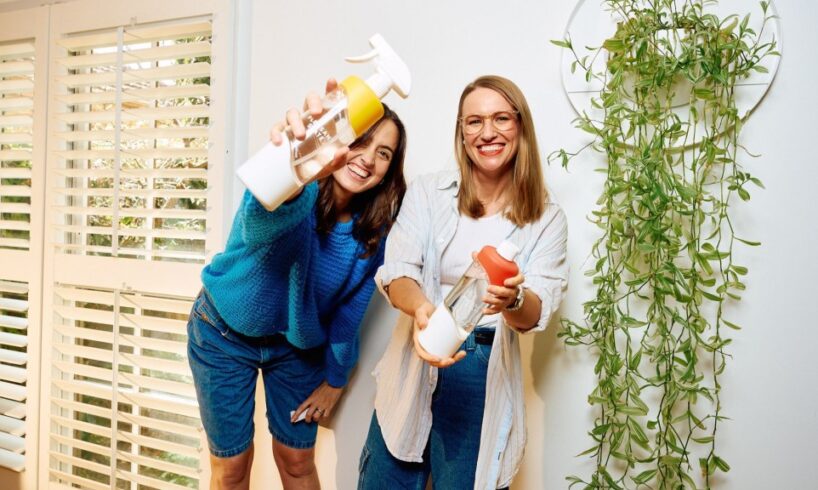
Founded in 2020 by Ami Bateman and Sian Murray, Pleasant State provides alternatives to traditional cleaning products and household sprays.
Instead of relying on single-use plastics, Pleasant State offerers refillable glass spray bottles, and concentrated cleaning product bars which dissolve in tap water.
Alongside fellow cleaning product disruptor Zero Co, Pleasant State won over consumers in the early days of the COVID-19 pandemic.
After raising nearly $90,000 through Indiegogo in late 2020, Pleasant State followed up with a Birchal crowdfunding round worth $1.06 million in 2023.
Smarter business news. Straight to your inbox.
For startup founders, small businesses and leaders. Build sharper instincts and better strategy by learning from Australia’s smartest business minds. Sign up for free.
By continuing, you agree to our Terms & Conditions and Privacy Policy.
The innovative startup also earned plaudits from Prime Minister Anthony Albanese and former New Zealand Prime Minister Jacinda Ardern.
Source: Supplied
But in a statement provided to SmartCompany on Tuesday, Bateman and Murray said the business faced multiple challenges in the past 18 months.
Tightening consumer budgets challenged its core customer base, they said, as their preference for environmentally-conscious products faced off against lower-cost alternatives.
“There’s a growing disconnect between conscious consumers and economic reality,” said Murray.
“People want to make better choices, but households are under pressure, and the cost of producing responsibly hasn’t come down.
“At the same time, there’s been an influx of low-cost cleaning alternatives that replicate the idea of refillable cleaning without the same efficacy or ethics.”
Internally, growing operating costs challenged the business.
“While we’re incredibly proud of the impact Pleasant State has made, in this chapter and in this market, we haven’t been able to make the model work long term,” said Murray.
Related Article Block Placeholder
Article ID: 320534
Bateman said the business explored partnership and restructuring opportunities, but a general meeting of shareholders resolved that Pleasant State should wind down.
“This has been the hardest decision we’ve ever had to make,” she said.
“We are deeply disappointed with this outcome, but we’re confident that we’re doing the right thing for our shareholders and the long-term integrity of the business.”
The business will hold a closing down sale, with the founders saying clearing out stock, instead of writing it off, fits with Pleasant State’s sustainable ethos.
Pleasant State will cease trading on January 27.
While its operations are coming to a close, the founders say they will hear offers for the brand’s intellectual property and other ‘strategic assets.’
“There may be opportunities for the brand, or parts of the legacy we’ve built, to continue in a new form,” said Bateman.
Pleasant State claimed to have reached 20,000 households as of 2023, while replacing the equivalent of 150,000 plastic bottles through its products.
The startup also earned B Corp certification.
Its closure follows that of Zero Co, which championed a circular economy model based on reusable plastic pouches.
That business faltered in 2024 after a costly and challenging transition to paper-based containers for its cleaning liquids and powders.