The Care Quality Commission found ‘widespread shortfalls in people’s care and the support available for them’
Sophie Fagone Buscimese Trainee Reporter
06:00, 14 Jan 2026
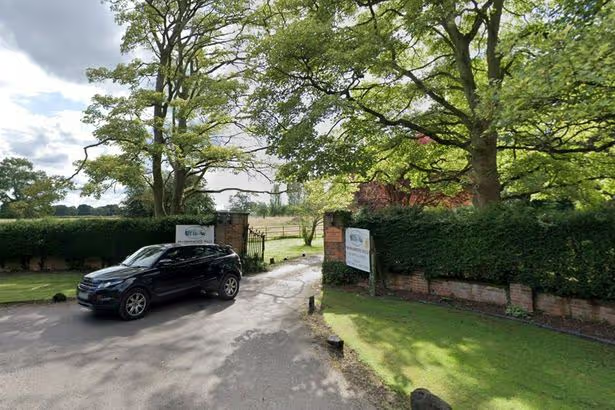
Bearwardcote Hall Residential Home saw its rating downgraded from “good” to “inadequate”.(Image: Google)
Special measures to protect residents in a Derby residential home at risk of harm have been introduced by the health watchdog.
The Care Quality Commission (CQC) has stepped in and introduced the measures Bearwardcote Hall Residential Home following an inspection in October.
The home has been downgraded from ‘Good’ – the second highest mark – to ‘Inadequate’ – the lowest possible – after inspectors found five breaches of regulation related to safe care and treatment, consent, safeguarding, staffing and management.
The Etwall-based home, run by Bearwardcote Hall Residential Home Limited, is a residential care home providing personal care for up to 38 people aged 65 and over.
At the time of the routine inspection, 23 people were using the service.
The CQC has downgraded the ratings for how safe, effective and well-led the home is from ‘Good’ to ‘Inadequate’, whilst the ratings for how caring and responsive it is have dropped from ‘Good’ to ‘Requires Improvement’.
The service has now been placed into special measures, which involves close monitoring to ensure people are safe while they make improvements.
Special measures also provide a structured timeframe so services understand when they need to make improvements by and what action CQC will take if this doesn’t happen.
The watchdog has also begun the process of taking regulatory action to address the concerns which Bearwardcote Hall has the right to appeal.
Greg Rielly, CQC’s deputy director of adult social care in the East Midlands, said: “When we inspected Bearwardcote Hall, we found widespread shortfalls in people’s care and the support available for them.
“Leaders had failed to identify, manage and mitigate risks, putting people at significant risk of harm.
“We saw leaders had failed to act on incidents or safety concerns and staff failed to record, investigate or correctly report other incidents such as allegations of abuse by people and visitors, and unlawful restraint.
“This left people and staff at risk of preventable harm. The home had limited opportunities for people to take part in activities.
“This was especially sad as we know that limited engagement with activities can lead to social isolation, particularly for people living with dementia.
“The home had a strong smell of damp and mould, which we found on ceilings, walls and windowsills. Staff hadn’t reported or addressed these issues, creating health risks for people in the home.
“We referred this issue to the environmental health department at the local authority.
“We found leaders didn’t ensure the home managed medicines and treatments effectively and there weren’t audits in place, limiting their ability to identify risks, errors or improve practice.
“Some people had prescribed medicines that carry higher risks if not managed safely, but staff put no risk assessment or monitoring plan in place which is unacceptable in a care environment.
“We have told leaders where we expect to see rapid and widespread improvements.
“We will return to check on their progress and won’t hesitate to use our regulatory powers further if people still aren’t receiving the care they have a right to expect.”
The inspection found the following shortcomings:
Staff didn’t consistently support people to be independent, make choices or have control over their day-to-day care and activities.Staff didn’t always involve people in their care planning and didn’t consider or document their needs and preferences.Leaders didn’t ensure that they safely recruited, sufficiently trained or supported staff to carry out their role, putting people at risk of avoidable harm. Staff lacked guidance on how to positively manage people’s needs, emotions and feelings of distress in a way which protected people’s rights and dignity.Inspectors weren’t assured that staff always recognised, monitored or acted on changes in people’s health, limiting opportunities to prevent deterioration.Staff didn’t maintain the home or equipment in a clean and hygienic way or consistently complete or document cleaning tasks, putting people at risk of infection and cross-contamination.
The inspection, however, also found:
People said staff were kind, caring and supportive, contributing to a positive atmosphere in the home.Staff supported people to safely use adaptive equipment, such as mobility aids, to support their independence.
Source