

Shafaq News
The security map of eastern and northern
Syria is shifting again, and for Iraq, the danger is neither conventional nor
distant. The risk lies in the fragility of control over prisons and
displacement camps holding thousands of ISIS detainees and their families. As
clashes edge closer to these facilities, Iraqi officials and security analysts
warn that the threat is structural, not hypothetical, and could materialize
with little warning.
At the center of concern are detention
centers and camps run by the Syrian Democratic Forces (SDF), most notably
al-Hol Camp. Any disruption to these sites, analysts told Shafaq News, risks
triggering a chain reaction that would not stop at Syria’s borders.
Why the Prison File Matters More Than
Frontlines
Unlike earlier phases of the Syrian
conflict, Iraq’s exposure today does not stem from advancing battle lines but
from instability around facilities that house the remnants of ISIS. The SDF has
repeatedly cautioned that international disengagement and mounting military and
political pressure have strained its ability to secure prisons and camps.
Al-Hol, located in Syria’s al-Hasakah
Governorate, remains the most sensitive file. The camp hosts tens of thousands
of people linked to ISIS, including more than 3,500 Iraqis, within a total
population exceeding 24,000. For Iraqi security planners, al-Hol represents
more of a humanitarian challenge, but it is also seen as a long-term incubator
for radicalization, recruitment, and logistical coordination.
Parallel concerns surround detention
centers scattered across northeastern Syria. The SDF says it holds between
9,000 and 10,000 ISIS fighters, many of them hardened operatives with
cross-border experience. Any lapse in control —whether caused by clashes,
political bargaining, or a sudden transfer of authority—could result in
escapes, releases, or unmanaged relocations.
Recent tensions and conflicting accounts
surrounding control of facilities such as al-Shaddadi and al-Aqtan prisons have
reinforced these fears. For Baghdad, the concern is how quickly its
consequences would travel.
Geography as a Force Multiplier
The threat emerging from eastern Syria
could be geographically defined. Al-Hol lies near Syria’s northeastern desert
belt, within reach of smuggling routes extending south and east toward the
Iraqi border. Historically, these corridors facilitated militant movement
during periods of weakened state control.
The camp’s population, in Baghdad’s eyes,
is a mobile reservoir of ideological and logistical support for ISIS. Any
security breakdown or forced displacement from al-Hol would likely push
movement toward Iraq’s western provinces, where terrain and tribal networks
have previously been exploited by militant groups.
Further south, al-Shaddadi prison sits
near desert corridors linking Syria to Iraq’s Al-Anbar province. These routes
were heavily used between 2014 and 2017 to move fighters, weapons, and funds.
Loss of control there would allow escapees to disappear into sparsely populated
terrain and reconnect with dormant networks.
Al-Aqtan prison, south of Raqqa, adds
another layer of risk. Its location near the Euphrates basin —a historical
population and logistics artery— means instability could facilitate movement
along the river corridor and reactivation of networks stretching toward
northern Iraq.
Taken together, these sites form a
north–south arc of vulnerability from al-Hasakah through Raqqa toward Iraq’s
western frontier. Iraqi officials stress that the danger lies not in mass
movement or visible offensives, but in gradual leakage, small groups exploiting
terrain, distance, and pre-existing ties. In this context, geography itself
amplifies risk, turning localized instability into a direct challenge for
Iraq’s border provinces.
Political Shifts, Security Vacuums
The risk has intensified following a
fragile ceasefire framework between Damascus and the SDF aimed at integrating
Kurdish forces into state structures and transferring control over parts of
eastern Syria. Presented initially as de-escalation, the process quickly
faltered amid disputes over authority, timelines, and governance, particularly
in al-Hasakah.
As negotiations stalled and Damascus
signaled a willingness to impose control by force, Iraqi analysts warned that
transitional phases are historically the most dangerous for prison security.
Redeployments and blurred chains of command create openings that militant
groups have repeatedly exploited.
Political analyst Imad al-Musafir
describes eastern Syria as having shifted from proxy competition to “direct
existential struggles among multiple actors,” arguing that overlapping US,
Turkish, Israeli, Syrian government, jihadist, and Kurdish interests have
turned the region into a regional fault line. In such an environment, prisons
become bargaining chips—and vulnerabilities.
Where Iraq Is Most Exposed
Contrary to common assumptions, Iraqi
officials say the greatest risk may not fall on Nineveh alone, despite its long
border with Syria. Mukhtar al-Moussawi of the Badr Organization warns that
Al-Anbar province could face greater exposure due to dormant ISIS cells,
smuggling routes, and social networks capable of absorbing returning
operatives.
Even limited infiltration —individuals
rather than units— could revive operational cells if paired with financing,
propaganda, or logistical support. The threat, security officials say, is not
invasion, but reactivation.
Is Iraq Prepared?
Iraq’s posture reflects heightened
awareness, but also clear limits.
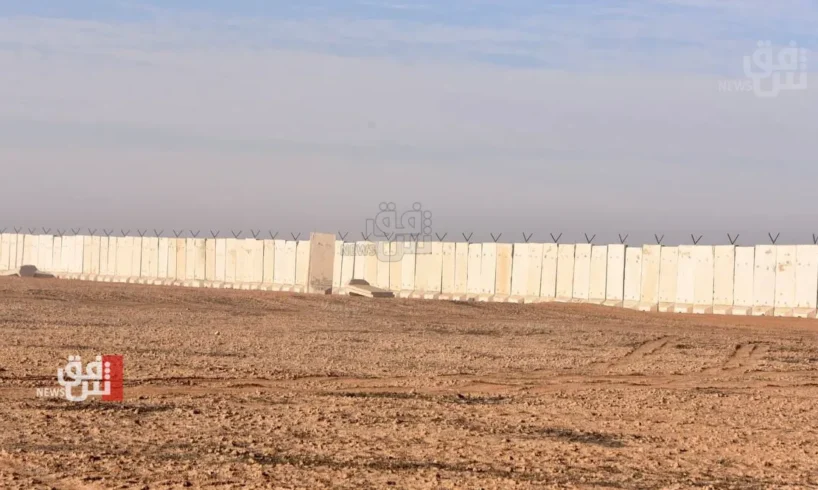
Along the border, forces have reinforced
deployments, expanded thermal surveillance, increased drone patrols, and
continued building barriers and trenches. These measures raise the cost of
infiltration but do not fully seal the frontier.
Interior Minister Abdul Amir al-Shammari
has also conducted inspection visits, asserting that Iraq’s entire border with
Syria remains under continuous monitoring.
Al-Moussawi stresses that “readiness must
be practical, not rhetorical,” focused on logistics, sustained surveillance,
and strict control of cross-border movement until Syria’s situation stabilizes.
Officials aligned with the Popular
Mobilization Forces emphasize that all units operating along the border do so
under state authority, seeking to counter concerns about fragmented
decision-making. “Iraq’s security institutions must prepare for a real
confrontation in terms of logistics, weapons, and both aerial and ground
surveillance, rather than relying on media-driven preparedness,” al-Moussawi
told Shafaq News.
Addressing concerns over armed factions
affiliated with the Islamic Resistance in Iraq, Hussein Ali al-Sheihani of the
Sadiqoun Movement —the political wing of Asaib Ahl al-Haq— said all forces
operate on the borders under state authority and the commander-in-chief, adding
that border measures were reinforced more than a week ago as preemptive steps.
Scenarios That Worry Baghdad
Security assessments in Baghdad focus on a
narrow set of scenarios that, while different in their immediate triggers, all
point toward the same strategic risk: renewed cross-border pressure on Iraq.
Chief among these concerns is the possibility of losing full control over ISIS
detention facilities as a result of fighting or political breakdowns, a
scenario that could rapidly translate into escapes or uncontrolled releases.
Closely linked is the risk of a security collapse at al-Hol camp, where any
disruption could facilitate recruitment, enable movement of extremist elements,
or lead to forced displacement toward Iraq’s western provinces.
Another source of anxiety is a prolonged
confrontation between Damascus and the SDF, which could produce extended
periods of instability and poorly managed transitions of authority —conditions
that have historically proven most vulnerable to exploitation by militant
groups. Iraqi officials are also wary of Turkish or Global Coalition
redeployments that may leave temporary security gaps during realignment phases,
creating openings for ISIS remnants to move or reorganize.
What Still Needs to Be Done
Despite visible preparedness, Iraqi
planners acknowledge that deterrence alone is insufficient. A worst-case
scenario would require tighter intelligence fusion across border commands,
sustained monitoring of hotspots in Al-Anbar and Nineveh, and calibrated
displacement and return policies balancing security with humanitarian
obligations.
Equally important is sustained
communication with Damascus to reduce surprises along the border. Al-Moussawi
confirmed that government-level contacts remain active, warning that Al-Anbar’s
risk may exceed Nineveh’s due to sleeper cells and enabling local environments.
Iraq is now approaching a more familiar
and dangerous test: whether it can prevent ISIS remnants from exploiting chaos
next door to rebuild influence at home. The outcome will depend less on troop
numbers than on timing, intelligence, and the ability to act before instability
in Syria’s prisons migrates westward once again.
Read more: Syria’s calm: An end to threat or a start of a complex security phase for Iraq?
Written and edited by Shafaq News staff.