Shafaq News
Iraq enters another phase of government
formation, and political debate has increasingly shifted beyond coalition
arithmetic toward familiar historical reference points. Discussions surrounding
potential premiership options have coincided with renewed attention to security
files and regional uncertainty, prompting political actors to revisit a formative
moment in Iraq’s recent past: the period following the withdrawal of US forces
in 2011 and the developments that unfolded in the years that followed.
In Iraqi politics, leadership debates are
rarely confined to present programs or parliamentary numbers. Certain governing
periods have become embedded in political memory, serving as benchmarks through
which current choices are assessed. Among the most frequently invoked is the
2010–2014 phase, recalled not as a single chain of decisions but as a cumulative
period marked by political polarization, institutional strain, and escalating
security challenges. As names associated with that era return to circulation,
the broader associations tied to those years have resurfaced alongside them.
The renewed prominence of the 2010–2014
period reflects more than historical interest. Political memory in Iraq
functions as an active variable during transitions, shaping negotiation
strategies, public messaging, and the boundaries of political acceptance.
References to earlier phases are often deployed as cautionary signals, intended
to frame present choices through experience rather than to reopen debates over
responsibility.
This dynamic has become particularly
noticeable as premiership discussions unfold amid unresolved governance issues
and heightened security awareness. In such moments, past cycles are recalled
less to predict instability than to emphasize the risks associated with
prolonged polarization or contested authority.
The withdrawal of US troops from Iraq in
December 2011 marked a major institutional shift in the country’s post-2003
political and security framework. What followed was a prolonged period of
political contention, beginning with disputes over government formation after
the 2010 elections, which took 289 days to conclude before Nouri al-Maliki
secured a second term as prime minister.
The years that followed were also marked
by rising tensions between the central government and several provinces,
particularly over security policies, local governance, and the distribution of
authority. Disputes over political representation, the application of
counterterrorism laws, and the continued enforcement of de-Ba’athification
measures became central points of contention, especially in Sunni-majority
areas such as Al-Anbar, Saladin, Nineveh, and Diyala.
High-profile legal actions —including an
arrest warrant issued for then-Vice President Tariq al-Hashemi in late 2011 and
security measures targeting the offices of Finance Minister Rafi al-Issawi in
2012 —were formally justified by authorities but widely interpreted by Sunni
political actors as indicators of shrinking political space. These developments
coincided with sustained protest movements between late 2012 and 2013 in
Al-Anbar, Nineveh, Saladin, and parts of Kirkuk, where demonstrators initially
advanced reform-oriented demands through largely peaceful sit-ins.
Tensions escalated sharply following the
April 2013 Hawija incident, which, according to United Nations figures, killed
a total of 712 people and wounded 1,633 others across the country. By late
2013, the prolonged political standoff intersected with renewed insurgent
activity, allowing extremist groups such as ISIS and Al-Qaeda to exploit local
grievances and a deteriorating security environment. This trajectory preceded
the loss of state control over parts of Al-Anbar and, ultimately, the fall of
Mosul in mid-2014.
Collectively, these developments have come
to define the period in Iraq’s political memory as a pre-crisis phase shaped by
accumulated institutional strain and unresolved disputes rather than by a
single triggering event.
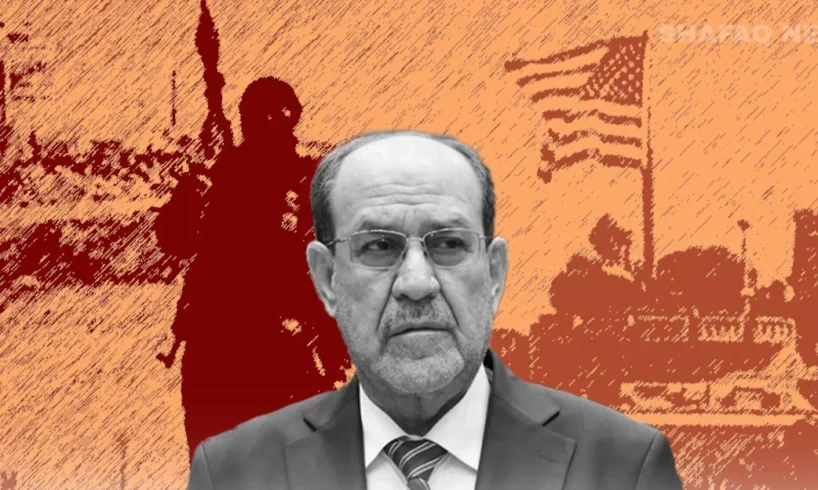
Within this context, renewed discussion of
former prime minister Nouri al-Maliki has functioned less as a reassessment of
his record than as a temporal marker reconnecting current debates with earlier
experiences. Al-Maliki served two consecutive terms between 2006 and 2014,
including the years that followed the US withdrawal, making his name closely
associated with that broader phase of Iraq’s political trajectory.
Al-Maliki’s State of Law Coalition, which
secured 29 seats in the recent parliamentary elections, positions him as a
leading contender within the Shiite Coordination Framework (CF).
Supporters within the political process
frame any potential return as a matter of experience and continuity, arguing
that Iraq’s institutions, security forces, and political environment have
evolved significantly since that time.
Critics, meanwhile, approach the
discussion through association, noting that the years linked to his tenure coincide
with episodes that continue to shape public perceptions of state fragility and
political imbalance.
In this sense, leadership debates extend
beyond individual platforms to encompass what specific periods represent within
Iraq’s collective political memory.
Current leadership discussions have
unfolded alongside renewed attention to security-related files, including
border management with Syria and the handling of detainees linked to extremist
groups. Iraqi authorities are expected to receive approximately 7,000 detainees
in coordination with the US Central Command, placing additional focus on
counterterrorism and detention infrastructure.
While these issues are being addressed
through institutional channels, their prominence has influenced political timing
and rhetoric. Historically, periods of heightened security awareness in Iraq
have tended to amplify political caution, reinforcing calls for stability,
coordination, and continuity during transitions. In this environment,
leadership figures associated with earlier transitional phases are evaluated
not only on current positions but on how their names resonate within broader
narratives of risk management.
Against this backdrop, Sunni political
messaging has emphasized the importance of national acceptance and consensus in
government formation. Former Parliament Speaker Mohammed al-Halbousi, whose
bloc holds 36 of the 329 parliamentary seats, publicly cautioned against
returning to periods marked by crisis and instability, stressing the need for a
government supported across Iraq’s political and social components.
Although his remarks avoided naming
specific individuals, their timing aligned with ongoing leadership discussions.
Political sources interpret such messaging as preventative rather than
confrontational, reflecting concerns rooted in earlier experiences rather than
an effort to block a particular candidacy outright.
For Sunni constituencies, references to
the 2010–2014 period remain closely tied to memories of protest movements,
security operations, displacement, and the erosion of trust between local
communities and the central government —factors that continue to shape how
leadership debates are framed and received.
Figures within the State of Law Coalition,
led by al-Maliki, and the broader Coordination Framework have responded by
emphasizing that leadership selection is governed by constitutional processes
and parliamentary negotiations. They have rejected the notion of political
vetoes and argued that claims of widespread rejection do not reflect the
current balance of forces within parliament.
This exchange highlights a recurring
tension in Iraq’s political system: the formal legitimacy and the broader
acceptance, which often becomes most visible during periods of government
formation.
Government formation talks are now
unfolding within this layered historical awareness, where constitutional
procedures intersect with deeply rooted political memory. References to the
2010–2014 period do not point to a return to earlier conditions, but underscore
how past transitions continue to inform present calculations at moments of
uncertainty.
The outcome of the current negotiations
will hinge not on the parliamentary alignments, but on how political actors
manage the tension between formal legitimacy and the enduring weight of
experience. The persistence of this historical frame highlights a political
system that continues to measure its choices by memory, not only numbers.
Read more: Nouri Al-Maliki: A name that still divides and tests the politics of memory
Written and edited by Shafaq News staff.