Shafaq News
By the end
of 2025, Iraq had become the second most polluted country in the world, while
more than five million cubic meters of untreated wastewater flowed into its
rivers every day —two figures that capture the scale of a country drowning in
its own environmental collapse.
From toxic
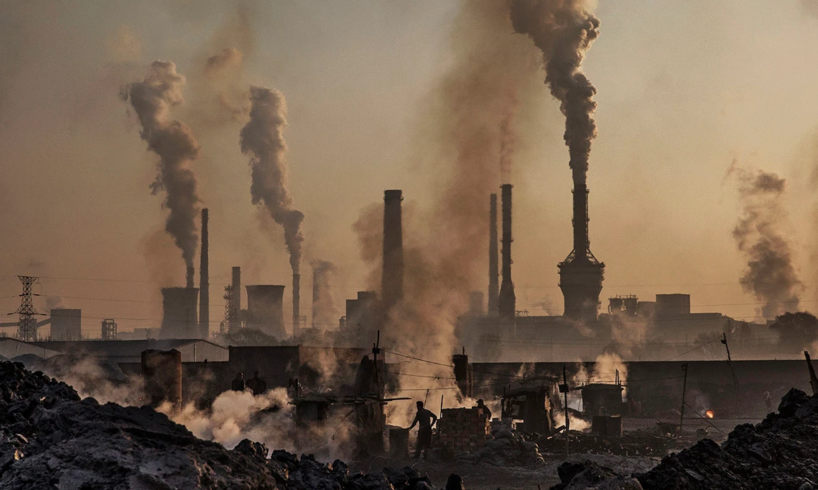
air and contaminated water to mountains of uncollected waste and the constant
hum of urban noise, pollution in Iraq is no longer a single-sector problem. It
is a nationwide condition shaping daily life and steadily eroding public
health, food security, and economic stability. Millions of Iraqis live inside
this crisis, often without the means to escape it.
The Gray
Suffocation
On many
mornings in Baghdad, a gray veil hangs over the city, blurring skylines and
muting the sun before noon. By evening, air quality monitors often register
levels unsafe even for brief outdoor activity.
In 2024, the
capital recorded an average Air Quality Index (AQI) of 113, placing it in the
“unhealthy” category for extended periods. Other Iraqi cities, including
Karbala, Al-Anbar, and Diyala, repeatedly appeared on global lists of the most
polluted urban areas.
The sources
are neither mysterious nor new. Heavy gas flaring from oil extraction —placing
Iraq among the world’s largest flaring countries— releases vast volumes of
particulate matter and sulfur dioxide into the atmosphere. Chronic electricity
shortages keep tens of thousands of diesel generators humming day and night,
while aging vehicle fleets add a steady stream of exhaust.
“Air
pollution in Iraq is no longer episodic or seasonal. It has become a constant
background exposure,” explained environmental researcher Ahmed Al-Bayati, a
professor of environmental engineering at the University of Baghdad. “When
people breathe this air every day, for years, the damage accumulates inside the
body even if symptoms do not appear immediately.”
Hospital
corridors reveal the human cost, with international disease-burden models
linking polluted air in Iraq to tens of thousands of premature deaths annually,
alongside sharply elevated risks of heart disease, stroke, and lung cancer.
Within the country, the 2025 Ministry of Health reports show rising hospital
admissions for asthma, bronchitis, and cardiovascular conditions during peak
pollution months, particularly in southern and central provinces.
Speaking to
Shafaq News, pulmonologist Dr. Zainab Al-Mousawi observed a shift in patient
profiles. “We are seeing people in their twenties and thirties with lung
function similar to that of much older patients. Many have never smoked. Their
common factor is long-term exposure to polluted air,” she explained.
Read more: The air we breathe: How pollution is quietly rewriting Iraq’s future
Wealth Wasted
According to
the World Bank, air pollution, unsafe water, and unmanaged waste together drain
several percentage points of Iraq’s GDP each year through healthcare costs,
lost productivity, and premature deaths. “Environmental harm in Iraq functions
like a hidden tax on society,” remarked Mustafa Al-Kinani, a development
economics lecturer at Al-Mustansiriyah University. “The state pays more to
treat preventable illnesses, families lose breadwinners earlier than they
should, and entire sectors operate below potential because workers are simply
not healthy.”
More than
five million cubic meters of untreated wastewater pour daily into Iraq’s
rivers, poisoning up to 90% of watercourses, according to the Ministry of Water
Resources. Only a fraction of households —30% in urban areas and 1.7% in rural
regions— have access to sewage treatment, leaving millions dependent on unsafe
surface water. In Basra and other southern provinces such as Dhi Qar, Maysan,
and Najaf, advancing seawater and shrinking river flows have pushed drinking
water salinity far beyond safe limits, sending tens of thousands to hospitals during
peak contamination periods.
Hydrologist
Ali Al-Taie, a former adviser to the Ministry of Water Resources, warned that
what Iraq is experiencing is the collapse of its water management system. When
wastewater, industrial discharge, and saline intrusion combine, ‘’you do not
just get bad-tasting water,’’ he explained, but ‘’you get a toxic mixture that
damages kidneys, livers, and the nervous system over time.”
For farmers,
the effects travel from tap to field: polluted and saline water corrodes the
soil, diminishes crop yields, and forces families to abandon lands that have
sustained them for generations.
At city
edges, the crisis is impossible to ignore. Smoke curls from open dumps where
mountains of uncollected waste smolder, injecting toxic compounds into
neighborhoods already burdened by polluted air. Iraq produces an estimated 23
million tons of municipal solid waste annually —more than two kilograms per person
each day, according to Eco Iraq— but barely half, around 11 million tons, is
formally collected. The remainder burns, spills into rivers, or rots in
informal landfills.
“When waste
is not collected and safely treated, it becomes a hazard at every stage,”
explained Sarah Al-Hakim, a consultant on urban sanitation projects. “Open
burning releases carcinogenic gases, while unlined dumps allow toxic leachate
to seep into soil and shallow groundwater.”
Read more: Pollution gnaws at Iraq: Laws without teeth, fines without impact
Screaming
Silence
Amid Iraq’s
environmental crises, noise pollution has emerged as a growing and often
overlooked hazard, posing risks as serious as air and water contamination.
Cities such as Baghdad now experience constant high-decibel levels, turning
daily life into a prolonged assault on hearing, nerves, and cardiovascular
health.
Measurements
in Baghdad over recent years have recorded noise ranging between 37.5 and 76
decibels —levels that often exceed World Health Organization recommendations
for residential areas, capped at 55 decibels by day and 45 by night. For large
segments of the population, this means living in an environment that is
chronically unsafe for health.
“The rise in
urban noise is not just an annoyance,” noted Layla Al-Kazemi, an environmental
health specialist, stressing that chronic exposure to high-decibel environments
often contributes to hearing loss, hypertension, sleep disturbances, stress,
and even cognitive deficits in children.”
Meanwhile,
the World Health Organization (WHO) warned in its August 2025 booklet that
daily exposure above 85 decibels, even for eight hours, can cause cumulative
damage to the auditory system, nervous system, and heart. Chronic exposure
above 80 decibels, as occurs in many Baghdad streets, is linked to tinnitus,
higher risks of heart disease, type 2 diabetes, sleep disorders, anxiety,
depression, and impaired concentration.
Taken
together, the evidence paints a stark reality: Iraq is not merely facing
pollution; it is living inside it —in air, water, soil, and even the food on
the table.
Because the
crisis can be measured, it can also be confronted. What remains uncertain is
whether Iraq’s political system will marshal the will, funding, and long-term
planning needed to reverse a trajectory decades in the making.
For now,
millions continue to breathe, drink, and live amid pollution that steadily
erodes their health, often without seeing the danger, but always paying its
price.
Read more: Baghdad Fading: How shrinking rivers and failed policies endanger the capital
Written and
edited by Shafaq News staff.