Home » AIRLINE NEWS » Brazil’s Top Airports in Crisis: LATAM, Azul, and GOL Struggle as 25 Flights Canceled & 166 Delayed Amid Carnaval Rush!
Published on
February 17, 2026
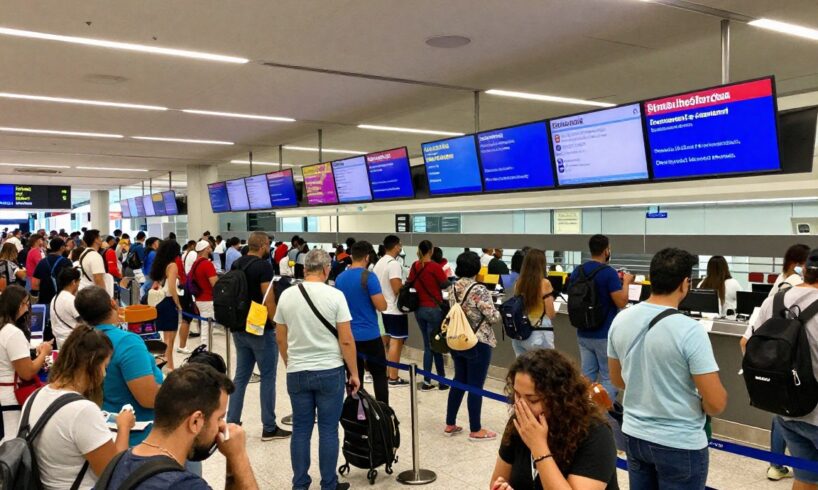
Image generated with Ai
São Paulo-Guarulhos, Brasília, and Rio de Janeiro-Galeão airports, the primary gateways to Brazil, are facing a crisis of unprecedented scale as the country’s busiest travel hubs buckle under the weight of Carnaval’s massive tourism influx. On February 15, 2026, travelers were hit with a storm of disruptions, including 25 flight cancellations and a staggering 166 delays in a single day. As LATAM, GOL, and Azul grappled with the chaos, passengers found themselves stranded, scrambling for solutions while the tourism and hospitality industries struggled to cope with the unforeseen strain. With Carnaval—the world’s largest celebration—driving millions of visitors to Brazil, the timing couldn’t have been worse. Airlines, already operating at full capacity, faced operational hurdles ranging from crew shortages to severe weather conditions. Meanwhile, hotels and restaurants in major cities like São Paulo and Rio de Janeiro were flooded with last-minute bookings, unable to keep up with the rising demand. For tourists hoping to experience the magic of Brazil’s famed Carnival celebrations, the disruptions have added an extra layer of stress and uncertainty to their travel plans. As the country’s infrastructure fights to keep up with the demand, will these flight woes ruin Brazil’s booming tourism industry, or will travelers find a way to weather the storm?
Brazil’s Top Airports in Crisis: LATAM, Azul, and GOL Struggle as 25 Flights Canceled & 166 Delayed Amid Carnaval Rush!
Brazil’s top airports are facing an unprecedented crisis, with significant flight cancellations and delays disrupting travel plans for thousands of tourists during the peak Carnaval period. São Paulo-Guarulhos, Brasília, and Rio de Janeiro-Galeão airports have been at the epicenter of this chaos, with major airlines like LATAM, Azul, and GOL struggling to maintain regular operations. The country’s booming tourism industry is feeling the strain as these disruptions not only affect airlines but also have ripple effects on hotels, restaurants, and other businesses within the hospitality sector. In this article, we delve into the ongoing crisis, its impact on Brazil’s airlines, hospitality, and tourism industry, and provide key travel tips for tourists navigating the Brazilian travel landscape this Carnaval season.
LATAM, Azul, and GOL’s Nightmare: 25 Cancellations & 166 Delays at Brazil’s Airports
Brazil’s largest airports, which serve as crucial hubs for both domestic and international flights, were overwhelmed on February 15, 2026. In a single day, a total of 25 flights were canceled, and an astounding 166 flights experienced delays at São Paulo-Guarulhos (GRU), Brasília (BSB), and Rio de Janeiro-Galeão (GIG). The situation quickly escalated, causing massive travel disruptions as airlines scrambled to manage the surge of travelers during one of the busiest periods of the year—Carnaval.
Advertisement
Advertisement
LATAM, the largest airline in Latin America, was at the forefront of the crisis, with 14 of its flights departing from São Paulo-Guarulhos alone being canceled. GOL Linhas Aéreas, another major carrier, faced similar issues with six of its flights grounded, while dozens of others were delayed for several hours. Azul, the third-largest airline in Brazil, also experienced a significant number of delays, adding to the frustration of passengers who were already under pressure from the travel peak. This wave of cancellations and delays is not an isolated incident; rather, it reflects the growing operational challenges that airlines in Brazil have been facing for months.
For tourists, this disruption marks the beginning of an unexpected and frustrating travel experience. With the Carnaval season attracting millions of visitors to Brazil, the aviation industry has been struggling to keep up with the demand. Flight schedules, already stretched to their limits, were severely disrupted by a combination of factors including weather conditions, crew shortages, and operational inefficiencies at airports.
Advertisement
Advertisement
Flight Disruptions Wreak Havoc: What You Need to Know
As airlines like LATAM, GOL, and Azul scrambled to find solutions, passengers at Brazil’s busiest airports were left in limbo. The disruptions came at a time when travelers were looking forward to one of the most vibrant and festive periods of the year—the Carnaval season, a week-long celebration of music, dance, and cultural festivities that draws millions of tourists from around the world. While the chaos at airports was largely due to logistical challenges, there were also factors like thunderstorms and staffing shortages that exacerbated the situation.
The ripple effects of this disruption extend beyond just airlines. The hospitality industry, which thrives during peak seasons like Carnaval, is facing severe challenges as well. With hundreds of flights delayed and passengers stranded at airports, hotels in São Paulo, Rio de Janeiro, and Brasília are seeing a surge in last-minute bookings. However, these establishments are struggling to meet the demand as the availability of rooms decreases. Tourists are finding it difficult to secure accommodations, especially in the more sought-after areas near the Sambadrome in Rio de Janeiro or the bustling business districts of São Paulo.
Advertisement
Advertisement
For many travelers, the hospitality industry’s challenge is not just finding a room, but navigating the unpredictable situation at airports, where flight schedules continue to fluctuate. The cascading effects of flight delays and cancellations have meant that even tourists who were able to arrive in Brazil faced challenges with transportation and settling into their hotels.
The Hospitality Sector Struggles to Keep Up
Brazil’s hospitality industry, a vital contributor to the country’s economy, is feeling the impact of the travel disruptions. Hotels in major cities like São Paulo and Rio de Janeiro are witnessing fluctuating demand, as tourists seek to book last-minute rooms after missing their scheduled flights. The availability of rooms has become scarce, and those who manage to secure bookings face skyrocketing prices, a direct result of the high demand created by the Carnaval rush.
In cities like Rio de Janeiro, where the famous Samba Schools Parade and street parties draw massive crowds, the combination of delayed flights and accommodation shortages has led to frustration. Tourists hoping to experience the full Carnaval experience now face uncertainty, as the very essence of their trip—the timing—has been compromised by the chaos at Brazil’s airports.
The impact on the hospitality industry is also being felt in the realm of dining and tourism services. With many tourists delayed or forced to alter their itineraries, restaurants and tourism operators are dealing with fluctuating reservations and unpredictable demand. While some restaurants have adapted by offering flexible bookings, the overall mood is one of uncertainty. Tourists seeking to make the most of their time in Brazil are finding that disruptions in the aviation sector are making it harder to enjoy the experiences they had planned.
Tips for Tourists Traveling to Brazil During Carnaval 2026
As Brazil’s airports and hospitality sector continue to navigate the turbulence caused by flight cancellations and delays, there are a few practical tips for travelers to ensure a smoother experience during the Carnaval season.
1. Plan for Delays and Cancellations
Given the uncertainty surrounding flight schedules, travelers should plan for delays and potential cancellations. Book flights with enough time between connecting flights, particularly if flying internationally into São Paulo-Guarulhos (GRU) or Rio de Janeiro-Galeão (GIG). Airlines like LATAM, GOL, and Azul are likely to face operational challenges during this time, so travelers should keep a close eye on their flight status.
2. Stay Updated on Flight Status
With real-time information available through apps like FlightAware and airline websites, travelers should continuously monitor their flight status. In the event of cancellations or delays, airlines like LATAM and GOL are required to provide compensation, including meals and hotel accommodation for passengers. Make sure to keep documentation of any disruptions for easy reimbursement.
3. Secure Hotel Reservations Early
Given the tight accommodation availability in major tourist cities during Carnaval, booking hotels well in advance is crucial. Hotels near the airport may offer last-minute availability, but they are often more expensive during peak seasons. To avoid being caught in a shortage of rooms, book your stay as early as possible, especially in Rio de Janeiro, São Paulo, or Brasília.
4. Consider Secondary Airports for Arrivals
While São Paulo-Guarulhos (GRU), Rio de Janeiro-Galeão (GIG), and Brasília (BSB) are the main international gateways into Brazil, considering secondary airports such as Campinas-Viracopos (VCP) or Belo Horizonte-Confins (CNF) for international arrivals can help reduce the chances of encountering travel disruptions. These airports tend to have less congestion, especially during peak travel times.
5. Flexible Travel Insurance
Travel insurance can be a lifesaver in times of unforeseen flight disruptions. Opt for a policy that covers flight cancellations, delays, and missed connections. With many travelers facing flight delays or cancellations during Carnaval, having flexible travel insurance will ensure you are compensated for any additional costs.
What to Expect at Brazil’s Top Airports
Brazil’s major international airports are essential to the country’s tourism and business travel sectors, handling millions of passengers every year. São Paulo-Guarulhos (GRU), Rio de Janeiro-Galeão (GIG), and Brasília (BSB) are Brazil’s busiest airports, serving as key points of entry for international travelers. However, these airports are also notorious for their occasional congestion, especially during peak seasons like Carnaval.
At São Paulo-Guarulhos (GRU), Brazil’s busiest airport, travelers can expect large crowds and long lines, particularly at check-in counters and security checkpoints. The airport is undergoing a series of infrastructure upgrades, which, while improving the airport in the long term, may contribute to delays in the short term. It’s essential to arrive well in advance to accommodate for potential delays at security and check-in.
Similarly, Rio de Janeiro-Galeão (GIG), while offering a vibrant airport experience, often becomes crowded during Carnaval, as the airport serves as a critical gateway for both domestic and international flights. Travelers should be prepared for potentially long waits, especially if they are arriving for the first time during peak tourism periods.
Brasília (BSB) offers an alternative for international connections but can also face delays, particularly during busy seasons. Although smaller than GRU and GIG, it still experiences congestion due to limited flight capacity during peak times.
Navigating Brazil’s Travel Chaos During Carnaval
Brazil’s major airports, airlines, and hospitality industry are experiencing a rough start to Carnaval 2026, with LATAM, GOL, and Azul facing flight cancellations and delays that have left travelers stranded and inconvenienced. The disruptions have put pressure on the tourism sector, forcing hotels, restaurants, and transportation services to adapt to the unpredictable travel environment. For tourists planning to visit Brazil this Carnaval season, it’s essential to plan ahead, monitor flight statuses, and book accommodations early to mitigate the impact of these disruptions.
São Paulo-Guarulhos, Brasília, and Rio de Janeiro-Galeão airports are in chaos, with 25 flight cancellations and 166 delays hitting Brazil’s busiest travel hubs. LATAM, GOL, and Azul are struggling to cope as Carnaval week brings massive disruptions to airlines and the tourism industry.
As Brazil continues to recover from the operational challenges at its top airports, the tourism and hospitality industries must work together to ensure travelers can still enjoy their stay. Despite the travel setbacks, Brazil’s vibrant culture, beautiful landscapes, and iconic celebrations continue to attract millions of visitors, making it a must-visit destination for travelers seeking an unforgettable experience. Whether you’re heading to Rio’s famous Samba parade or exploring the streets of São Paulo, with a little patience and preparation, your Carnaval experience can still be magical.