2026-03-11T14:39:34+00:00
font
Enable Reading Mode
A-
A
A+
Shafaq News
Iraqis are increasingly stockpiling food,
medicine, and fuel as regional tensions escalate following the United States and
Israel’s military strikes on Iran on February 28, raising concerns about
disrupted trade routes, supply chains, and economic stability across the
country.
The surge in consumer demand comes as the region
faces heightened military activity, including repeated drone and missile
attacks launched by the Islamic Resistance in Iraq against US bases and
facilities in Iraq and across the region, as well as cross-border strikes
involving Iranian opposition groups and ongoing confrontations between Iranian,
Israeli, and US forces.
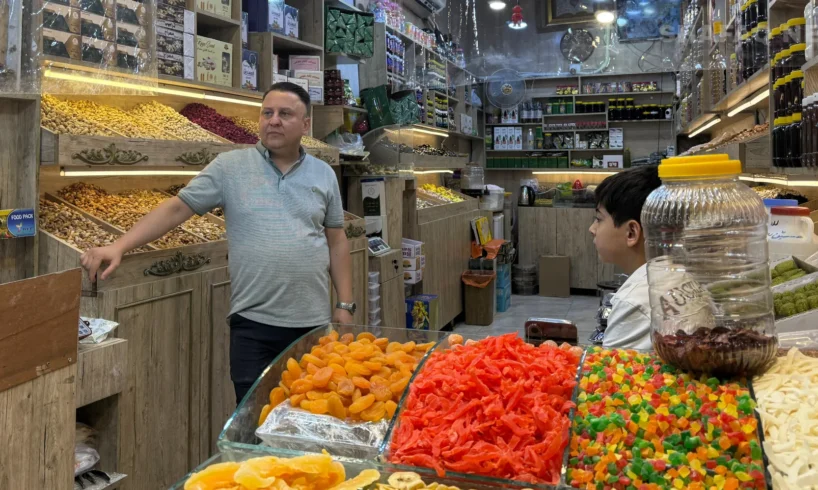
In Baghdad’s markets, traders say fear rather
than shortages is driving the rush to buy. Abu Ali, a food trader in the
capital, told Shafaq News that the current surge reflects a combination of the
traditional demand linked to Ramadan and the approaching Eid al-Fitr holiday,
alongside anxiety triggered by the regional conflict.
“The psychological factor linked to the war is
the main driver,” he explained, noting that many customers are purchasing
quantities far exceeding their immediate needs despite the availability of
goods and relatively stable prices.
Umm Alaa, a resident of Babil province, said
Iraqis’ memories of the economic sanctions of the 1990s continue to shape
public behavior during periods of uncertainty.
“The experience of sanctions made storing food
and medicine a preventive instinct that people cannot easily abandon whenever
political or economic instability emerges,” she said.
Economic analysts say the reaction reflects
broader regional uncertainty. Economist Ahmed al-Janabi linked the surge in
stockpiling to fears that the ongoing conflict could disrupt global trade
routes, particularly after the tensions led to the closure of key maritime passages
such as the Strait of Hormuz.
He also noted that rumors circulating on social
media have amplified public anxiety, prompting many Iraqis to hoard supplies
out of concern that traders may exploit the situation or that prolonged
conflict could affect government salary payments.
According to al-Janabi, roughly 70 percent of
Iraq’s consumer trade passes through Iran, making the Iraqi market particularly
sensitive to any disruption in cross-border commerce.
Another economist, Mustafa al-Faraj, said
excessive consumer behavior itself is contributing to market pressure, explaining
that panic buying has disrupted supply patterns and allowed some traders to
raise prices.
Al-Faraj added that the situation reflects a
deeper issue of public trust in state institutions, even though the Iraqi
government says sufficient reserves are available. The Ministry of Trade has
stated that Iraq holds wheat reserves sufficient for a full year and basic food
supplies for at least six months.
Concerns are not limited to Baghdad. In the
southern city of Basra, business leaders warn that Iraq’s economy remains
vulnerable to the fallout of any wider regional war.
Sabeeh al-Hashemi, head of the local
Businessmen’s Union, told Shafaq News that the closure of the Strait of Hormuz and
disruptions to maritime shipping have serious consequences for Iraq. “If the
strait closes and ships stop arriving, it would represent a major negative
development,” he said, adding that Iraq’s proximity to Iran means the country
is directly and indirectly affected by the conflict.
Despite these concerns, al-Hashemi urged
citizens to avoid excessive purchasing and limit buying to short-term needs,
warning traders against exploiting the situation.
Read more: Hormuz lockdown: Iraq’s economic lifeline under threat
Earlier, Iraq’s Ministry of Trade said the
country’s food supply remains stable and under control, emphasizing that there
are no indicators of shortages despite the regional escalation following the U.-Israeli
strikes on Iran. However, the ministry acknowledged that prices of several food
commodities have risen in recent weeks across various Iraqi provinces.
The ministry also urged citizens not to follow
rumors or engage in excessive purchasing, stressing that food supplies remain
available in local markets and that the government is continuing efforts to
stabilize prices and safeguard the country’s food security amid the regional
conflict.
Ministry’s spokesperson, Mohammed Hanoun, told
Shafaq News that the price increases are linked to a combination of regional
and international factors affecting global supply chains and trade flows.
Hanoun said the ministry continues to monitor
markets closely and is taking measures to mitigate price increases, including
maintaining the distribution of subsidized food rations and strengthening
strategic reserves.
Authorities are also coordinating with relevant
institutions to monitor markets, prevent price manipulation, and ensure the
smooth flow of imports while diversifying supply sources to maintain price
stability.
Written and edited by Shafaq News staff.