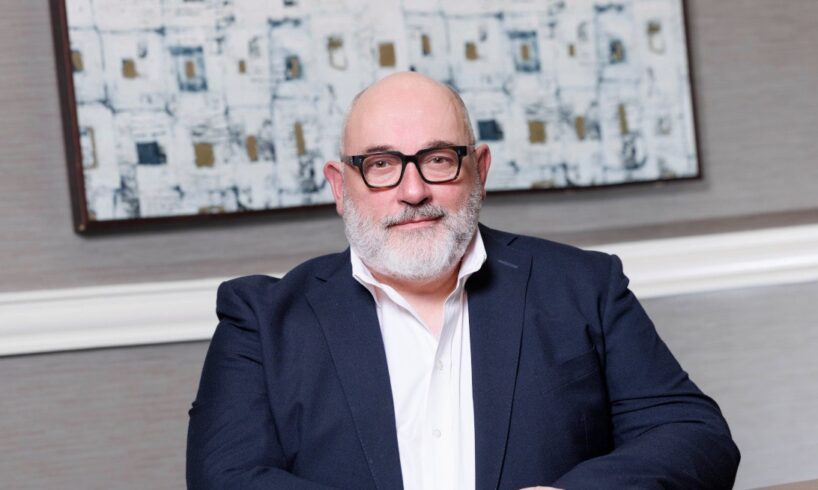
Ian Dodson discusses upskilling in an AI-driven world and the challenges professionals might face in accessing opportunities to learn.
Ireland’s AI landscape, and indeed the global space, is changing faster than most organisations and professionals can keep up with. As companies adopt new processes and employees find their roles augmented by artificial intelligence, one thing is becoming clear: organisations who want their workforce to get ahead have to consider AI education.
“Ireland’s AI training scene is growing fast, but it’s still all over the place,” said Ian Dodson, the founder and CEO of AICertified and co-founder of the Digital Market Institute.
The edtech founder added, “Most people are picking up skills through quick courses, company-run workshops, online videos, or just teaching themselves with YouTube and similar platforms. These can help you get started, but they don’t usually offer proper, structured training or widely recognised qualifications.”
Because of this, Dodson has found it can be difficult for employers and professionals to decipher who truly knows their stuff and who is simply dabbling with AI, resulting in an environment where “skill levels are all over the map and lack any meaningful credentials”.
Dodson is of the opinion that this is where programmes aligned with educational institutions, that are industry-validated and carry the potential to create the standard for professional AI competence, have a larger role to play in creating a future-focused workforce.
Established AI
For Dodson, students and professionals require a clear way to showcase the depth of their knowledge and a trusted, measurable qualifications framework has the potential to provide people with an education entry point, progression route and validation of their skills.
He said: “This lets people prove they can actually use AI well and appropriately at work, not just mess around with the tools. For employers, it takes the guesswork out of hiring or training and helps make sure people’s skills actually match what companies need.”
By developing a standard that carries academic accreditation and is recognised by key industry figures, Dodson believes that professionals and companies can build trust and consistency in a field that is “pretty uncertain right now”.
He added: “Formal accreditation means the learning is serious and meets proper standards, while industry input makes sure the skills are actually useful in real jobs. Put together, it gives employers something solid to go by when hiring or training people and it gives learners a qualification that shows they really know their stuff, not just that they’ve played around with some AI tools.”
That is, he has found, a significant challenge in the current AI training market, as too much focus can be placed on using a medley of tools without diving deeply enough into the foundational elements of the subject. Additionally, a lack of consistency in what is taught, as well as how people are graded, can present problems.
“Pretty much anyone can set up a course and say they teach AI, but there’s often no good way to tell if people have actually learned anything useful,” Dodson explained.
“So, certificates might just mean someone showed up and companies can’t be sure that training actually leads to real skills.”
On a broader scale, by connecting AI education to the European Qualifications Framework, he noted, certification will actually match wider European expectations.
He said: “The framework sets out what skills and knowledge people should have at different levels, so AI courses can match up to these standards. That way, Irish professionals can prove what they know wherever they go in Europe, and it makes the qualifications more respected and useful.”
No one left behind
We live in an era where knowing how to use AI, both responsibly and effectively, is becoming as vital as was learning how to navigate the web in the early days of the internet. As AI is increasingly used in everyday tasks – for example, in data collection, clean-up, administration, content-creation and more – those who lack the skills risk falling behind professionally.
Dodson stated: “If you don’t pick up these skills, you might miss out on a lot of new opportunities. AI isn’t just for specialists anymore, it’s becoming a must-have skill in most jobs”, adding, “Government, colleges, and businesses all need to be pulling in the same direction, not just offering more courses, but actually building a joined-up system that turns big plans into real skills.”
Ultimately, he noted, the real challenge in AI education is not just about having access to the tools and technologies, it is about establishing clear and trusted learning routes for those who want to expand their skillsets for the long-term.
“As AI becomes a normal part of business and daily life, we’ll need proper qualifications and training that really mean something. If Ireland gets these standards in place soon, it’ll help make sure AI is used well and for the right reasons, not just as a gimmick.”
Don’t miss out on the knowledge you need to succeed. Sign up for the Daily Brief, Silicon Republic’s digest of need-to-know sci-tech news.