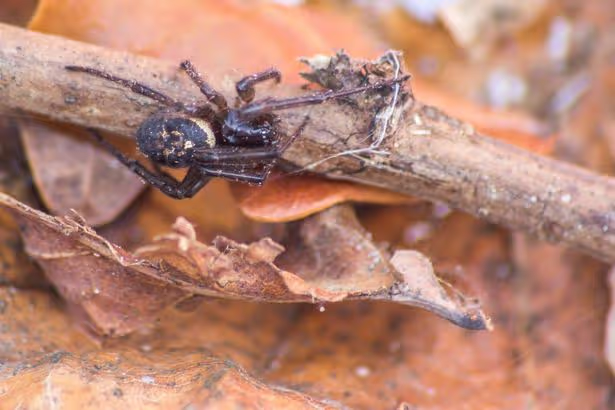
People are being urged to be careful when around their gardens or grass areas this summer
These spiders are known as the most dangerous in Ireland and the UK(Image: Getty)
A mild, wet winter combined with a warmer than average spring has sparked a population boom of one of Britain’s most dangerous spiders.
As their numbers continue to climb, bites from these creatures are now leading to more hospital admissions than ever before, according to a Freedom of Information Act request by the Press Association.
The UK’s NHS figures show that there were 100 hospital admissions in 2025 related to spider bites, up from 47 in 2015.
Ireland weather forecast ‘cloudless skies’ as hottest days pinpointedWatch as hunt on to find Galway heroes who stopped car jacking thug
This dramatic increase is being linked to the rising numbers of the noble false widow spider. Michel Dugon, a zoologist specialising in venom systems at the University of Galway, described the “not surprising” figures as being down to the “explosion in the population of noble false widow”.
According to a 2020 paper by Clive Hambler, a lecturer in Biological and Human Studies at Herreford College, the false widow is the most dangerous spider in the UK due to its propensity to bite, and the infection that can result from this bite.
With its population expanding, the danger it presents is only becoming more significant.
These venomous spiders look remarkably similar to the lethal black widow, featuring rounded bodies and characteristic white or cream markings on the abdomen that can resemble a skull.
Originally hailing from the Canary Islands and Madeira, these spiders have now become established in the UK, where they are living and breeding, and inflicting painful bites.
False widow, Steatoda nobilis, spider, resting on wooden slats(Image: Andi Edwards via Getty Images)
According to British Spiders, the bite is comparable to a wasp sting and can leave sufferers feeling unwell for several days in rare cases.
As the mercury begins to climb, these spiders start to breed, so if you’re eager to prevent them from entering your home, keeping on top of your cleaning routine is absolutely essential.
False widows are frequently found in sheds, outbuildings and porches, as well as within the home itself.
Their webs can be identified by loose, tangled silk featuring a tube in one corner, where the spider hides itself away.
The British Pest Control Association recommends hoovering up these webs to eliminate them and discourage the spiders from settling in. It’s also advisable to seal any potential entry points in your porches and conservatories to stop the spiders from taking up residence.
These spiders are known as the most dangerous in Ireland and the UK(Image: Getty)
Should you find yourself on the receiving end of a bite, it’s crucial to keep a close eye on it and seek medical attention if any signs of infection appear.
As an immediate measure, treat the bite with basic first aid by:
Washing the bite with soap and waterPlacing a cold pack on for a few minutes at a timeIf possible, apply a bite spray
Over the following days, keep a close watch on the bite and consult a medical professional if any signs of infection emerge, such as worsening redness, swelling, or pain.
Join Galway Beo’s top stories and breaking news service on WhatsApp.
Click this link to receive breaking news and the latest headlines direct to your phone.
We also treat our community members to special offers, promotions, and adverts from us and our partners.
If you don’t like our community, you can check out any time you like.
If you’re curious, you can read our Privacy Notice.