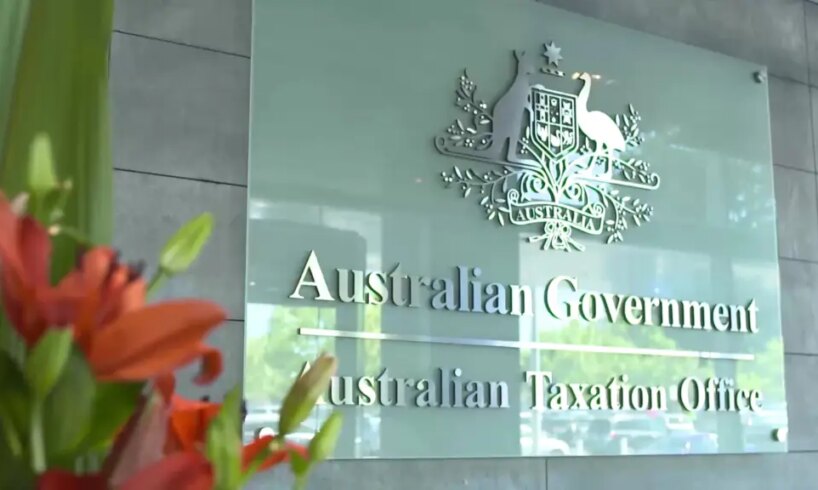
The technology underpinning payday superannuation is ready to go, the tax office and payroll platforms say, assuaging fears that software errors will leave small businesses exposed to late payment penalties.
Australian employers are bracing for the launch of payday super, which from July 1, will require employers to pay their workers’ superannuation guarantee (SG) at the same time as wages.
Related Article Block Placeholder
Article ID: 334392
The Australian Taxation Office (ATO), payroll platforms, and the super funds themselves have worked to ensure their backend systems are ready for the generational reform.
That reliability will be vital for small businesses: from July 1, employers must ensure SG lands in the correct super fund within seven business days of payday.
If they don’t, businesses could be liable for the super guarantee charge (SGC), a financial penalty imposed by the ATO, designed to encourage timely SG payment.
Smarter business news. Straight to your inbox.
For startup founders, small businesses and leaders. Build sharper instincts and better strategy by learning from Australia’s smartest business minds. Sign up for free.
By continuing, you agree to our Terms & Conditions and Privacy Policy.
Crucially, that seven-day timer will not pause if an SG payment is delayed by a technical error — even if the holdup is caused by an employer’s payroll software, clearing house, payment processor, or the superannuation fund itself.
Assurances from ATO
Speaking at the Australian Financial Review Workforce Summit in Sydney on Tuesday, ATO deputy commissioner Emma Rosenzweig outlined the challenge.
The tax office is “aware that errors in the system are a big irritant for all parties and a huge driver of costs, and we currently see a 2% error rate for about 200 million contribution transactions annually,” she said.
But payday super’s backend infrastructure is ready for the challenge, and will “significantly reduce the amount of errors getting into the system,” she said.
Related Article Block Placeholder
Article ID: 330633
Ensuring all super funds can receive SG contributions via the New Payments Platform (NPP) — which underpins the Osko bank-to-bank transfer system — will provide “greater confidence for employers, a more efficient and lower-cost system, and more time to identify and resolve errors,” she said.
Several funds have already adopted the system with the support of their clearing houses, and are already seeing some employers provide SG contributions on the same day they process payroll, she said.
The tax office is encouraging more digital service providers and clearing houses to enable NPP transfers to accommodate the payday super regime.
Additionally, the new Member Verification Request system will help “payroll or HR teams to verify the information you have gathered to make sure a super contribution is all accurate before you submit it through,” Rosenzweig said.
This pre-check system could help employers dodge “up to 90% of current errors” before they occur, she said.
Some errors are inevitable, said Rosenzweig, but the deputy commissioner reiterated that the ATO will not clamp down on every single employer caught out by the system.
“Employers who demonstrate they are doing everything they can to pay SG contributions in line with payday cadences, are likely to be low-risk and won’t be the focus of ATO compliance activity.”
“This also applies to those employers who make honest mistakes and take steps to rectify them quickly,” she added.
Tech platforms up for the challenge
Software providers handling small business SG payments also say they are ready for the changeover.
Related Article Block Placeholder
Article ID: 333469
“Xero is 100% ready from a technology standpoint, and we’ve been on this journey for a while,” said Charlie Sheppeard, Xero’s ANZ executive general manager for strategy and operations.
“We haven’t been waiting for the July deadline.”
The business has built a self-service capability allowing employees to update and maintain their super fund details with an employer, with its Member Verification System in the works.
Sheppeard said Xero is also developing a tool that gives employers visibility over an SG payment as it flows from the company’s books and into the employee’s super fund of choice.
Smaller upstarts have also welcomed the challenge.
PaySauce, a New Zealand mobile-first payday platform expanding into Australia, promises to automatically handle small business SG obligations and speed up payments by using the NPP.
In a statement on PaySauce’s local launch, Mel Shortland-Power, a former Xero executive now working on its Australian expansion, said, “small business owners do not wake up wanting to think about payroll”.
PaySauce’s technology is “already proven and ready to scale”, she added.