A government minister said the new measure will aim to “strengthen protections in the home”
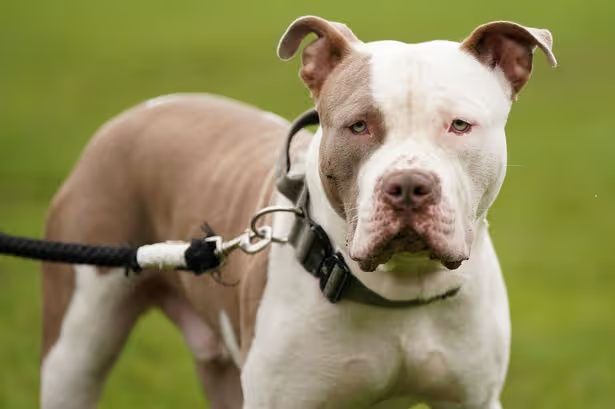
XL bully owners told they will be banned from leaving kids under 12 alone with their dogs(Image: PA)
The Government has revealed it will bring in new safety regulations for prohibited dog breeds.
In an announcement made in Parliament today, June 9, it was confirmed that the new rules will safeguard youngsters from dangerous dogs within the home and will strengthen protections surrounding banned breeds, including XL Bully types, reports Express.co.uk.
From November 1, 2026, owners will be banned from leaving a child under the age of 12 in close proximity to a banned breed dog in a domestic setting or other private settings without adult supervision.
READ MORE: Tony Livesey ‘stepping back’ from BBC show following Panorama investigation
Get breaking news on BirminghamLive WhatsApp , click the link to join
This will become a requirement of the Certificate of Exemption, which allows owners to lawfully keep a banned breed.
The new protection has been designed to minimise the risk of serious injury to children in home settings.
It will also enable exempted dogs to stay with families where appropriate supervision is in place.
As with other exemption requirements, failure to stick to this stipulation may lead to enforcement action.
This can include seizure of the dog and potential prosecution, in accordance with existing powers under the Dangerous Dogs Act 1991.
Animal Welfare Minister, Baroness Hayman said: “Any attack on a child by a dangerous dog is unacceptable.
“The safety of children must always come first, and this new measure will strengthen protections in the home by ensuring young children are not left unattended around banned breed dogs, including XL Bully types.
“While many owners are acting responsibly – those that don’t should face the legal consequences.”
While this measure applies specifically to banned breed-type dogs, young children should be supervised around all breeds of dog.
Further guidance will be published ahead of implementation on November 1.
Also being introduced are changes to the insurance requirements for owners of exempted banned dog breeds.
The requirement for third-party public liability insurance will be removed from July 1.
This reflects the withdrawal of the only available provider and the absence of suitable alternatives in the market.
All other legal requirements remain in place, including requirements for exempted dogs to be muzzled and kept on a lead in public places.
Owners remain fully responsible for any harm caused by their dogs.
Responsible dog ownership continues to be encouraged across all breeds of dog, and the Department for Environment, Food and Rural Affairs (DEFRA) keeps current dog control rules under review to ensure they are sufficient to protect communities.
In the UK, the Dangerous Dogs Act of 1991 makes it illegal to own, breed, or sell five specific types of dogs.
The classification of these dogs is determined by their physical traits rather than their breed name.
Owning any of these dogs without a valid Certificate of Exemption is considered a criminal offence.
What are the banned dog breeds?
The five prohibited breeds/types in the UK are:
XL Bully: Added more recently to the banned list. It is illegal to own an XL Bully without an exemption certificate.Pit Bull Terrier: One of the original breeds targeted due to its fighting heritage.Japanese Tosa: A large fighting breed originally from Japan.Dogo Argentino: A large, white Argentine mastiff originally bred for big-game hunting.Fila Brasileiro: Also known as the Brazilian Mastiff, known for its tracking abilities and size.
What are the rules for exempted dogs?
Those who own a dog matching the physical characteristics of a prohibited breed but possess a valid Certificate of Exemption must comply with stringent legal obligations.
The dog must:
Be microchipped and neutered.Be kept on a lead and securely muzzled at all times in public.Be insured with third-party liability insurance.Be kept at a registered address (you must inform authorities if you change your address).Be available for police or council inspection upon request.
Source