School leaders are looking to make the unit as ‘high quality’ as possible, but the costs of inflation are biting
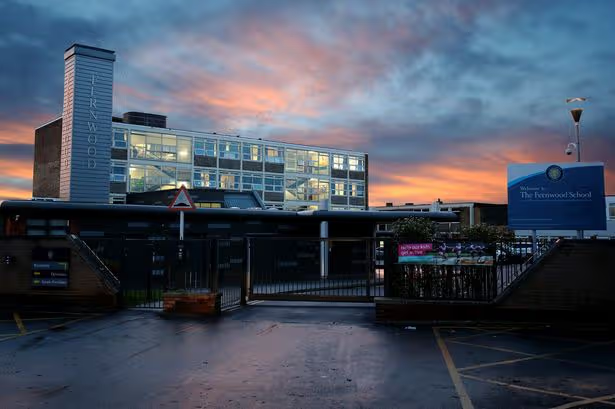
The Fernwood School in Wollaton.(Image: Joseph Raynor / Reach PLC)
Difficult economic conditions and further planned improvements have caused the cost of a new special educational needs school unit in Nottingham to soar by more than £800,000.
A new Special Educational Needs and Disabilities (SEND) unit, fit for 24 key stage three and four pupils with moderate learning difficulties and autistic spectrum disorder, is being built at Fernwood Academy, in Wollaton.
School leaders are looking to make the unit as “high quality” as possible, and more money is now going towards new life skills kitchens, more sensory garden equipment, and extra car parking spaces.
The current sensory garden is located where the new unit is planned, and pupils have expressed their desire to keep the garden, but in a different location, which also comes with extra costs.
The proposals to design and construct the new facility were first approved back in 2024.
Some of the costs relate to inflation, while the school has requested a series of further improvements to improve the overall scheme.
Costs for the scheme first increased from an initial £2.75 million in 2024 to £3.15 million in May, last year.
An extra £830,000 is now needed to cover the costs of inflation, as well as the new improvements to the scheme, bringing the overall cost to £3.98 million.
The main improvements to the scheme include the life skills kitchens and new car parking.
Nottingham City Council officer, Helen Wallace, says in a report: “The updated designs better meet the needs of pupils with SEND.
“The plans include dedicated calm spaces, life skills kitchens, a relocated parking facility with clear access routes, a safe turning circle and drop‑off area, and improved pedestrian segregation.
“These features are critical for ensuring predictable, low‑stress arrival routines that help pupils regulate and transition into learning.”
The life skills kitchens will offer significant benefits for both pupils and the council, the council says.
For pupils with additional needs, the space will provide “a safe, structured environment to learn essential skills such as food preparation, cooking, hygiene, and independent living routines and skills that directly support long‑term independence, confidence, and improved life outcomes.”
For the council, the investment is said to be cost‑effective because it reduces future reliance on costly adult social care, by equipping young people with practical skills they will use throughout adulthood.
SEND costs have been soaring for all councils that are responsible for such services.
Councils, including Nottingham, have been given money by the Government to increase the number of SEND spaces in local authority-run schools, reducing the reliance on costly external placements and the travel needed to get children to them.
Ms Wallace adds in her report: “The updated plan relocates the existing car parking and adds ten additional car parking spaces; its relocation is essential to facilitate the move of the SEND provision and to ensure the site remains safe and functional.
“Nottingham City Council’s SEND Sufficiency Strategy 2023-28 states the local authority is committed to delivering a sustainable, inclusive, and high-quality education offer for children and young people with SEND.
“The plans for the Fernwood School will ensure best value, reduce reliance on costly external placements, and strengthen our capacity to meet needs within the community.”
The extra spending is due to be approved at a meeting of senior councillors on Tuesday (May 12).