Shafaq News
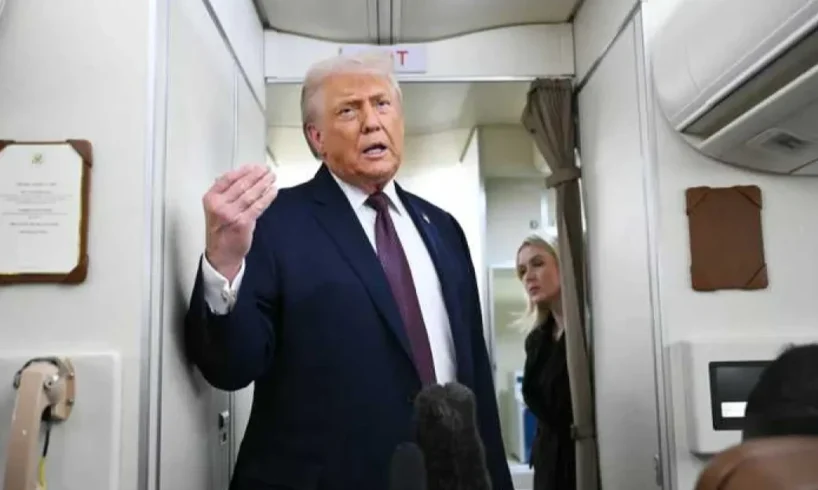
US President Donald Trump’s repeated decisions to postpone
strikes on Iran at the request of parties involved in the conflict no longer
come as a surprise. After each delay, negotiations between Washington and
Tehran regain momentum, yet the two sides have still failed to reach an
agreement.
Trump’s latest decision to suspend a planned strike on Iran,
following appeals from the leaders of Qatar, Saudi Arabia, and the United Arab
Emirates, has fueled questions over the reasons behind the US reversal. Political
observers interviewed by Shafaq News say the move reflects the convergence of
three key factors: accelerating diplomatic contacts, Gulf pressure, and the
economic and military cost of any open confrontation in the region.
At the same time, Pakistan-backed regional mediation efforts
continue to shuttle proposals between the two sides. The mediation has
increasingly shifted from seeking to end the war to preventing its return, as
both Washington and Tehran continue to reject each other’s conditions while
escalating their demands. Islamabad conveyed a new 14-point Iranian proposal to
Washington focused on ending the war, lifting sanctions, and reopening the
Strait of Hormuz, while deferring more sensitive issues, including uranium
enrichment, to later stages of negotiations.
The proposal coincided with reports of partial US
flexibility toward allowing Iran to maintain a limited civilian nuclear program
under International Atomic Energy Agency supervision, in exchange for reducing
enrichment levels and transferring part of its stockpile of highly enriched
uranium.
Despite these developments, major disputes remain
unresolved, particularly over Iran’s right to enrichment, the mechanism for
lifting sanctions, security guarantees, and the future of the US military
presence in the region. Washington continues to insist on a central demand: no
uranium enrichment inside Iran.
Read more: Force without a finish line: Iran is losing thewar, the US is losing the endgame
Crisis of Trust
Researcher on Iranian affairs Saleh Al-Qazwini said the
roots of the dispute between Tehran and Washington lie in years of accumulated
mistrust.
“The Islamic Republic does not trust the United States
because of a long history of violating agreements and failing to honor
commitments,” he told Shafaq News, stressing that Iran’s distrust does not mean
abandoning negotiations.
“On the contrary, Tehran is keen to present itself as a
state committed to political solutions, even if negotiations fail to produce
tangible outcomes.”
Al-Qazwini noted that Iran pursues a “balanced deterrence
policy,” and that “Tehran’s hand remains on the trigger, but at the same time
it is serious about negotiations.”
According to the researcher, Iran places little confidence
in US guarantees, viewing its immediate priority as “ending the war and
aggression before moving to other issues, including the nuclear file.”
Meanwhile, Iran continues to insist that ending the conflict
across all fronts in the region is a prerequisite for negotiations on other
matters, including its nuclear program.
Read more: Ceasefire without sovereignty: how Lebanon’s fragmented power blocks a peace with Israel
Cost of War
The push toward de-escalation is shaped by increasingly
difficult economic calculations inside the United States, particularly with
rising energy prices and fears that the conflict could spread across the Gulf
and disrupt the Strait of Hormuz.
Jordanian political science professor Hazem Ayad said
economic considerations have become a decisive factor in the US
administration’s decision to preserve the negotiation track.
“US markets have shown panic and alarm over the
repercussions of the war,” Ayad told Shafaq News, pointing out that persistent
concerns over inflation and the difficulty of lowering interest rates while the
conflict continues have all pushed Washington to favor the diplomatic path.” He
argued that the United States has failed to isolate Iran from China, warning
that any open confrontation could evolve into “a prolonged war of attrition
backed by international powers,” reducing the likelihood of entering a
large-scale direct conflict.
Ayad concluded that negotiations, even without a
breakthrough, remain the “preferred option” for all parties, particularly given
the difficulty of making painful concessions at this stage. “Israeli pressure
continues to heavily influence the American decision,” the academic said, and
that Israel views the conflict as “an existential issue tied to its deterrence capability
and preserving its regional position.”
Israel continues its military campaign in Lebanon despite
the announcement of a ceasefire. While Israel says it retains freedom of
movement to respond to Hezbollah violations under the agreement reached with
the Lebanese state under US sponsorship, Tehran insists, according to
statements by its officials, that ending the war in Lebanon is a core condition
in any agreement.
Read more: US-Iran talks collapse; Analysts warn of high escalation risk as ceasefire deadline nears
Negotiations at a Standstill
Essam Al-Faili, professor of political science at
Al-Mustansiriya University, said the high cost of war remains the main factor
sustaining negotiations, describing it as a genuine barrier against the
collapse of talks.
Al-Faili told Shafaq News that the mysterious military
operations and explosions witnessed across the region in recent hours,
including at sites linked to missiles and strategic weapons inside Israel,
“have exposed the scale of risks associated with any broad escalation.”
These developments prompted Washington to delay its response
to the latest 14-point Iranian initiative, noting that the US administration
has so far limited itself to media leaks suggesting the Iranian proposals
remain insufficient.
The continuation of communication channels between the two
sides, alongside regional diplomatic activity, indicates that negotiations
remain on the table as the logical alternative to war, he added, warning that
“the negotiations remain fragile and vulnerable to collapse if Washington
concludes that military action could achieve decisive results.”
The talks, al-Faili explained, are currently stuck in a
phase of stalemate and indirect messaging, but still represent the preferred
option “compared to an open-ended war with no horizon.”
Read more: US-Iran war threatens Iraq’s fragile stability
Written and Edited by Shafaq News Staff.