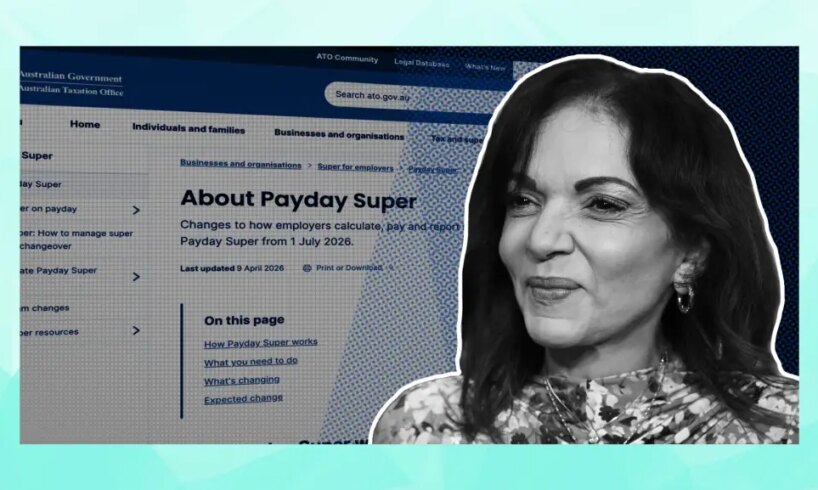
Small businesses have “come to terms” with payday super and its July 1 start date, says Minister for Small Business Anne Aly, playing down fears the seismic reforms could catch many employers off guard.
Related Article Block Placeholder
Article ID: 337715
Employers will soon need to align their employees’ superannuation guarantee (SG) payments with their standard pay runs, instead of filing those SG payments quarterly.
Shifting to fortnightly or weekly SG payments could challenge small business cash flow, and the Australian Taxation Office (ATO) itself has urged employers to plan ahead to avoid disruption.
Businesses that do not ensure payment to a worker’s super fund within seven days of payday could face penalties (though the ATO has pledged not to slug employers trying to do the right thing in the first year).
But as late as February, about a third of surveyed small businesses were still unaware of the changes, according to data from specialist lender Prospa.
Smarter business news. Straight to your inbox.
For startup founders, small businesses and leaders. Build sharper instincts and better strategy by learning from Australia’s smartest business minds. Sign up for free.
By continuing, you agree to our Terms & Conditions and Privacy Policy.
Speaking to SmartCompany this week, Aly said the small businesses she has spoken to are comfortable with the imminent reform.
“The small businesses that I’ve spoken to, who have raised this with me, they have had significant time to prepare for payday super, and they are very well aware of the significant amount of time that they’ve had to get their affairs in order,” she said.
Related Article Block Placeholder
Article ID: 332675
“Personally, I have not had small businesses come to me and say, ‘We’re not ready, the time is too short,’” she added.
The ATO hopes increasing the frequency of SG payments will help close the $6 billion gap between the superannuation owed to employees and what has actually been paid.
Employers accept the need to tighten the system, Aly told SmartCompany.
“The small businesses that I’ve met with, who do employ people and who will be affected by payday super aren’t averse to it,” she said.
“They want to look after their employees, they want to ensure that their employees get paid on time, and that they get their super paid on time as well.”
Earlier, some representative groups called on the federal government to defer its payday super timeline.
In October, the Council of Small Business Organisations Australia (COSBOA) recommended shifting to monthly SG payments on July 1 this year, with full payday super coming into effect no earlier than July 1, 2030, giving employers, payroll software companies, clearing houses, and super funds more time to prepare.
“I’ve heard that from COSBOA,” said Aly.
Related Article Block Placeholder
Article ID: 335867
“But I will say that when I go out and talk to small businesses, and specifically on payday super, I get the response that I’ve just told you, that they recognise that they have to do this, they recognise that they’ve had a lot of lead time, but they also are small businesses who care about their employees.”
In a separate statement marking the five-week countdown to payday super, ATO deputy commissioner Emma Rosenzweig said it was vital for employers to get a headstart.
“We understand when something is new, you might not get it perfect the first time, but it’s important to start, have a go, give yourself as much time as possible to fix any errors as they occur,” she said.
“If we can see employers making effort to move towards the payday model and fixing errors quickly, they won’t be the focus of any compliance actions from the ATO in the first year.”