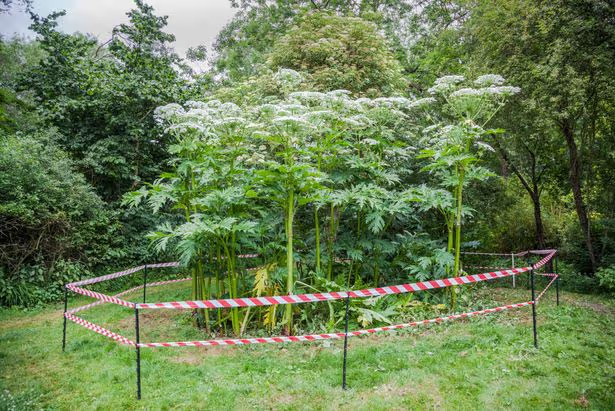
If you come into contact with the plant and the sap gets onto your skin, it can cause severe blistering and burns that may take weeks or even months to fully heal
Giant hogweed(Image: Getty Images)
Every June, searches for giant hogweed skyrocket as people spend more time outdoors and begin encountering the plant during its peak growing season.
While giant hogweed is one of Ireland’s most well-known and notorious poisonous plants, many people don’t realise it is frequently mistaken for harmless lookalikes such as cow parsley, common hogweed, and wild angelica.
To help people identify the dangerous plant safely, Eflorist‘s flower and garden expert with over 35 years of experience, David Denyer, has shared the key warning signs to look out for, the dangers associated with giant hogweed, and what to do if you spot it growing in your garden or while out walking this summer.
“June is when giant hogweed becomes much more noticeable because the plants have put on most of their growth and their large white flower heads begin appearing above surrounding vegetation,” David explained.
“At the same time, more people are spending time outdoors, so it’s natural that more people start noticing unusual plants and searching online to find out what they’ve found. Because giant hogweed is one of Ireland’s most well-known dangerous plants, people often worry whenever they see a tall plant with white umbrella-shaped flowers, even though many of the plants they encounter are actually harmless lookalikes.”
One of the easiest ways to identify giant hogweed is by its size. Mature plants can grow between two and five metres tall, making them far larger than most of the plants people commonly mistake them for.
Their stems are thick, hollow, and covered in coarse white hairs, with distinctive purple blotches or streaks. The leaves are also huge, often growing over a metre across, with deep, jagged cuts that give them a very dramatic appearance.
“Many of the plants people mistake for giant hogweed belong to the same family and produce similar umbrella-shaped clusters of white flowers, which is why they’re so often confused. However, giant hogweed is usually far larger and more robust than its lookalikes,” David said.
“When flowering, the flower heads are another giveaway. They form huge clusters of small white flowers that can reach up to 80 centimetres across, which are typically far larger than those seen on cow parsley, common hogweed, and wild angelica. If you’re unsure, it’s always best to keep your distance and avoid touching the plant until you’ve identified it properly.”
The danger comes from the plant’s sap, which contains chemicals called furanocoumarins. If the sap gets onto your skin and is then exposed to sunlight, it can cause severe blistering and burns that may take weeks or even months to heal.
David explained, “One of the reasons giant hogweed catches people out is that the reaction isn’t always immediate. Unlike stinging nettles, which cause an instant sting, giant hogweed can leave people completely unaware they’ve come into contact with the plant until serious blistering develops after their skin is exposed to sunlight.”
If you think you’ve found a giant hogweed, the most important thing is not to touch it.
Keep children and pets away from the area, and avoid attempting to remove large plants without appropriate protective clothing, as even a small amount of sap can cause a reaction.
“If the plant is growing on public land, report it to your local council or landowner. If it’s growing in your own garden, consider seeking professional advice if you’re unsure how to remove it safely. And if you do come into contact with the sap, wash the area thoroughly with soap and water as soon as possible and keep it covered from sunlight for at least 48 hours.”
Want to see more of the stories you love from RSVP ? To add RSVP as a preferred source of news on Google, simply click here