“Once you’re addicted and hooked into it, you either belong to someone or you are the man.”
Kaipo said methamphetamine dealers had moved from cities into remote areas near the coast or in the countryside.
He believed they targeted vulnerable communities because they saw them as easy places to make money.
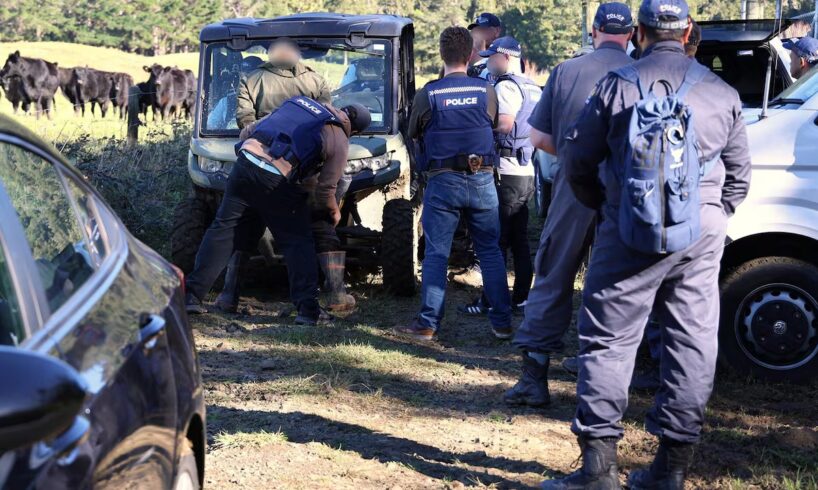
Last month, a police operation uncovered what Kaipo described. Police alleged methamphetamine was being manufactured in homes across isolated Far North communities, with single mothers allegedly being drawn into dealing after becoming addicted themselves.
Kaipo said the harm from meth addiction had a ripple effect.
“You’re sacrificing family, and you don’t even know that you’re doing it.”
Kaipo believed family could be the answer. He said he had seen “tremendous results” from whānau who took a no-frills approach to helping loved ones through addiction at home.
Ōtangarei Trust chief executive Martin Kaipo. Photo / NZME
“I think the war on drugs is not necessarily the war we should be fighting. We should be dealing with the addiction,” he said.
“You’ve got to look at the family, where the strengths are within the families, where the leadership is. And it really takes community to fight that war.”
The recruitment of vulnerable people into dealing was something Kaikohe’s Whakaoranga Whānau Recovery Hub (WOW Hub) chief executive Rhonda Zielinski said she saw reflected in her work.
“You know, it’s no different from the people in the supermarkets that give out free chocolates or taste this, taste that. It’s a marketing strategy.”
Zielinski believed Northland was a hotspot for meth use because vulnerable communities were an easy target.
“If we didn’t have people who were poor and traumatised and didn’t have all that stuff to deal with, then maybe the demand for drugs would decrease.”
Her concerns were reflected in wastewater testing from the first quarter, which showed Northland continued to have the highest per-capita daily methamphetamine consumption in the country and remained above its previous four-quarter average.
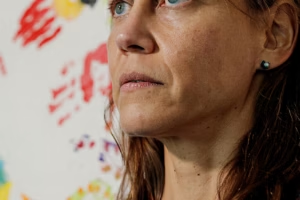
Whakaoranga Whanau Recovery Hub chief executive Rhonda Zielinski at its clinic in Kaikohe. Photo / Annaleise Shortland
Zielinski described her work as being “in the trenches” with those battling addiction.
“We need to be there because when we change one adult, we change a whole family, and that changes a whole bloodline.”
Zielinski said methamphetamine affected people’s wairua.
“Once you start taking meth, it actually robs your soul.”
However, she urged people not to judge those struggling with addiction as they were often using drugs to cope with trauma.
Zielinski said recovery was possible and could have a generational impact.
She felt the Government was so busy “whipping from the top” that it risked overlooking people who needed support to overcome addiction.
Justice Minister Paul Goldsmith disagreed.
He pointed to the meth action plan announced last November, which included $30 million over four years to increase services available to communities hardest hit.
Maritime operations to disrupt organised crime networks in the Pacific, increasing police enforcement, and strengthening border security were also announced.
Goldsmith said drug harm was an “extremely difficult” issue and the Government was working hard to turn it around.
“We’re monitoring progress closely, but we know it will take time to see consistent results.”
The scale of the problem was reflected in wastewater testing, which showed methamphetamine consumption nearly doubled in the last quarter of 2024. High availability and lower prices had “almost certainly” contributed to increased demand countrywide, according to last year’s Drugs in Wastewater Testing annual overview.
Methamphetamine use had remained at that elevated level and ticked up again this year, according to Massey University Professor Chris Wilkins, from the Shore & Whāriki Drug Research Team.
He said the cost of meth had fallen as well.
“We’re in a pretty extraordinary situation where the price of meth is now … in a similar bracket, broadly speaking, to cannabis.”
Wilkins said the methamphetamine market had changed since he began researching it more than two decades ago. Seizures that once attracted attention because they involved tens of kilograms had been eclipsed by routine interceptions of hundreds of kilograms.
Northland was the site of New Zealand’s largest methamphetamine bust in 2016, involving almost 500kg of meth, but that mark was overtaken by a 747kg haul in Auckland in March 2023.
Massey University Professor Chris Wilkins says Wilkins said the methamphetamine market has changed since he began researching it more than two decades ago. Photo / NZME
Northland’s geography made it well suited to drug smuggling, Wilkins said, with the region’s 3200km coastline providing ample opportunities to bring contraband ashore.
Evidence suggested Mexican cartels had established reliable supply routes, he said.
Prime Minister Christopher Luxon recently identified methamphetamine as a key challenge, saying drugs were reaching New Zealand via Pacific trafficking routes. He made the comments while at a Mayoral Inner City Taskforce meeting in Whangārei on Tuesday.
Prime Minister Christopher Luxon (centre right) meets with Whangārei’s Mayoral Inner City Taskforce, including Mahitahi Hauora’s Jensen Webber (from left), Deputy Mayor Scott McKenzie, Mayor Ken Couper and district commander Superintendent Matthew Srhoj. Photo / Denise Piper
He said the Government was working with international partners to disrupt supply chains before drugs reached New Zealand, while also focusing on improving addiction treatment services and identifying programmes that delivered results.
Northland District Commander Superintendent Matthew Srhoj agreed methamphetamine was an issue, especially in the Far North.
“We all do have to do our part. There has been a slight lack of co-ordination around the services and there’s probably not enough services … but I think we’re getting better at co-ordinating work and other initiatives are starting to have some impact now.”
Brodie Stone covers crime and emergency for the Northern Advocate. She has spent most of her life in Whangārei and is passionate about delving into issues that matter to Northlanders and beyond.