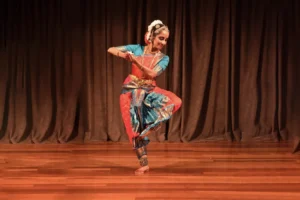
PETALING JAYA: For decades, Bharatanatyam artist Sheela Raghavan has faced the same question from people unfamiliar with classical dance.
Isn’t it boring?
Rather than dismissing the perception, the founder of Mahavidya Dance Theatre said she understood why some people felt that way.
“Our biggest challenge is simply getting people to come and watch,” said Sheela, 59, who started dancing at the age of six.
“Many people assume classical arts is boring. I don’t blame them. If you don’t know what’s going on, it’s easy to think it’s boring.”
She believes the problem is not the art form itself, but that audiences are often expected to follow centuries-old stories and symbolism without any guidance.
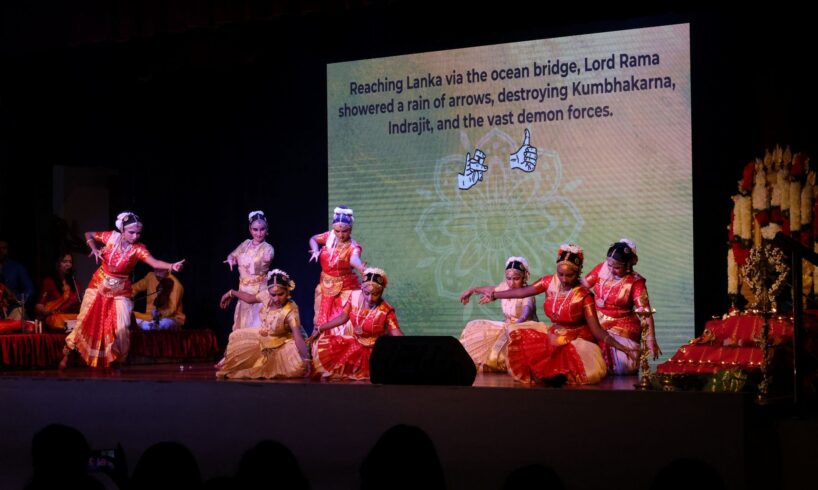
To bridge that gap, Mahavidya has spent the past 25 years incorporating subtitles, projected visuals and explanations of symbolic hand gestures into its productions.
“They make a huge difference. Once people can follow the story, they’re no longer just watching dance and music,” said Sheela, who also judges dance competitions and has conducted workshops and lectures in Malaysia and abroad.
“They’re following the narrative. That’s when they really begin to enjoy it.”
The idea did not originate in Indian classical dance. Sheela admitted she borrowed it from Italian opera, where audiences have long relied on subtitles to follow performances.
“About 25 years ago, my sister, who works in opera, suggested I do the same for dance,” said Sheela, a regular on Malaysian television. “I thought it was an excellent idea.”
The concept later evolved after students at Akademi Seni Budaya dan Warisan Kebangsaan (Aswara) proposed adding animated backdrops and projected visuals alongside the subtitles.
Beyond translating dialogue, the production also explains the meaning behind Bharatanatyam’s intricate hand gestures and facial expressions.
“We don’t just provide subtitles. We also explain the hand gestures,” Sheela said while demonstrating some of the movements.
“So, if I make a particular gesture, give a fierce expression, and the subtitle says ‘demon’, the audience begins to connect the gesture with its meaning.
“It’s like watching a subtitled film, but with an extra layer of context.”
The approach has transformed how audiences experience her performances.
Sheela recalled a father who reluctantly attended a show to support his daughter, but left with a newfound appreciation for the performance.
“He told me honestly that he thought he would have to sit through the performance because of his daughter,” she said.
“Then he said, ‘For the first time, I actually understood what was happening. I genuinely enjoyed it because I understood the story.’
“That meant a great deal to me.”
Ramayana as a shared Asian heritage
Mahavidya Dance Theatre’s use of subtitles was particularly evident in its recent staging of Ayodhya Putra on June 28, a production so well received that Sheela has been invited to stage it again.
The production delivered a vivid, emotionally charged rendition of Prince Rama and Sita’s triumph of light over darkness, brought to life by 21 dancers accompanied by a distinguished live orchestra.
For Sheela, choosing the Ramayana was an attempt to present a story that belongs not only to Indian tradition, but to a shared Asian cultural heritage.
“If I were staging something in Malaysia, it should be something that resonates with everyone, rather than something viewed as purely Indian,” she said.
“The Ramayana is part of our heritage. I’m not just talking about Indian heritage; it’s really part of Asian heritage.”
Versions of the epic have taken root across the region over centuries, from Thailand’s Ramakien and Cambodia’s Reamker to Indonesia’s Kakawin Ramayana and Malaysia’s own adaptations, passed down through dance, literature and wayang kulit.
As the story travelled between kingdoms and cultures, each society reshaped it to reflect its own beliefs, artistic traditions and historical experiences.
“In those days, myths were how people recorded history,” Sheela said.
“As stories were handed down from one generation to another, elements of truth remained, but they became embellished according to each culture’s traditions.”
She noted that even familiar characters evolved across different versions. Hanuman, revered in India as the embodiment of devotion and loyalty to Prince Rama, is portrayed with a far more playful and mischievous personality in the Balinese tradition.
“There are at least 54 versions of the Ramayana, and probably many more,” she said. “The version I staged is simply one interpretation.”
Sheela hopes Mahavidya Dance Theatre’s continued use of subtitles and contextual explanations will encourage audiences to look beyond the visual spectacle and better understand the stories, symbolism and cultural traditions that shape each performance.