PETALING JAYA: As Mahavidya Dance Theatre prepares for a second staging of Ayodhya Putra, Sheela Raghavan is thinking beyond the performance itself.
For her, the production is part of a much larger conversation about arts education, cultural policy and whether Malaysia is doing enough to support its creative sector.
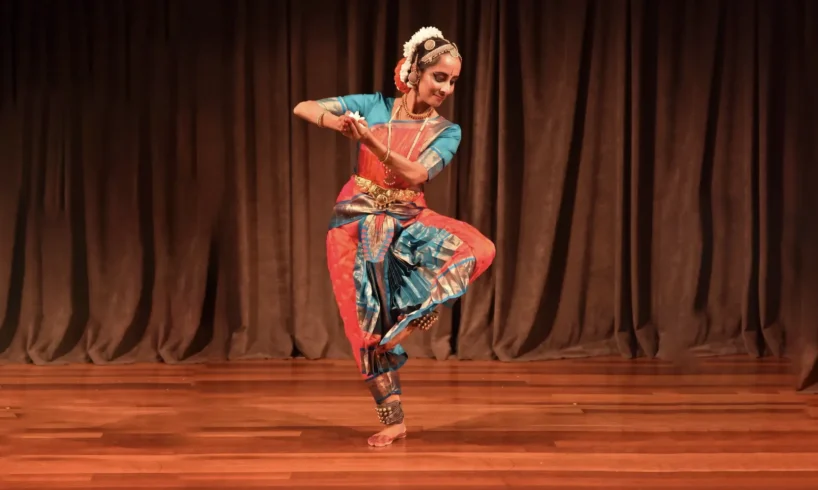
Sheela (main image), founder of Mahavidya Dance Theatre and the creative force behind the reimagining of the Ramayana, said sustaining arts organisations in Malaysia often begins with fundraising rather than public support.
Mahavidya Dance Theatre is a non-profit organisation committed to promoting and preserving traditional performing arts among underprivileged children in Malaysia.
“We rely entirely on donations. Thankfully, we’ve always managed to cover our costs that way,” said Sheela, who has been dancing for 53 years.
“If we want the arts to thrive in this country, we need a complete change in how they’re supported.”
She said greater corporate support for the performing arts through corporate social responsibility programmes would make a significant difference.
“Perhaps the government could introduce double tax deductions for companies that support the arts or performance venues. That makes it very attractive for companies,” said Sheela, a chartered accountant by training.
“For example, companies that support the arts – say they give you RM500,000 – should be allowed to claim a tax deduction of RM1 million. Things like that will help.”
Sheela also said Malaysia should look to Kerala, in southwestern India, as an example of how government policy can nurture artistic talent from an early age.
There, students are encouraged to learn a fine art – music, dance or percussion – as part of their education, with annual competitions involving around 12,000 schools from local to state level.
The result is an ecosystem that supports teachers, creates employment and continuously develops new generations of artists.
“The aim isn’t to make everyone a professional artist, but to develop an appreciation of the arts,” said Sheela, who has received several Shivapriya Lifetime Achievement Awards in India.
“Not every child becomes a professional athlete, but every pupil benefits from physical education. Music and dance should be viewed in the same way.
“Beyond artistic skills, they cultivate discipline, confidence and communication.”
Sheela recalled working with children from difficult family environments who found stability and purpose through dance.
“Several of them have told me, ‘If it hadn’t been for dance, we would have gone mad.’ That’s not an exaggeration,” she said.
“Children from wealthier families often enjoy piano lessons, theatre programmes and dance classes, while those from less privileged backgrounds may never receive similar opportunities.
“When they enter the workforce, they often lack confidence.”
She said too often, the arts are viewed purely as entertainment rather than as an industry capable of generating employment, tourism and investment.
Sheela added that behind every successful global music act lies an enormous ecosystem of training academies, producers, designers, marketers, technicians and creative professionals.
“The problem is that people don’t realise soft power can become a major industry,” Sheela said.
“Look at South Korea’s K-pop industry. It didn’t happen overnight. It took about 20 years.
“People only see BTS performing on stage. They don’t see the ecosystem behind it.”
Malaysia, she believes, possesses its own competitive advantage – its cultural diversity.
She recalled combining Bharatanatyam with Kelantan’s wayang kulit in an earlier production, performing alongside a tok dalang (traditional shadow puppet master), with projected visuals accompanying the performance.
“These were people who might never otherwise have watched a traditional Kelantan wayang kulit performance,” said Sheela.
“The lesson was clear – innovation does not require abandoning tradition. Sometimes it means bringing traditions together in new ways.”
Yet challenges remain for local performers as venue rental costs continue to rise, forcing ticket prices beyond the reach of many audiences.
“I had several people call me asking how much my performance cost,” Sheela recalled. “I told them only a minimum donation was required.”
Even that, she realised, could be too expensive for some.
Whenever possible, she quietly invited people to attend as her guests because sponsors had helped offset production costs.
“Most artists don’t have that opportunity,” she said. “They’re barely breaking even.”
Her concerns echoed calls for reform within the live entertainment industry.
Earlier this month, Industries United, representing 123 trade associations and chambers of commerce, and the Malaysian Association for Arts, Live Events, Concerts and Festivals (ALIFE), called for the abolition of the Entertainment Duty Act 1953, arguing that the colonial-era levy no longer reflects the needs of Malaysia’s modern creative economy.
The groups said the duty, which can reach 25 per cent in some jurisdictions and applies to most ticketed entertainment, raises ticket prices, increases costs for organisers and disproportionately affects grassroots performers.
They also cited inconsistent implementation across states as a barrier to industry growth, while urging the government to extend its entertainment duty exemption for international live performances nationwide to boost investment, jobs and regional economic activity.
Ultimately, Sheela said meaningful change required long-term thinking rather than short-term political cycles.
“If K-pop took 20 years to develop, then we should be thinking in terms of at least 10 years,” she said.
Traditional art forms such as Main Puteri and wayang kulit, Sheela argued, deserve to be seen by Malaysians, not only by tourists.
One of the greatest obstacles is the tendency to confuse culture with religion.
She said Malaysia should take a leaf out of Indonesia’s playbook.
“They’re very clear about being Muslim, and they’re equally clear that their traditional culture is part of their heritage,” she said.
“Separating culture from religion allows people to celebrate their heritage without compromising their faith.”
“If you don’t know your history, you’re weakened as a nation.”
Sheela said investing in the arts is about far more than staging performances.
“It is about nurturing confident citizens, preserving cultural heritage and building a creative ecosystem that strengthens both society and the economy for generations to come.”