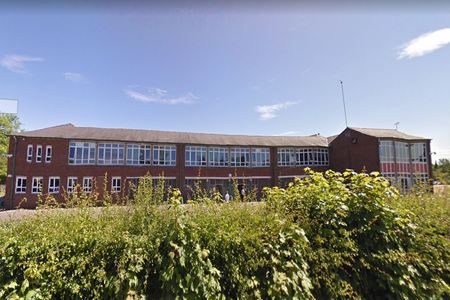
In papers released on Thursday ahead of an 18 December East Dunbartonshire Council meeting, officers outlined the updated costs of the project. These costs include the need to remove “hazardous waste” materials from the site, which could cost up to £4.8 million.
The papers do not provide line-item expenses to account for the full increase from the original estimate.
The council’s choice to build on the site of the current Whitegates Park has sparked controversy within the community.
When Whitegates Park was selected as the preferred site in 2022, there were already documented concerns about contamination. A 2018 feasibility study, originally carried out for a new additional support needs (ASN) school, found the site to be “toxic”, “likely to have ground contamination issues”, and “not feasible” for construction.
The contamination was not referenced directly in the 2022 paper which recommended Whitegates as the preferred site.
When asked this week how long officials were aware of the contamination and the cost of removing it, a council spokesperson said that “there are contaminants present beneath the ground, but the site is not classified as contaminated land.”
They added that the there would be no reason to address the contamination if the site were not being used for construction.
“The site is perfectly safe for its current use and had the new school project not required a reprofiling of the site topography there would be no requirement to remove any materials from site.
“As the site topography will be altered then there will be a requirement to remove some of the contaminants from the site at an estimated cost of £4.8m.”
Read more
The new Lenzie Academy as part of the Scottish Government’s £2 billion Learning Estate Investment Programme (LEIP). LEIP provides support to local authorities for school improvement and replacement projects. Councils pay the cost of projects up front, with government funding dependent on the size of the school roll and whether local authorities meet certain targets around building conditions, connectivity and energy usage over the course of a 25-year repayment schedule.
According to council documents, East Dunbartonshire Council expects to receive up to £52.8 million in LEIP funding, provided it meets the necessary requirements.
The council spokesperson explained that the LEIP funding in the report represents the “maximum level of funding available to deliver the project.”
They added:
“The value of the LEIP funding contribution itself is determined primarily by the school roll and through a commitment from the Council that the completed building will achieve specific performance outcomes over its lifespan, with a particular emphasis on energy efficiency and building condition.
“The funding is based on the building meeting specific criteria at the point of construction and thereafter the building being maintained and operating in line with that criteria.
“Should the building fail to operate as intended in terms of energy efficiency or drop below A or B rated for condition then LEIP funding may be reduced by the Scottish Government throughout the funding period, which is 25 years.”
The spokesperson said that Whitegates Park remains the only suitable site for the Lenzie Academy project and no others are under consideration or being costed out.
Community members had raised concerns in late November that councillors were reporting an increase in the cost of the project. When asked at the time to confirm the reports, the council responded to say that an update would be given to council in December.
The Lenzie Academy project will replace the existing school with a new 1,400-pupil campus. However, it has been regularly hit by controversy. In addition to concerns about the waste materials on the land, community members have called for more transparency over the council’s decision-making process.
Council officials did not use any scoring matrix when selecting Whitegates Park over the other shortlisted sites, and residents complained after it was revealed that councillors were advised by officers not to attend an October public meeting.
At the time, a council spokesperson explained that, while councillors are free to attend meetings if they wish, the quasi-judicial nature of planning decisions means that they must take extra care to be mindful of council rules and “the criteria for disqualification from participation at Planning Board.”
A resident lodged a complaint after alleging that a contractor had been “verbally aggressive” at the meeting in question.