Shafaq News
Iraq’s recent tax and customs
measures —introducing charges ranging between 5% and 30% on selected imported
goods— have reopened a long-simmering debate over fiscal reform, placing the
government at the center of a delicate balancing act between urgent revenue
needs and fragile living conditions. While officials insist the steps do not
amount to “new taxes,” market reactions tell a different story, as price
volatility, trader anxiety, and public confusion expose deeper structural and
institutional strains within the Iraqi economy.
At stake is not only the success of
a set of fiscal tools, but the state’s capacity to impose reform without
triggering economic disruption or social backlash in a country where nearly 90%
of public revenue still comes from oil, leaving the budget highly exposed to
external shocks.
Read more: Iraq’s economy in 2025: Oil dominance and delayed reforms
Official Denials and Political
Sensitivities
From the outset, government
officials and allied lawmakers sought to contain public anger by rejecting
claims that the measures represent new taxation, as already affirmed by the
country’s General Customs Authority. Member of parliament Ahmed Karim Al-Delfi
insisted that what is underway is not the imposition of fresh taxes, but rather
the collection of tax deposits to be settled later through electronic customs
procedures.
“There are no new taxes on imported
goods at the moment,” Al-Delfi told Shafaq News, stressing his rejection of any
levies on essential goods or services. He attributed the controversy to
misinformation and the circulation of outdated footage that misrepresented the
new mechanisms.
This narrative aligns with Prime
Minister Mohamed Shia Al-Sudani’s position, as he said that tax reform is
significant to investors and companies, noting that the government is firm in
re-establishing the business environment, while indicating that “the problem is
related to the tax reality,” rather than putting more taxes.
The denial reflects Iraq’s political
reality. The word “tax” remains deeply associated with protest movements,
declining purchasing power, and fears of social deterioration, making narrative
control a core element of fiscal policy rather than a secondary concern.
Read more: Iraq’s delicate maneuver: Boosting revenue without crushing consumer power
What Measures Target—and What They
Avoid
According to economic expert Osama
Al-Tamimi, the government’s recent measures targeted specific sectors rather
than basic consumer goods. Taxes were applied to gold, electric vehicle
imports, and gasoline-powered cars, while reports suggesting that medicines
would be taxed were denied by the Ministry of Health.
Al-Tamimi explained to Shafaq News
that the government is increasingly viewing taxation as one of the few
available tools to address revenue shortages, particularly as oil returns
struggle to keep pace with expenditure. At the same time, he stressed that
imposing taxes on food staples remains politically and socially untenable,
given their direct impact on daily life and the state’s reliance on the ration
card system to preserve minimum living standards.
This distinction has formed a
central pillar of the government’s defense, alongside repeated assertions that
the measures constitute administrative “organization” rather than new fiscal
burdens.
Structural Pressures Behind the
Shift
The renewed push toward taxation is
rooted in long-standing structural weaknesses. Iraq’s fiscal model remains
overwhelmingly dependent on oil, while salary obligations, pensions, and social
spending continue to rise steadily.
This imbalance has eroded financial
flexibility, exposing the state to oil price fluctuations and global market
disruptions. These domestic constraints intersect with an unsettled
international environment marked by economic slowdown, trade disputes, and
tighter customs regimes, developments that amplify the sensitivity of
import-dependent economies like Iraq to any changes in tariffs, taxes, or
currency flows.
Within this context, the
government’s turn toward non-oil revenue reflects a growing recognition that
oil alone can no longer sustain public spending indefinitely.
Read more: Deficit soars, projects freeze: Iraq heads into 2026 with NO BUDGET
ASYCUDA and Customs Reform Equation
Economic expert Safwan Qusay placed
Iraq’s measures within a broader global trend, pointing to escalating trade
tensions and revisions to customs systems worldwide. He cited US-imposed
tariffs and retaliatory steps by China, Canada, and Japan, alongside policy
adjustments in Gulf states operating within dollar-based financial frameworks.
For Iraq, Qusay argued, the
centerpiece of reform is the rollout of ASYCUDA, an automated customs
management system that covers most foreign trade procedures, designed to
regulate imports, verify invoices, and track financial transactions.
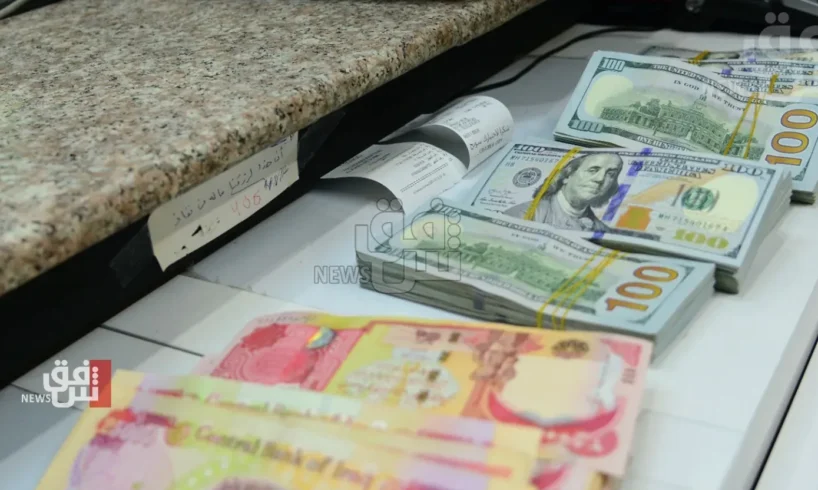
By restricting access to dollars to
legitimate trade activities, the system aims to curb customs evasion, invoice
manipulation, and undocumented imports that have long distorted the market.
Qusay noted that resistance has largely come from traders operating outside
formal frameworks, some of whom have sought to magnify fears of price hikes.
While he did not rule out limited
price increases, Qusay urged compliant traders to rely on official dollar
channels, emphasizing that Iraq’s foreign currency reserves remain at historic
highs and are capable of defending the dinar if speculation is contained and
enforcement is applied uniformly.
A Reform Postponed Too Long
Economist Ahmed Abd-Rabbu described
the current measures as a delayed but unavoidable correction. Speaking with our
agency, he argued that similar reforms should have been implemented nearly a
decade ago, warning that postponement has only increased their disruptive
impact.
Abd-Rabbu said that comprehensive
and uniform enforcement could generate up to seven trillion Iraqi dinars in
annual revenue. Failure to proceed, he warned, could ultimately leave the
government unable to meet salary obligations, transforming fiscal reform from a
policy option into a necessity.
He also noted that preparations for
the new tax framework —scheduled for January 2026 and expected to cover roughly
6,000 imported goods— have already produced a market shock. Some traders halted
sales or suspended imports in anticipation of higher costs, increasing demand
for hard currency and pushing activity toward parallel markets.
Inflation Fears and Market
Volatility
Economist Bassem Jameel Antoine
offered a more cautious outlook, warning that the new taxes could fuel monetary
inflation that may prove difficult to reverse. In an interview with Shafaq
News, he described current price movements as “disguised speculation,” driven
less by real economic costs than by opportunistic behavior.
Antoine confirmed that rising dollar
demand comes at a time of weak purchasing power and heavy public debt,
cautioning that without addressing deeper structural imbalances, Iraq risks
prolonged market instability.
The Real Test: Enforcement and Trust
Beyond the debate over inflation or
revenue, the unfolding controversy highlights a more fundamental challenge:
Iraq’s limited capacity to enforce reform evenly. Partial application across
border crossings risks rewarding informal traders while penalizing compliant
businesses, undermining confidence in the system, and amplifying resistance.
Ultimately, the success of Iraq’s
tax and customs measures will depend less on their technical design than on
credibility, communication, and institutional coherence. Reform imposed without
trust risks being perceived as punishment rather than a necessity.
Written and edited by Shafaq News
staff.