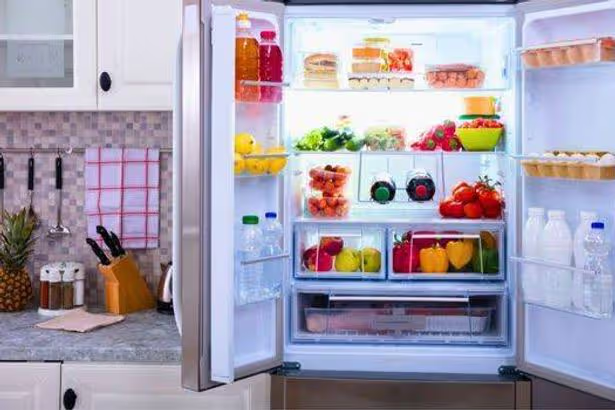
Kitchen expert says poor fridge organisation is the common mistake causing UK households to waste around £60 per month in edible food
An organised fridge will help households save money(Image: Getty)
Numerous British families face financial pressure in January, following the Christmas expenditure, and must adopt smarter spending habits to navigate what invariably feels like the year’s most drawn-out month.
One effective approach is to reduce food waste and ensure that every pound spent translates into meals consumed.
Yet, food waste remains a significant issue across Britain.
UK households are believed to be discarding approximately £60 monthly in perfectly edible food – totalling roughly 4.5m tonnes of food annually, representing a staggering £14bn.
With household expenses continuing to climb, reducing waste represents one of the most straightforward methods to economise.
Nevertheless, a kitchen specialist has warned that most families aren’t losing money through excessive shopping but rather through one widespread daily error – inadequate fridge organisation.
Salah Sun, Head of Product Management at Beko UK, explains that food waste often has little to do with overbuying and is largely a result of fridge usage.
Products often get relegated to the rear, leftovers remain unlabelled, and food deteriorates before anyone notices its presence.
Sun explains: “Many families don’t realise just how much value is lost in food that never gets eaten. Wasting leftovers or letting food spoil isn’t just bad for the environment – it’s money that could be put to better use,” reports the Daily Record.
“With energy and grocery costs higher than ever, January is a great time to make small changes that can make a big difference.”
The Beko employee has shared advice on how families can reduce food waste and maximise leftovers in the new year.
Britain discards approximately 9.5 million tonnes of food waste annually, with the majority coming from domestic households.
Alarmingly, a significant portion of this thrown-away food remains perfectly safe to eat and could be put to valuable use, with estimates suggesting the wasted food could feed roughly 30 million people each year.
Salah Sun says: “Many families don’t realise just how much value is lost in food that never gets eaten. Wasting leftovers or letting food spoil isn’t just bad for the environment – it’s money that could be put to better use. With energy and grocery costs higher than ever, January is a great time to make small changes that can make a big difference.”
Organising the Fridge
Salah highlights that the majority of waste originates in the refrigerator, where items become buried at the rear, use-by dates go unnoticed, and leftovers slip from memory.
She suggests storing items such as cooked meats and dairy products on the upper shelf, positioning raw meat on the lowest shelf, and placing fresh produce in the crisper compartments to extend their lifespan.
She added: “Label leftovers with the date you stored them, so you know how long you have to use them. Putting the newest food at the back and older items at the front means you’re much less likely to find spoiled produce weeks later.”
Items that deteriorate rapidly and warrant attention include:
Fresh BerriesAvocadosBananasBroccoliRaw FishGround BeefDeli MeatCakes and CupcakesMilk
The culinary specialist continued: “To stay on top of this, label and store foods properly in the fridge so you can keep track of expiry dates, to ensure nothing goes to waste.”
Freezer Tips
Another effective method to reduce waste involves maximising freezer usage, as cooked leftovers can be safely preserved for up to three months, Salah notes.
She stated: “The key is portioning and labelling. Freeze turkey in slices rather than whole joints so you can defrost only what you need. Bread can be frozen in individual slices and reheated in the toaster straight from frozen.
“It’s also important not to overfill the freezer. Air needs to circulate to keep food at a safe and consistent temperature, and if you’re using containers, choose stackable, airtight ones to avoid freezer burn.”
Extending Food Freshness
Studies reveal that fruit and vegetables account for the majority of discarded food items.
Salah advises: “Keep apples away from bananas, as ethylene gas from bananas speeds up ripening,” says Sun.
“Wrap herbs loosely in damp paper towels inside a container to extend their freshness. It’s always worth remembering that slightly soft veggies are still perfect for soups and stews.”
Forward Planning
Research indicates that the typical British resident discards approximately 70kg of food annually, equivalent to wasting 140 meals. Salah recommends:
“A weekly meal plan is one of the simplest fixes. Write down what you’re cooking and stick to a shopping list – it prevents duplicate purchases and ensures you actually use what you buy.
“Batch cooking is another money saver. Cook once, portion into containers, and freeze. It means you’ve always got quick meals ready to go and far less food ending up in the bin.”