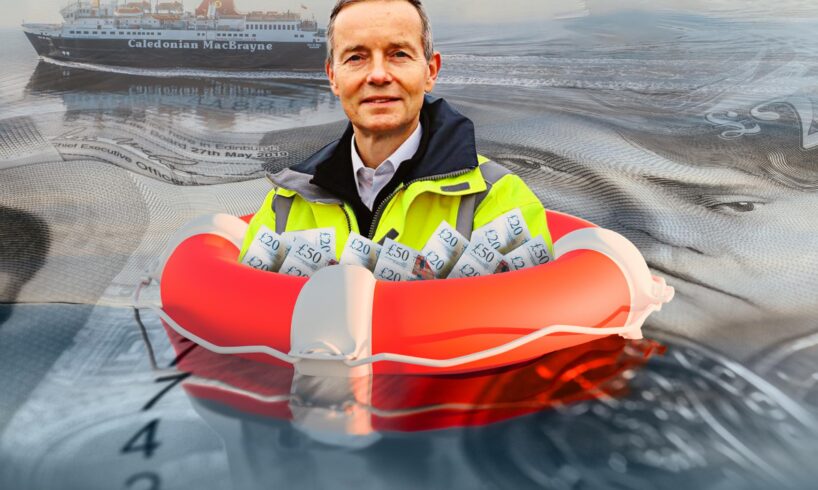
Ministers are concerned that CalMac failed to follow due process after The Herald revealed Robbie Drummond received £175,000 remuneration in a year – after being ‘fired’ after just three days of it.
It included an estimated £150,000 ‘golden goodbye’ pay off and sparked concerns of an alleged ‘breach’ of the Scottish Government’s public sector severance rules.
Read More:
The Scottish Government’s public finance manual – over the proper handling and reporting of public funds that sets out severance policy – states exit payments in public bodies “must be capped at £95,000” and includes both contractual and non-contractual elements.
But CalMac has since Tuesday declined to publicly respond to the investigation declared by ministers.
Now Holyrood’s transport committee convener Edward Mountain is seeking assurances from ministers that the silent ferry operator will co-operate.
The Scottish Conservative Highlands and Islands MSP said: “I am pleased that there will be an official probe into Robbie Drummond’s payoff, which is a total waste of taxpayer money.
Video: Holyrood transport committee convener Edward Mountain says he is seeking assurances from ministers that the ferry operator will co-operate.
“CalMac’s lack of public comment, even to indicate that they would co-operate with the civil service’s probe, shows that they are aware they should have consulted ministers on the ridiculous sum.
“CalMac has a history of mishandling public funds, so this incident will do nothing to improve the confidence the public has in how their money is being spent.”
There was concern in 2023, when CalMac, which is at the centre of a row over disruption to lifeline services in the midst of Scotland’s island transport crisis, received over £300,000 in performance bonuses and perks since taking on the contract.
Three key executives of CalMac – Robbie Drummond, Duncan Mackison, and Martin Dorchester at that point had between them pulled in £208,000 in performance bonuses and £121,000 in benefits in kind, or perks, between 2016 when the Clyde and Hebrides ferry contract was awarded to the ferry operator and 2022.
The performance payments come despite CalMac receiving £10.5m in poor performance fines in the six-and-a-half years since CalMac took the franchise – nearly eight times more than in its first nine years in charge of the beleaguered west coast fleet.
They were described as “payments for failure” by some ferry user group officials who are shocked by the bonuses in the wake of concerns over how CalMac has managed lifeline ferry services with an ageing, underinvested fleet of vessels.
Read More:
Jamie Green, the Liberal Democrats’ transport spokesman who challenged Ms Hyslop over the controversial pay off said: “It is my expectation that any public organisation being investigated for its use of public funds would cooperate fully with this investigation and actively address its findings.”
Details of the severance formed part of a settlement that was kept confidential for nearly two years by the under-fire publicly funded ferry operator.
It included not just paid six months pay in lieu of notice which CalMac had said he was contractually due, estimated to be worth over £100,000 but also £48,000 compensation for “loss of office” despite having his contract terminated.
Video: Transport secretary Fiona Hyslop told MSPs this week that she took the pay off concerns “seriously”.
Ms Hyslop said CalMac had initially insisted that the settlement agreement would be bang on the threshold of £95,000 – but that CalMac had recently advised ministers that that this figure did not include accrued holiday pay of £12,000. That took the pay off over the threshold and Ms Hyslop said they should have sought ministerial approval.
Joe Griffin, the most senior civil servant in Scotland and head of the civil service is now to look into the affair.
In October, CalMac was awarded a new ferry contract by ministers without a public tender in a decision that could cost taxpayers more than £4 billion over the next decade.
The contract, which covers lifeline ferry services to Scotland’s islands, was ratified a few days before it began on October 1 and will run for 10 years. Under the new deal, for the running of over 30 lifeline ferry routes, the annual public subsidy will jump to an average of £400 million a year, up from around £120 million under the previous contract.
Ministers say the direct award will provide stability and ensure continued service, but critics argue it lacks transparency and may have broken UK subsidy control laws.
A ferry user group official said: “We all hoped that the promises of the new contract ushering in a new way of working with the Scottish Government saying that it would be more focused on the delivery of services and that we would not get more of the same.
“We can only hope that the positive change promised becomes apparent, because exposes of stonewalling and secrecy like this are a metaphor for how poorly our services are being managed.”
Scottish Government officials have written to CalMac, the current chief executive Duncan Mackison reminding him “of the need to comply with the Scottish public finance manual and seeking a full and detailed explanation as to why due process was not followed in this case”.
CalMac had said Robbie Drummond was placed on six months’ paid gardening leave after the board made a “unanimous decision” to terminate his contract, although The Herald was told there was no formal board vote.
In the year before his dismissal, he received total remuneration of £238,000, including a £173,000 salary and £52,000 in pension contributions.
CalMac said he was contractually entitled to a six-month notice period during which he remained on the payroll but did not work. The Herald has previously revealed that Scotland’s information watchdog ruled CalMac broke transparency laws by wrongly withholding details of his severance package.
The commissioner found that disclosure would be lawful and fair and that there was a clear public interest in knowing how much senior executives at publicly funded bodies are paid on exit. It also found the ferry operator had failed to meet legal deadlines when reviewing its refusal.
Crucially, the commissioner ordered the information to be released and warned that non-compliance could be treated by the courts as contempt of court.
In the wake of the concerns, CalMac said last night: “In Parliament earlier this week, the Cabinet Secretary for Transport confirmed that officials have written to us for clarification on the process. We will respond to this letter fully, and work openly with officials looking into this further.”
A spokesman added: “Our duty of care to Mr. Drummond was at the forefront of our initial response to the FOI request. In his nine-page report following the appeal, the Commissioner acknowledged that is a factor to consider when responding to any such request.