Once the preserve of connoisseurs and collectors, niche perfumes are breaking into the mainstream and providing new opportunities for Australian fragrance makers and boutique retailers.
Experts in the field say evaporating gender barriers, an influx of young buyers influenced by social media, and resilient spending on small luxuries are benefiting local businesses.
The Australian fragrance sector was valued at nearly $1.01 billion in 2025, according to Expert Market Research, with brands under international houses like Estée Lauder, L’Oréal Groupe, and Kering dominating luxury sales.
But beyond department store concession stands and discount chemists, a growing number of consumers are paying attention to local and specialist brands.
Australian houses like Goldfield & Banks are bringing notes like blue cypress and finger lime to fine perfumery, while Mihan Aromatics promises a scent just like summer rain hitting hot pavement.
Smarter business news. Straight to your inbox.
For startup founders, small businesses and leaders. Build sharper instincts and better strategy by learning from Australia’s smartest business minds. Sign up for free.
By continuing, you agree to our Terms & Conditions and Privacy Policy.
And to find them, buyers are turning to retailers like Melbourne’s Lore Perfumery, which has championed left-of-centre scents for more than a decade.
Lore Perfumery director Jessica Tate told SmartCompany the business saw significant growth in 2025, with the retailer welcoming a greater variety of customers than ever.
Source: Facebook/ Lore Perfumery
Pinning down the ‘typical’ Lore Perfumery customer is now the “$1 million question,” she said, with the business just as likely to welcome mid-career professionals as teens seeking their first fragrance.
Not content with supermarket body sprays, a growing number of young adults are taking notes from fragrance influencers on TikTok, and Fragrantica, a wiki-like site where thousands of scent aficionados review and rate perfumes.
This new cohort, including teens knowledgeable of terms like sillage, oud, and chypre, has “really interesting taste, which is so cool,” said Tate.
Scents from major designer houses like Dior, YSL, and Tom Ford are still there for those wanting to make an impression in the workplace, at the club, or on a romantic night out.
“But I think people are wanting to shop in niche fragrance for a personal reason, as opposed to an external reason,” she continued.
And interest in niche perfumes now crosses all gender lines, she said, as buyers experiment with everything from powdery florals and pastry-sweet ‘gourmands’ to woody notes and smoky incense accords.
Related Article Block Placeholder
Article ID: 261844
“It’s a commercial fragrance marketing tactic that there’s men’s and women’s fragrances,” said Tate.
“That is so redundant in 2026.”
Expert Market Research also projects unisex fragrances to be the fastest-growing segment in the coming decade.
Niche sector “standing on its own two legs”
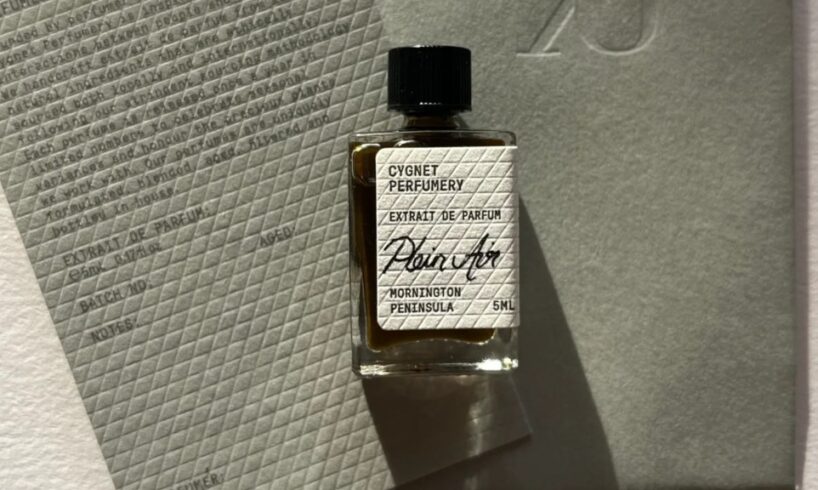
Cygnet, a boutique brand based in South Gippsland, is one of the Australian businesses serving a passionate niche of fragrance enthusiasts.
It produces extrait de parfum — which contains a higher concentration of aromatic oils than standard sprays — in once-a-year batches.
Founder and perfumer Sondrine Kehoe formulates scents like the sold-out Plein Air, inspired by the pastures surrounding the business, and Seville, combining citrus and neroli scents to conjure a feeling of fresh linen on a summer’s day.
Honing in on specific moods and motifs does not limit its audience, said Patrick Beggs, Cygnet Perfumery’s strategic director. Instead, that specificity is a drawcard.
“Some of them are based off a landscape, some of them are based off a memory, some of them are based off a story, and a lot of it is inspired by seasonal variants that you get from natural ingredients,” said Beggs.
“So batch of perfume has little unique differences, and just celebrate that.
“I think a lot of customers are really connecting with that. And then people have really gravitated towards the curtain that’s being pulled back around fragrance creation.”
Related Article Block Placeholder
Article ID: 312737
The Australian niche fragrance sector is still small compared to those found in Europe and America, but it is “standing on its own two legs,” he said.
And like skincare, savvy buyers are increasingly aware of the ingredients that go into their favourite fragrances, with many opting for natural alternatives where possible.
“I think the appetite of consumers is changing,” said Beggs.
There is a growing awareness of “what’s actually on offer, and what goes into making a perfume, and what raw ingredients can actually go in there, and maybe the appetite to really enjoy the uniqueness of that is really there,” he continued.
Samples duel against dupe culture
Increasing awareness of and desire for niche perfumes is also exposing more consumers to the luxury price tags that many products command.
Full-size 100mL bottles of eau de parfum can cost upwards of $400, making some fragrance purchases a significant financial commitment.
In Australia’s two-speed economy, these high price tags might be little deterrent to older, well-heeled consumers.
But younger consumers, without the buying power afforded by appreciating assets to their name, could be more likely to blanch at costly perfumes.
To meet that second category of consumer — curious, but without significant cash to spend on discretionary goods — many niche labels are turning to ‘discovery sets’ and sample packs.
Those 5mL spritzes and samplers offer a more affordable entry to high-end fragrance.
“They have been booming for us,” said Tate.
“I think having that option where you could have 30 different fragrances, but they’re all little minis that didn’t break the bank, but give you variety, has really taken off.
“And I think that’s what a lot of people, particularly that younger client, is doing.”
Just like the skincare sector, the fragrance world is also filled with ‘dupes’, with many brands offering fragrances that emulate the characteristics of pricier competitors.
Online, price-sensitive buyers weigh the merits of copycat scents against the real thing, and some social media users proudly flaunt collections filled with imitation fragrances.
Even in that sub-$100 space, Tate, who is “very anti-dupe culture”, sees an opportunity for boutique brands.
“If you are open to looking, you can get an awesome fragrance for $50… there really is something for everyone in the fragrance world, regardless of what you want to spend,” she said.