2026-02-03T13:33:18+00:00
font
Enable Reading Mode
A-
A
A+
Shafaq News
Few countries carry as much civilizational weight as
Iraq. Often described as the heartland of Mesopotamia, Iraq is home to some of
humanity’s earliest cities, legal systems, and cultural traditions.
UNESCO inscription provides international recognition
and places these sites under formal preservation frameworks. As of 2025, Iraq
ranked ninth among Arab countries for the number of UNESCO World Heritage
sites, holding five cultural and one mixed cultural and natural sites:
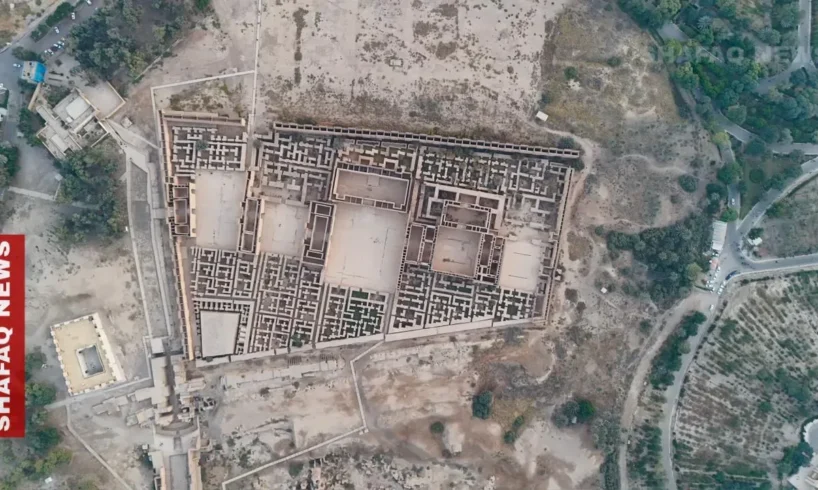
Hatra (Nineveh Province)
Standing today as one of Iraq’s most rigorously
protected heritage sites, Hatra remains recognized by UNESCO for its
exceptional architectural and cultural value. Although it sustained damage
during past conflicts, much of its monumental urban fabric still survives.
Conservation, structural stabilization, and regular monitoring continue under
Iraqi heritage law and the supervision of the State Board of Antiquities and
Heritage.
Ashur/ Qalaat Sharqat (Saladin Province)
At Ashur, protection efforts focus on safeguarding an
exceptionally authentic archaeological landscape that still preserves its core
features. The site remains a national priority, covered by the Antiquities and
Heritage Law and overseen by the State Board of Antiquities and Heritage with
local inspectors, guards, and continued archaeological oversight, ensuring
sustained supervision.
Samarra Archaeological City (Saladin)
In Samarra, the Abbasid capital’s vast historic
footprint is still clearly legible, from the Malwiya Minaret to its major
mosque and palace complexes. Despite periods of instability and limited access,
its defining features remain in place. While management conditions can be
demanding, ongoing monitoring and protection keep Samarra established as a
major World Heritage location.
Erbil Citadel (Kurdistan Region)
At the center of Erbil, the citadel presents itself as
an actively revitalized urban heritage landmark rather than a dormant relic.
Conservation, stabilization, and carefully managed restoration continue under
the leadership of the High Commission for Erbil Citadel Revitalization in
partnership with UNESCO, maintaining the citadel as a functioning cultural
space with strong public presence.
The Ahwar of Southern Iraq/ Marshlands (Basra &
Dhi Qar)
Across the south, the Ahwar represent a living
landscape where wetlands and heritage exist side by side. The marshes support
wildlife, migration routes, and local communities, while the archaeological
cities of Ur, Uruk, and Eridu remain protected and monitored. Environmental
management and site safeguarding continue to define how the Ahwar function
today.
Babylon (Babil Province)
In Babil, Babylon continues to be managed under
heightened attention due to its global symbolism and delicate physical
condition. Heritage authorities oversee the site with on-ground policing and
conservation work targeting structural stability, improved management, and
responsible visitor access. Supported by national and international backing,
preservation remains the primary focus while visible remains are kept
protected.
UNESCO’s Tentative List
Iraq’s Tentative List also includes a wide range of
cultural and archaeological sites that reflect the country’s historical depth
and diversity. Among them are the Ancient City of Nineveh and Nimrud in Nineveh
Province, Wasit, the Fortress of Al-Ukhaidar in Karbala, Wadi al-Salam Cemetery
in Najaf, the Old City of Mosul in Nineveh, Lalish Temple in Duhok, Kirkuk
Citadel, the Historical Features of the Tigris River in Baghdad Rusafa, the
Bestansur Neolithic Settlement in Al-Sulaymaniyah, Nippur in Al-Qadisiyah
(Al-Diwaniyah), and Amedi city in Duhok.
Some of these locations illustrate critical stages in
Iraq’s cultural and urban development. Bestansur offers insight into early
agricultural life and community formation in Western Asia, while Kirkuk Citadel
stands as a layered historical landmark, preserving traces of Neo-Assyrian,
Hellenistic, and Ottoman periods and demonstrating long-continuing human
settlement and heritage significance.